Introduction
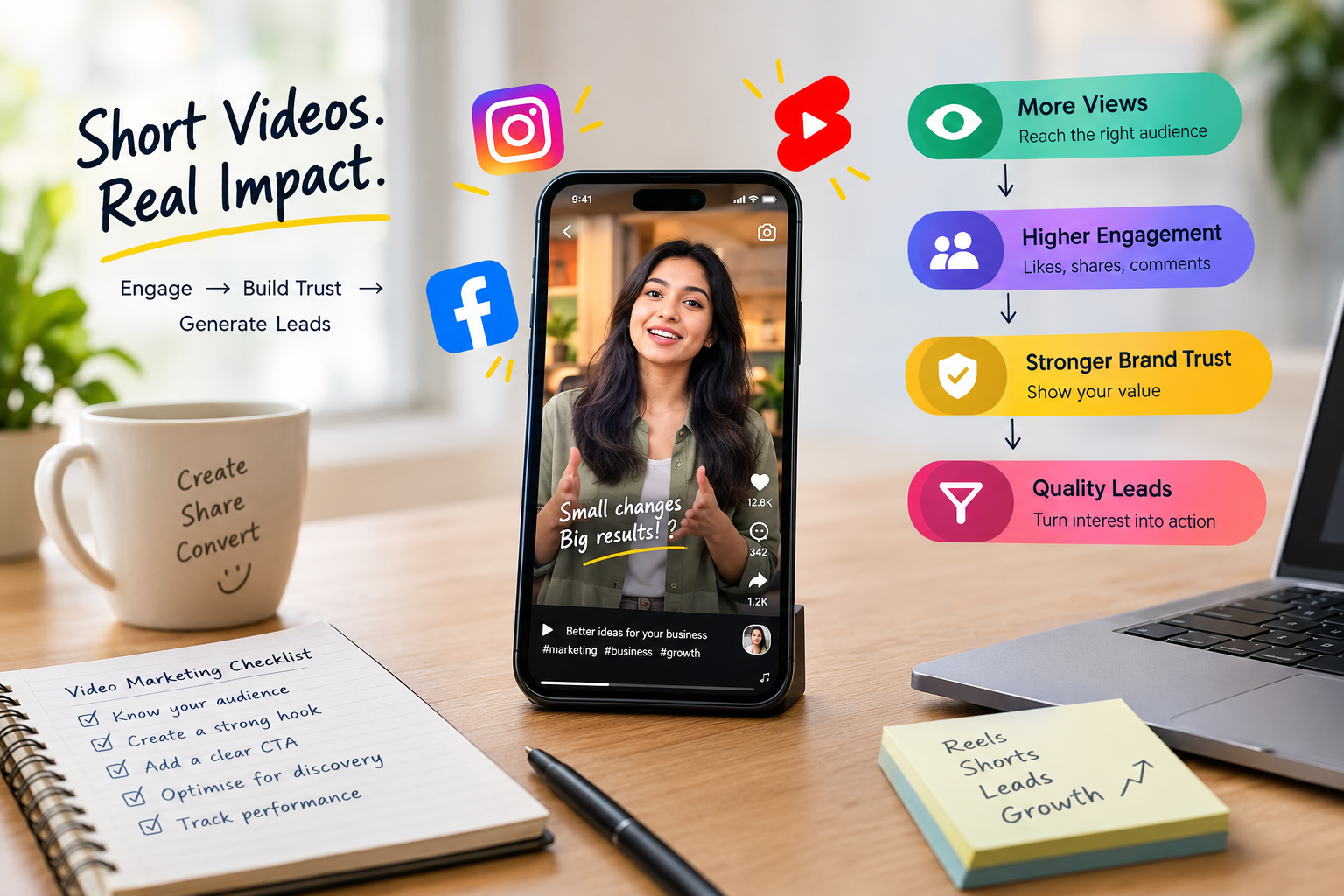
In 2026, short-form video marketing has become an important part of digital marketing strategies for businesses looking to increase brand awareness, engage audiences, and generate qualified leads. Platforms such as Instagram Reels, YouTube Shorts, and Facebook Reels allow businesses to communicate their value through short, engaging videos that capture attention quickly.
However, successful video marketing is not just about views, likes, or followers. The real objective is to turn audience attention into meaningful business outcomes, including website visits, enquiries, product purchases, and long-term customer relationships.
With the right content strategy, creative storytelling, audience targeting, and performance tracking, short-form videos can become a valuable channel for sustainable business growth.
What Is Short-Form Video Marketing?
Short-form video marketing involves creating concise, engaging video content to promote a brand, product, service, or business idea. These videos generally range from a few seconds to around a minute, although platform formats and audience preferences vary.
Businesses use short-form videos to explain services, demonstrate products, answer customer questions, share industry insights, and highlight customer experiences.
For example, a software company might publish a 30-second video explaining how its solution saves time, while a digital marketing agency could demonstrate how an effective advertising campaign helps businesses generate leads.
The key is to deliver useful information quickly while giving viewers a clear reason to take the next step.
Why Short-Form Video Marketing Matters in 2026
1. Captures Audience Attention Quickly
Online audiences consume content across multiple platforms every day. Short videos help businesses communicate their message without requiring a significant time commitment from viewers.
A strong opening, relatable problem, and clear message can encourage users to watch longer and engage with the content.
2. Improves Brand Awareness
Consistently publishing relevant videos helps businesses introduce their brand to new audiences. Platform recommendation systems may distribute engaging content beyond existing followers, creating opportunities to reach potential customers organically.
3. Builds Trust Through Demonstrations
Video allows businesses to explain their services, demonstrate expertise, answer frequently asked questions, and show how their solutions work in real situations.
This transparency can help potential customers understand a business's value before contacting its sales team.
4. Supports Lead Generation
Short-form videos can encourage viewers to visit a website, download a resource, book a consultation, request a quotation, or send a direct message. When these actions are connected to a well-designed landing page and follow-up process, video engagement can contribute to measurable business growth.
How to Turn Reels and Shorts into Business Leads
1. Define Your Target Audience
Before producing content, identify the people most likely to purchase your products or services. Consider their industry, job roles, challenges, interests, and purchasing intentions.
For example, a B2B technology company may target business owners and operations managers who need better digital solutions. Its videos should address business challenges rather than focus only on general entertainment.
Understanding your audience helps create relevant content that attracts potential customers instead of generating irrelevant views.
2. Create a Strong Hook Within the First Few Seconds
The opening determines whether viewers continue watching or scroll to the next video. Begin with a question, a common problem, a surprising insight, or a clear benefit.
Examples include:
1."Struggling to generate quality leads from your website?"
2."Three digital marketing mistakes that could be costing your business customers."
3."Want to improve your website's conversion rate?"
Avoid misleading clickbait. The opening should accurately represent the information delivered in the video.
3. Focus on Educational and Problem-Solving Content
Businesses can build credibility by sharing information that helps their audiences make better decisions.
Effective video formats include quick tutorials, industry tips, product demonstrations, frequently asked questions, myth-busting videos, customer success stories, and behind-the-scenes content.
For service-based companies, explaining how a problem can be solved is often more useful than repeatedly promoting services. Helpful content attracts relevant viewers and creates opportunities for future enquiries.
4. Include a Clear Call to Action
Every lead-generation video should guide viewers towards a specific next step. Without a clear call to action (CTA), interested viewers may watch the content without taking further action. Depending on the campaign objective, businesses can use CTAs such as:
A.Visit our website to explore our services.
B.Send us a message to discuss your requirements.
C.Book a consultation with our team.
D.Download our free guide.
E.Complete the enquiry form to learn more.
Use one primary CTA per video to avoid confusing viewers.
5. Optimise Videos for Discovery
Content optimisation helps viewers understand what a video is about and may improve its discoverability.
Use relevant keywords naturally in video titles, captions, descriptions, and spoken content where appropriate. Add readable on-screen text, accurate subtitles, and relevant hashtags. Choose a clear thumbnail or cover image when the platform supports it.
For YouTube Shorts, descriptive titles and relevant search terms can help communicate the video's subject. On Instagram Reels, engaging creative content, relevant captions, and audience interaction can support discovery.
Optimisation should complement valuable content rather than replace it.
6. Connect Videos to a Lead Generation Funnel
Generating a lead requires more than attracting attention. Businesses should create a clear journey from video discovery to conversion.
A practical funnel includes:
1.Awareness: Publish engaging videos that introduce a problem or business solution. 2.Consideration: Share educational content, comparisons, demonstrations, and customer testimonials.
3.Conversion: Direct interested viewers to a relevant landing page, enquiry form, booking link, or messaging channel.
4.Follow-up: Respond promptly to enquiries and nurture potential customers through appropriate communication.
Ensure the landing page matches the promise made in the video. A confusing or slow website can cause potential customers to leave before submitting an enquiry.
Measure the Right Video Marketing Metrics
Businesses should evaluate short-form video campaigns using metrics that align with their objectives.
Important metrics include:
1.Watch time and retention: Show how effectively videos maintain audience attention.
2.Engagement rate: Helps assess audience interactions, including likes, comments, shares, and saves.
3.Click-through rate (CTR): Measures how often viewers click a displayed link or call to action when impressions are defined and available.
4.Conversion rate: Indicates the percentage of relevant visitors who complete a desired action.
5.Cost per lead (CPL): Measures advertising expenditure per generated lead in paid campaigns.
6.Lead quality: Evaluates whether enquiries match the business's target customer profile.
Tracking website conversions, using campaign-specific UTM parameters, and reviewing platform analytics can help businesses identify which videos contribute to genuine business results.
Common Short-Form Video Marketing Mistakes to Avoid
Businesses should avoid posting without a clear objective, copying trends that do not suit their audience, overloading videos with promotional messages, and using weak calls to action. Inconsistent publishing, poor audio quality, unreadable text, and ignoring comments can also reduce effectiveness.
Another common mistake is judging success solely by views. A video with fewer views but highly relevant enquiries may deliver greater business value than a viral video that attracts the wrong audience.
Conclusion
Short-form video marketing in 2026 offers businesses an effective way to communicate their value, build trust, and connect with potential customers. However, sustainable results require more than creative videos. Businesses need a clear audience strategy, useful content, strong calls to action, an optimised conversion journey, and consistent performance analysis.
By combining Reels and YouTube Shorts with effective digital marketing strategies, companies can turn audience engagement into meaningful enquiries and measurable growth. Softechedge helps businesses strengthen their digital presence through strategic digital marketing solutions focused on visibility, engagement, and business growth. With the right combination of content, optimisation, and performance tracking, short-form video can become a valuable part of a results-oriented marketing strategy.
Ready to turn your video content into business opportunities? Connect with Softechedge to explore digital marketing solutions aligned with your growth goals.