Introduction
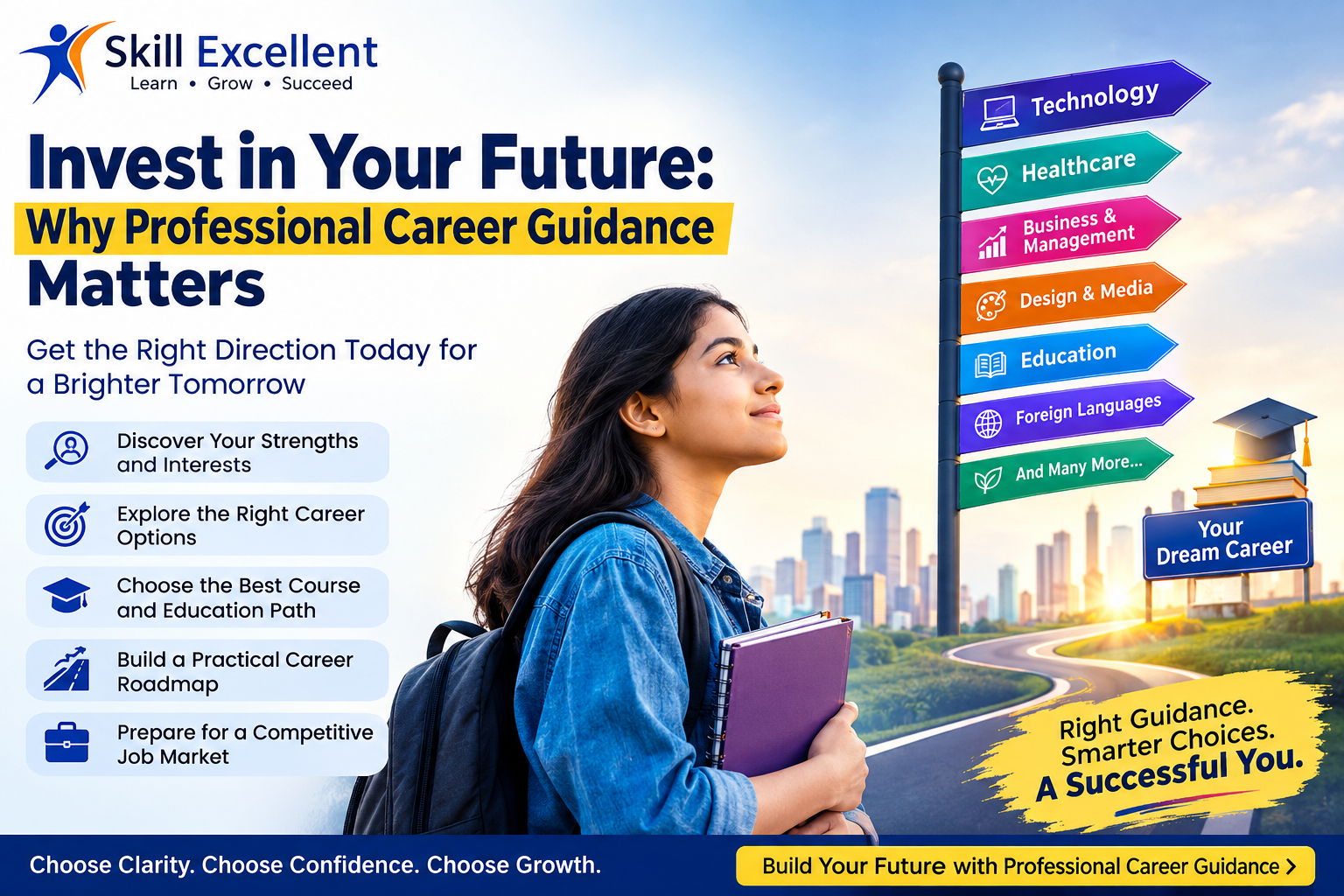
Choosing the right career is one of the most important decisions a person makes. With hundreds of courses, career paths, industries, and job opportunities available today, making the right choice can sometimes feel overwhelming. Students and professionals often find themselves asking: Which career is right for me? What skills should I develop? Which course should I choose?
This is where professional career guidance can make a meaningful difference. Career counselling helps individuals understand their strengths, interests, abilities, and goals so they can make informed decisions rather than choosing a career based solely on trends, social pressure, or assumptions.
Understanding the Importance of Career Guidance
Career guidance is not simply about recommending a particular profession. It is a structured process that helps individuals understand themselves and explore career opportunities that align with their abilities and aspirations.
A professional career counsellor can help you evaluate your interests, identify your strengths, understand potential career options, and develop a practical roadmap. Instead of making an important decision based on limited information, you can approach your future with greater clarity and confidence.
Make Decisions Based on Your Strengths
Every individual has a different combination of skills, interests, personality traits, and learning preferences. However, students may not always recognize their strongest abilities.
Professional career guidance can help individuals identify what they are naturally good at and where they may need improvement. For example, someone who enjoys solving problems may discover opportunities in technology, data analysis, engineering, or research. Similarly, someone with strong communication and interpersonal abilities may explore careers in management, human resources, marketing, education, or public relations.
Understanding your strengths can help you select a career that feels more suitable and sustainable in the long term.
Avoid Career Decisions Based on Trends
Career trends can influence students significantly. A particular profession may become popular because of social media, peer influence, or perceived salary opportunities. However, popularity does not necessarily mean that a career is suitable for everyone.
A career should be evaluated based on multiple factors, including personal interests, aptitude, required qualifications, future opportunities, working environment, and individual goals. Professional guidance encourages students to look beyond temporary trends and understand whether a particular career genuinely matches their profile.
Explore More Career Options
Many students are familiar with only a limited number of conventional career paths. They may know about engineering, medicine, law, teaching, or government jobs but remain unaware of numerous emerging and specialized opportunities.
Career counselling can introduce individuals to a broader range of career possibilities. Depending on their interests and abilities, students can explore areas such as digital marketing, software development, cybersecurity, artificial intelligence, data science, foreign languages, finance, design, healthcare management, and many other fields.
Greater awareness allows students to compare different possibilities before making an important educational or professional decision.
Choose the Right Course and Education Path
Selecting a career and selecting an educational course are closely connected. Choosing the wrong course can lead to wasted time, unnecessary expenses, and frustration.
Professional career guidance can help students understand the relationship between their desired career and the qualifications or skills required to enter that field. It can also help them evaluate different academic and skill-development options.
Instead of asking only, “Which course is popular?”, students can begin asking, “Which course supports my long-term career objective?”
Develop a Practical Career Roadmap
Career success rarely happens overnight. It often requires a combination of education, technical skills, practical exposure, communication abilities, networking, and continuous learning.
Career guidance can help individuals create a step-by-step roadmap. This may include identifying educational requirements, developing relevant skills, completing certifications, gaining internship experience, building projects, and preparing for future employment opportunities.
Having a roadmap makes a large career goal feel more manageable because it converts an uncertain future into achievable milestones.
Prepare for a Changing Job Market
The employment landscape is continuously evolving. Technology, automation, artificial intelligence, and changing business requirements are influencing the skills employers value.
As a result, students and professionals need to think beyond their current qualifications. They must understand which skills are becoming important and how they can remain competitive. Professional career guidance can encourage individuals to adopt a continuous-learning mindset and identify skills that can support long-term employability.
Build Confidence in Your Career Decisions
Career confusion can create stress and hesitation. When individuals are uncertain about their choices, they may repeatedly change courses or career plans.
Professional guidance provides a structured environment where individuals can discuss their concerns, evaluate options, and understand the possible outcomes of different decisions. This process can increase confidence and help individuals take ownership of their career choices. Confidence does not mean knowing every answer immediately. It means having enough clarity and information to take the next step.
Career Guidance Is Valuable at Every Stage
Career counselling is not limited to school students. College students, fresh graduates, working professionals, and individuals considering a career change can also benefit from professional guidance.
Students may need help selecting a stream or course, graduates may need direction while entering the job market, and professionals may require support when considering a new industry or career path.
At every stage, career guidance can help individuals reassess their goals and make decisions aligned with their changing priorities.
How Skill Excellent Can Support Your Career Journey
At Skill Excellent, career development is approached with a focus on helping individuals understand their potential and make informed career decisions. Professional career counselling can help students and aspiring professionals explore suitable career options, identify their strengths, understand skill requirements, and plan their next steps.
With the right guidance, career planning becomes less about guessing and more about making informed choices based on personal strengths and future goals.
Conclusion
Your career is a long-term investment, and the decisions you make today can influence your opportunities tomorrow. While there is no single formula for career success, having the right information and professional guidance can make the journey clearer and more focused. Whether you are choosing your first career, selecting an educational course, preparing for employment, or considering a career change, professional career guidance can help you understand your options and build a realistic path forward.
Investing in career guidance today can help you move toward a future built around your strengths, skills, interests, and aspirations.