Introduction
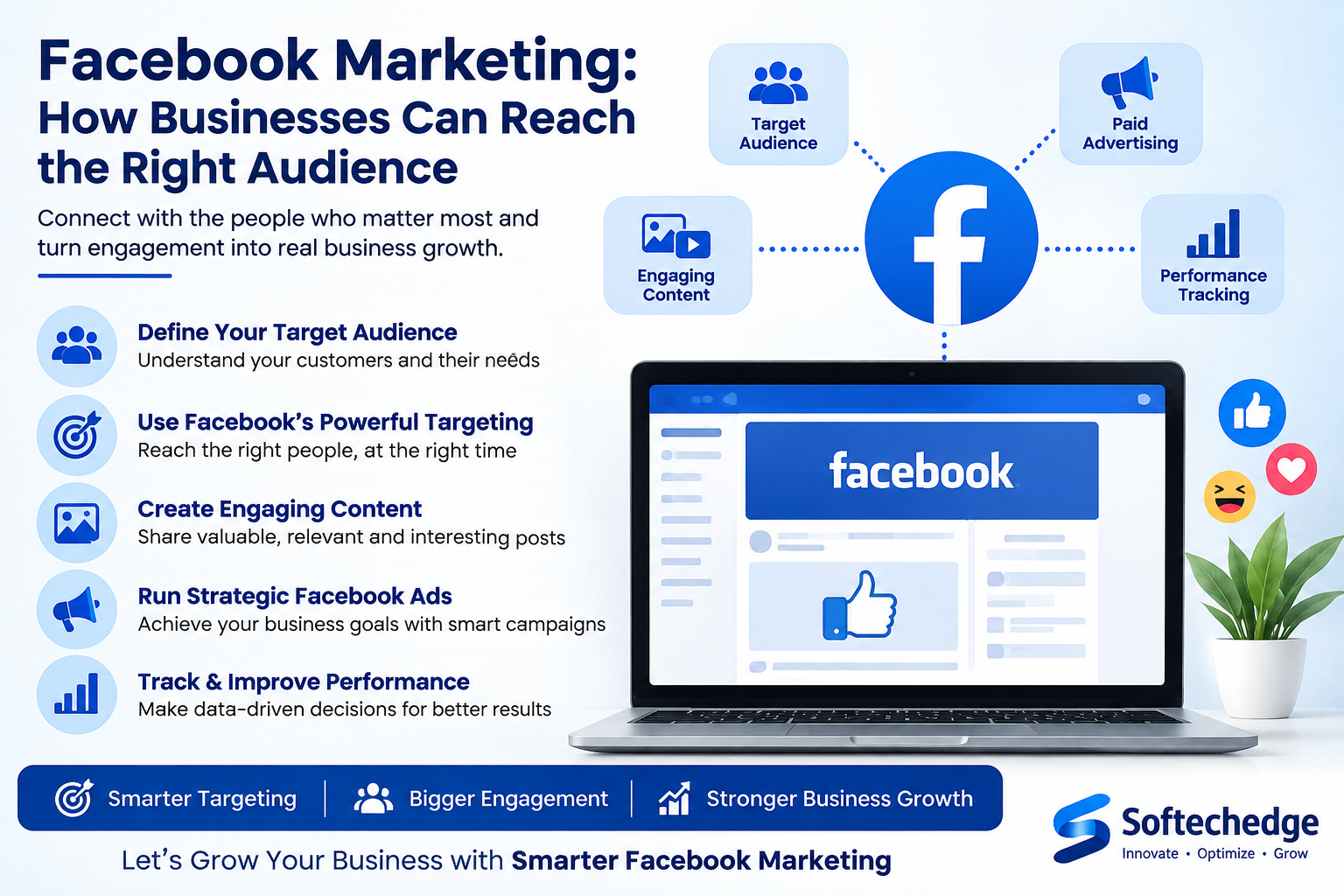
In today’s competitive digital landscape, reaching the right customers is just as important as promoting your products or services. Facebook continues to be a powerful platform for businesses that want to build brand awareness, generate leads, engage customers, and increase sales. However, simply creating a Facebook page and posting content regularly is not enough to achieve meaningful results. Businesses need a well-planned Facebook marketing strategy that delivers the right message to the right audience at the right time. With the support of a digital marketing agency such as Softechedge, businesses can use audience research, engaging content, paid advertising, and performance analysis to create more effective Facebook campaigns.
Why Facebook Marketing Matters for Businesses
Facebook offers businesses the opportunity to connect with a broad and diverse audience based on factors such as age, location, interests, profession, and online behavior. This makes it a valuable platform for businesses across different industries. Whether a company wants to promote a new product, attract website visitors, generate enquiries, or strengthen its brand identity, Facebook can support different marketing objectives. One of its biggest advantages is that businesses can measure campaign performance and make changes based on real-time results. Instead of communicating with a broad audience without knowing their interests, businesses can use digital targeting techniques to focus their marketing efforts on people who are more likely to become customers.
Define Your Target Audience
The first step toward successful Facebook marketing is understanding who your ideal customers are. Businesses should identify the characteristics, needs, interests, and challenges of their target audience before creating campaigns. Factors such as age, gender, location, occupation, interests, purchasing behavior, and lifestyle can help businesses create a clearer customer profile. For example, a fitness centre may target people interested in exercise, wellness, sports, and healthy living within a particular location. Similarly, a B2B technology company may focus on business owners, professionals, or decision-makers from specific industries. Having a well-defined target audience allows businesses to create more relevant content and advertising campaigns.
Make the Most of Facebook Audience Targeting
Facebook provides businesses with various targeting options that can help them reach specific customer groups. Businesses can build audiences based on demographics, interests, behaviours, locations, and interactions with their brand. Custom audiences can also be created to reconnect with people who have previously visited a website, interacted with social media content, or engaged with a business in some other way. Businesses can also use lookalike audiences to discover new potential customers who share similarities with their existing audience. Using these targeting options effectively can reduce unnecessary advertising expenses and improve the chances of reaching people who are genuinely interested in a product or service.
Create Content That Connects With Customers
Effective Facebook marketing depends not only on targeting but also on the quality and relevance of content. Businesses should create content that addresses customer needs instead of constantly promoting their products or services. Educational posts, product demonstrations, customer testimonials, short videos, industry insights, infographics, questions, polls, behind-the-scenes content, and special offers can all help increase audience engagement. The content should be easy to understand, visually appealing, and aligned with the brand’s identity. When businesses consistently provide useful and interesting content, they can build trust and encourage their audience to interact with the brand.
Use Facebook Advertising Strategically
Facebook Ads can help businesses reach highly specific audiences and achieve measurable marketing objectives. However, businesses should avoid launching advertisements without first defining what they want to accomplish. A campaign may be designed to increase brand awareness, generate leads, drive website traffic, promote a product, or encourage conversions. The campaign objective should determine the advertising message, creative format, audience, and call-to-action. A lead generation campaign, for example, may focus on a strong offer and an easy enquiry process, while an awareness campaign may focus more on attractive visuals and memorable brand messaging. Strategic planning can help businesses make better use of their advertising budgets.
Retarget Potential Customers
Many people do not make a purchase or submit an enquiry the first time they interact with a business. Retargeting provides businesses with an opportunity to reconnect with people who have already demonstrated an interest in their products or services. A potential customer may visit a website, view a product, watch a video, or interact with a social media post without taking further action. Retargeting campaigns can remind these users about the business and encourage them to return. This approach can be particularly useful for maintaining communication with potential customers throughout their buying journey.
Test Different Content and Campaigns
There is no single Facebook marketing strategy that works equally well for every business. Different audiences respond differently to advertisements, visuals, offers, headlines, and calls-to-action. Businesses should therefore test different versions of their campaigns to identify what performs best. They can experiment with different images, videos, ad copy, audience groups, offers, and landing pages. A/B testing can provide useful insights into which elements generate better engagement, clicks, leads, or conversions. By continuously testing and improving campaigns, businesses can make decisions based on actual performance rather than assumptions.
Measure Facebook Marketing Performance
Tracking campaign performance is essential for understanding whether Facebook marketing is producing the desired results. Businesses should monitor metrics that match their specific objectives. Reach, impressions, engagement, click-through rate, cost per click, cost per lead, conversions, and return on ad spend are some of the important indicators that can provide valuable insights. For example, a campaign may receive a large number of clicks but generate very few enquiries. This could indicate that the landing page, offer, messaging, or audience targeting needs improvement. Regular performance analysis allows businesses to identify weaknesses, optimize campaigns, and use their marketing budgets more effectively.
Connect Facebook With Other Digital Marketing Channels
Facebook marketing becomes even more effective when it is integrated with other digital marketing activities. Businesses can combine social media marketing with SEO, content marketing, Google Ads, email marketing, and website optimization to create a complete digital strategy. For example, Facebook can be used to promote a blog article, while SEO can help the same article attract organic search traffic. Similarly, Facebook advertising can generate leads that can later be nurtured through email marketing. By creating multiple touchpoints, businesses can maintain communication with potential customers at different stages of the buying journey.
How Softechedge Can Support Your Facebook Marketing Strategy
Managing Facebook marketing effectively requires audience research, content planning, creative development, advertising expertise, campaign monitoring, and continuous optimization. Softechedge can help businesses build a digital marketing strategy based on their goals, target audience, industry, and available budget. By combining social media marketing with other digital marketing services, businesses can develop a consistent online presence while focusing on measurable outcomes. A data-driven approach can also help businesses understand customer behaviour and continuously improve their campaigns.
Conclusion
Facebook marketing is more than simply publishing posts or running advertisements. Successful campaigns depend on understanding the target audience, creating relevant content, using precise targeting, retargeting interested users, testing different strategies, and measuring results. Businesses that approach Facebook marketing strategically can improve their online visibility, strengthen customer relationships, generate qualified leads, and support long-term growth. With the right digital marketing strategy and continuous optimization, Facebook can become an important part of a business’s overall online marketing efforts.