Introduction
Hiring the right talent is one of the most important decisions a business makes. However, finding qualified candidates is only one part of the recruitment process. Businesses must also determine the type of employment arrangement that best supports their goals. Should they hire a permanent employee who can contribute to long-term growth, or bring in a contract professional for a specific project or temporary requirement? Both permanent and contract hiring offer unique advantages, and the right choice depends on factors such as business objectives, project duration, budget, skill requirements, workforce flexibility, and future growth plans.
Understanding Permanent Hiring
Permanent hiring refers to recruiting an employee for a long-term position within an organization. A permanent employee generally becomes an ongoing part of the company and may receive benefits such as paid leave, insurance, retirement benefits, bonuses, and other benefits according to company policies and applicable regulations. Permanent employees are typically hired for roles that are important to the company's continued operations, including management, sales, finance, HR, technology, customer service, and other core functions. For businesses that need consistent expertise and want to develop employees over several years, permanent recruitment can provide a strong foundation for workforce stability.
Benefits of Permanent Hiring
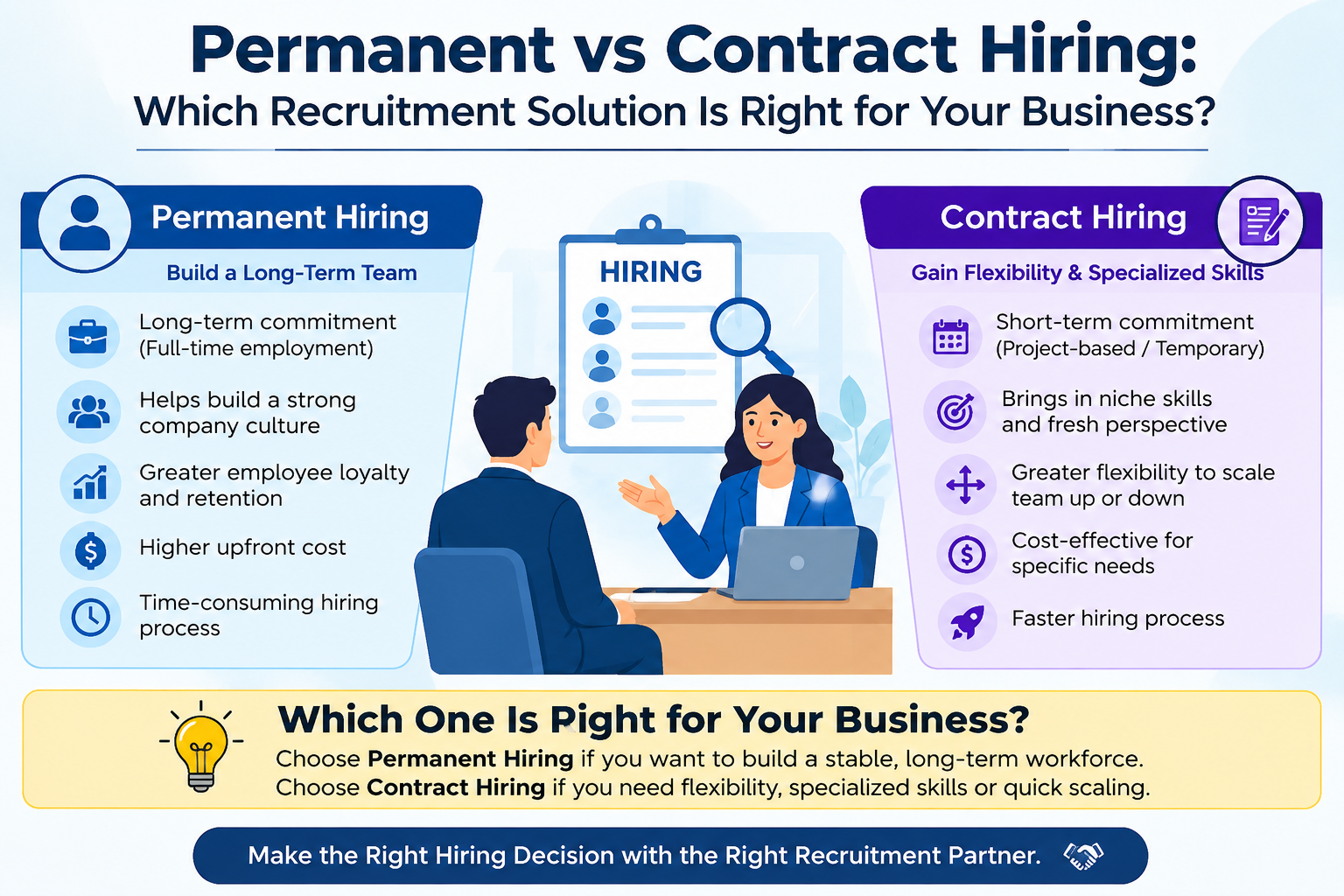
One of the biggest advantages of permanent hiring is long-term commitment. Employees who expect to build their careers within an organization can develop a deeper understanding of its products, customers, processes, and company culture. Permanent recruitment can also support employee retention and create opportunities for career progression. Businesses can invest in training and professional development because they expect employees to contribute over an extended period. Over time, experienced permanent employees can take on additional responsibilities and move into leadership positions. This makes permanent hiring particularly valuable for organizations focused on building stable teams and developing internal talent.
Understanding Contract Hiring
Contract hiring involves recruiting professionals for a defined period, project, assignment, or specific business requirement. Depending on the agreement, a contract employee may work for several weeks, months, or longer. This type of hiring can be particularly useful when a business has a temporary workforce requirement or needs specialized skills for a specific project. For example, a company launching a new website may require a developer, designer, or digital marketing specialist for a defined period. Similarly, a business experiencing seasonal demand may hire additional professionals to manage increased workloads without making a long-term workforce commitment.
Benefits of Contract Hiring
Contract hiring provides businesses with greater workforce flexibility. Organizations can increase their workforce when demand rises and adjust staffing levels when a project or assignment is completed. It can also provide access to specialized skills that may not be required on a permanent basis. Companies can bring experienced professionals into the organization for specific projects without creating permanent positions. Contract hiring can also help businesses respond quickly to urgent requirements, making it useful for industries where project demands and workforce needs change frequently. For growing businesses, this flexibility can be an important part of workforce planning.
Permanent vs Contract Hiring: Key Differences
The key difference between permanent and contract hiring is the nature and duration of the employment relationship. Permanent hiring is generally designed to meet long-term workforce requirements, while contract hiring is more suitable for temporary, project-based, or specialized needs. Permanent employees may receive broader employee benefits and have greater opportunities for long-term career development within the organization. Contract professionals, on the other hand, generally focus on completing a specific assignment or fulfilling a defined business requirement. Permanent hiring can provide greater workforce stability, while contract hiring can offer greater flexibility. Neither model is universally better; the right option depends on the organization's requirements.
When Should a Business Choose Permanent Hiring?
Permanent hiring is usually a better option when a position is critical to the company's long-term operations. If a business expects a continuous need for a particular role, hiring a permanent employee can provide greater stability and allow the organization to invest in the employee's development. Companies should consider permanent recruitment when they want to build experienced teams, strengthen company culture, retain organizational knowledge, develop future leaders, and support long-term expansion. For example, a growing company that needs an HR manager to continuously manage recruitment, employee relations, policies, and workforce development may benefit from hiring a permanent professional.
When Is Contract Hiring the Better Choice?
Contract recruitment can be a better solution when the business requirement is temporary, specialized, or uncertain. Companies may choose contract hiring when they need professionals for a particular project, require specialized expertise, experience seasonal increases in workload, or need to fill a position quickly. Contract hiring can also be useful when a company is testing a new business function before making a long-term investment. For example, a business entering a new market may hire a consultant or specialist on a contract basis to manage a specific project. If the function becomes a permanent part of the business, the company can later consider creating a permanent position.
Can Businesses Use Both Hiring Models?
Businesses do not necessarily have to choose only one hiring model. Many organizations use a combination of permanent and contract employees to create a flexible and efficient workforce. A company may maintain permanent employees for core business functions while hiring contract professionals for specialized projects, seasonal workloads, temporary vacancies, or short-term assignments. This blended approach can provide stability while allowing businesses to respond quickly to changing market conditions. It can also help organizations manage workforce requirements more effectively while gaining access to specialized talent when needed.
How Recruitment Services Can Help
Choosing between permanent and contract hiring requires a clear understanding of business goals, job requirements, workforce needs, and future plans. Professional recruitment services can help businesses define job descriptions, identify suitable candidates, screen applicants, and manage different stages of the hiring process. With the support of a recruitment partner such as Jobsglint, businesses can connect with candidates based on relevant skills, experience, and role requirements. A structured recruitment process can reduce the time spent searching for candidates and help employers make more informed hiring decisions.
Conclusion
Permanent and contract hiring are not simply two competing recruitment methods; they are solutions designed to address different business requirements. Permanent employees can provide stability, organizational knowledge, long-term commitment, and opportunities for employee development, while contract professionals can provide flexibility, specialized expertise, and support for short-term or project-based requirements. Before selecting a hiring model, businesses should consider the duration of the role, required skills, budget, workload, and long-term importance of the position. With the right recruitment strategy and professional hiring support, organizations can build a workforce that is skilled, adaptable, and aligned with their business objectives. Ultimately, successful recruitment is not just about filling vacancies—it is about hiring the right people in the right way at the right time.