Introduction
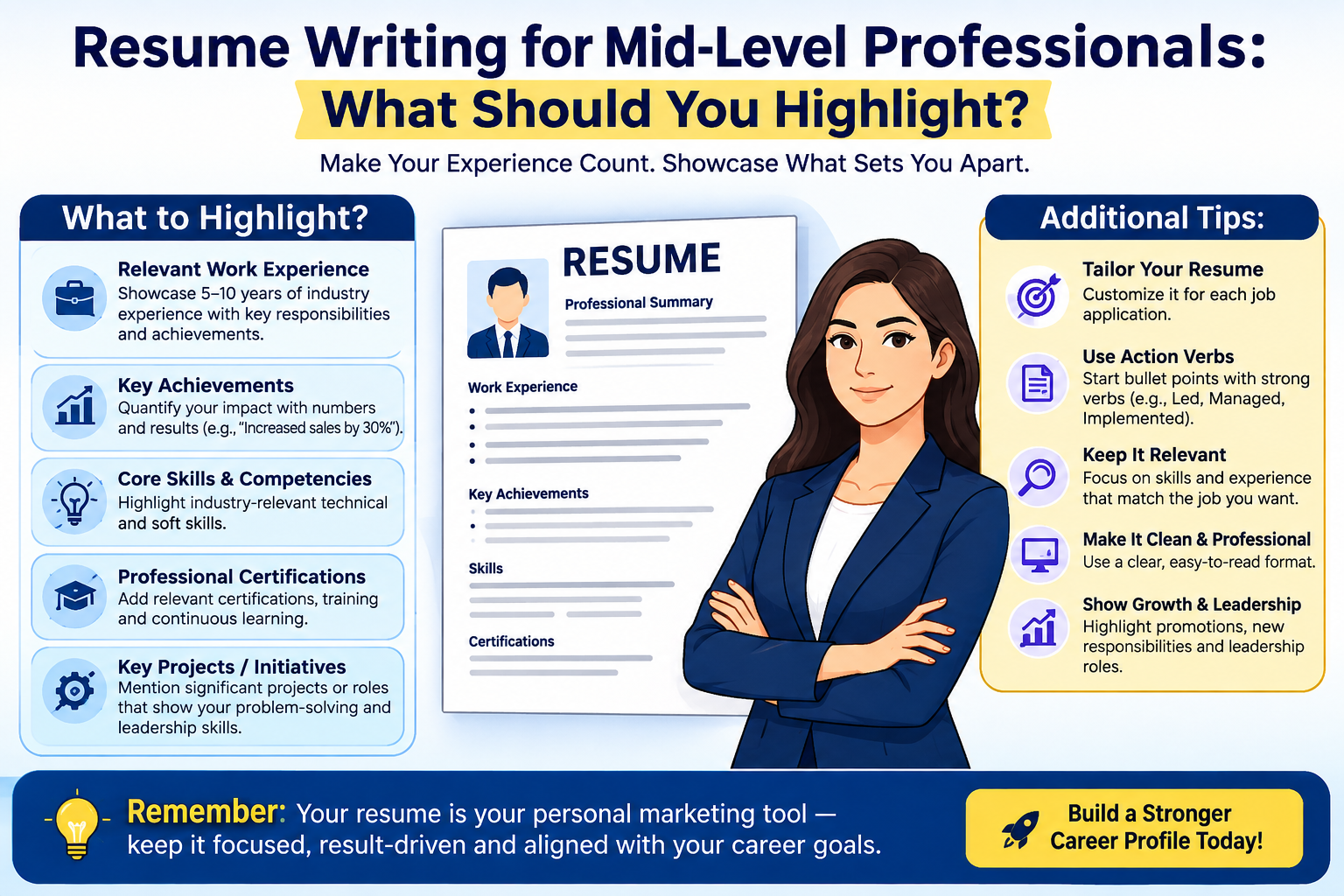
For mid-level professionals, a resume is much more than a list of previous jobs and qualifications. At this stage of your career, recruiters want to understand your professional growth, expertise, achievements, leadership capabilities, and the value you can bring to their organization. Unlike freshers, who often focus on education and potential, mid-level professionals need to demonstrate proven experience and measurable contributions. Therefore, an effective resume should focus on career progression, accomplishments, relevant skills, major projects, and the ability to take on greater responsibilities.
Start With a Strong Professional Summary
The professional summary is one of the first sections recruiters notice, so it should immediately communicate your experience and professional strengths. Instead of using generic statements such as “hardworking professional seeking a challenging opportunity,” create a concise summary that explains your years of experience, specialization, and key areas of expertise. For example, an HR professional could highlight experience in recruitment, employee engagement, performance management, and HR operations while mentioning significant improvements or achievements. A strong summary gives recruiters a quick understanding of who you are professionally and what you can offer.
Highlight Career Progression
Career growth is an important factor for mid-level professionals. Your resume should show how your responsibilities and expertise have developed over time. If you have received promotions, moved into specialized roles, managed larger teams, or taken responsibility for important projects, make these achievements visible. Showing a progression such as HR Executive to Senior HR Executive to HR Manager can demonstrate that you have consistently developed your capabilities and earned greater responsibilities. Rather than simply listing job titles, explain how each role contributed to your overall professional growth.
Focus on Achievements Instead of Responsibilities
One of the most common resume mistakes is focusing only on job responsibilities. Statements such as “managed recruitment activities” or “handled customer accounts” tell recruiters what you were expected to do but do not explain the impact of your work. A stronger resume focuses on achievements and measurable outcomes. For example, instead of saying that you managed recruitment, you could mention that you reduced the average hiring time by 25% by improving the recruitment process. Whenever possible, include numbers, percentages, revenue figures, cost savings, productivity improvements, or other measurable results to demonstrate your contribution.
Showcase Relevant Skills
Mid-level professionals should present a balanced combination of technical and professional skills. Depending on your industry, technical skills may include software, programming languages, analytics platforms, CRM systems, HR technology, digital marketing tools, or other specialized technologies. Soft skills such as leadership, communication, problem-solving, decision-making, project management, negotiation, and stakeholder management can also strengthen your profile. However, avoid creating a long list of generic skills. Focus on skills that are directly relevant to the position you are applying for and support them with examples from your professional experience.
Demonstrate Leadership and Ownership
As professionals move into mid-level positions, employers increasingly look for candidates who can take ownership and lead initiatives. If you have supervised employees, managed projects, trained team members, coordinated with clients, introduced new processes, or handled important business functions, these experiences should be clearly highlighted. Rather than simply stating that you worked with a team, explain how you contributed to a project, solved a problem, improved a process, or helped the team achieve a specific objective. Demonstrating ownership can show recruiters that you are prepared to take on more senior responsibilities.
Highlight Major Projects and Contributions
Major projects can add significant value to a mid-level resume because they provide evidence of how you apply your skills in practical situations. Think about projects where you introduced a new system, improved an existing process, reduced costs, increased sales, improved customer satisfaction, implemented technology, or solved an important business challenge. Briefly explain your role and the outcome of the project. This approach helps recruiters understand not only what you have done but also the business impact you have created.
Tailor Your Resume to the Job
Using the same resume for every application can reduce your chances of getting noticed. Each position may emphasize different qualifications, responsibilities, and skills. Before applying, carefully study the job description and identify important keywords and requirements. Your resume should then highlight the experience and achievements that are most relevant to that particular role. Tailoring your resume can also make it more suitable for Applicant Tracking Systems (ATS), which many organizations use to screen applications before they reach recruiters.
Keep Education and Certifications Relevant
For mid-level professionals, professional experience generally deserves more attention than academic qualifications. Your resume should include your most relevant degrees, certifications, and professional courses, but unnecessary educational details can be removed. Industry-specific certifications and recent training can be particularly valuable because they demonstrate that you are continuing to develop your knowledge. Certifications related to technology, management, AI, data analytics, digital transformation, HR, finance, or other specialized areas can help strengthen your professional profile.
Show Continuous Professional Development
Employers value professionals who continue learning and adapting to changes in their industries. Mention relevant workshops, certifications, online courses, conferences, or training programs that have contributed to your professional development. This is especially important in rapidly changing fields where new technologies and working methods are constantly emerging. Demonstrating continuous learning shows that you are prepared to upgrade your skills and remain relevant in a competitive job market.
Maintain a Clear and Professional Format
Even an impressive career history can lose its impact if the resume is difficult to read. A professional resume should have clear headings, consistent formatting, concise paragraphs or bullet points, appropriate spacing, and an easy-to-follow structure. Avoid excessive graphics, complicated designs, and unnecessary information. Recruiters should be able to quickly identify your professional summary, experience, achievements, skills, education, and certifications. Most importantly, remove outdated or irrelevant information that does not support your current career goals.
Conclusion
A strong mid-level professional resume should communicate a clear story of career growth, expertise, leadership, and measurable impact. Instead of simply documenting previous responsibilities, focus on what you achieved, how you contributed, and how your experience prepares you for your next career opportunity. A well-structured and customized resume can help recruiters understand your professional value and make your application more competitive.
Jobsglint’s Resume Writing Services can help mid-level professionals create customized resumes that showcase their experience, achievements, skills, and career goals in a clear and recruiter-friendly format. With the right resume strategy, your professional experience can become a powerful tool for opening the door to your next career opportunity.