Introduction
A job interview is not just an opportunity for an employer to evaluate whether you are the right fit for a role. It is also your chance to understand the company, the position, the team and the opportunities that come with the job. While most candidates prepare carefully for questions they may be asked, many forget one important part of the interview: asking thoughtful questions to the interviewer.
At the end of an interview, you will often hear, “Do you have any questions for us?” Saying “No, I think everything has been covered” may seem safe, but it can mean missing a valuable opportunity. Well-prepared questions demonstrate your interest, curiosity, professionalism and desire to make an informed career decision.
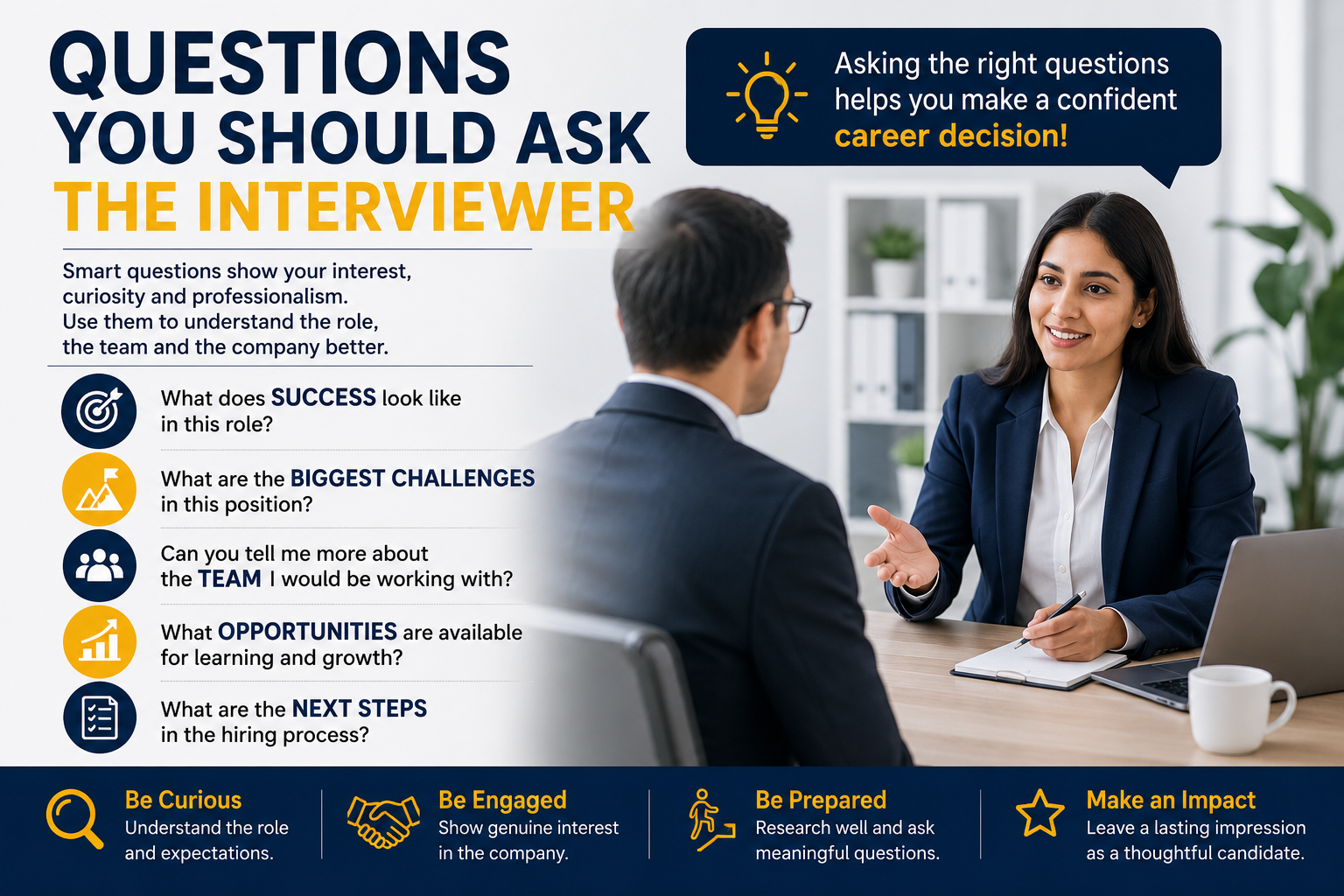
Here are some of the most important questions you should consider asking an interviewer.
1. What Does Success Look Like in This Role?
One of the best questions you can ask is, “What would success look like for someone in this position during the first six months?”
This question shows that you are already thinking beyond getting hired. You want to understand expectations and how your performance will be measured. The interviewer’s answer can also help you identify the key responsibilities and priorities associated with the role.
For example, success may involve achieving sales targets, completing projects on time, improving a process, managing clients effectively or learning specific skills. Understanding these expectations can help you decide whether the position matches your strengths and career goals.
2. What Are the Biggest Challenges in This Position?
Every job comes with challenges, and it is important to understand them before accepting an offer. Ask the interviewer, “What are some of the biggest challenges someone in this role might face?”
Their response can provide valuable insight into the realities of the position. Perhaps the team is working under tight deadlines, the company is entering a new market or the role requires managing several responsibilities at once.
Knowing the challenges in advance does not necessarily mean the job is unsuitable. Instead, it helps you evaluate whether you have the skills, mindset and willingness needed to handle the demands of the role.
3. Can You Tell Me More About the Team?
Your experience at work is often influenced by the people you work with every day. Therefore, asking about the team is an excellent way to understand the working environment.
You could ask, “Can you tell me about the team I would be working with?”
This can help you learn about the team’s size, structure, responsibilities and collaboration style. You may also discover who you will report to and how different departments work together.
A role may look perfect on paper, but understanding the team dynamic can give you a clearer picture of what your daily work experience may actually be like.
4. How Would You Describe the Company Culture?
Company culture plays an important role in job satisfaction and long-term growth. A workplace can have excellent salaries and benefits, but you should also consider whether its culture suits your personality and working style.
Ask questions such as, “How would you describe the company culture?” or “What do you enjoy most about working here?”
The second question can be particularly useful because it encourages the interviewer to share a personal perspective. Listen carefully to their answer. Do they mention teamwork, learning opportunities, flexibility, innovation or employee support? Their response may give you deeper insight than a general description on the company's website.
5. What Learning and Growth Opportunities Are Available?
A good job should offer more than just a monthly salary. It should also help you develop professionally.
You can ask, “What opportunities are available for learning and career development?”
Find out whether the organization provides training programmes, mentoring, certifications, workshops or opportunities to work on new projects. You can also ask how employees typically progress within the company.
This is especially important if you are focused on building a long-term career. Continuous learning can help you stay competitive, develop new skills and prepare for greater responsibilities in the future.
6. Why Is This Position Open?
Another useful question is, “Why is this position currently available?”
The answer can provide important context. Is the company expanding? Was a new role created because of business growth? Did the previous employee receive a promotion, or did they leave the organization?
For example, a newly created position may offer exciting opportunities to shape the role. On the other hand, if there has been frequent turnover, you may want to understand the reasons more carefully. Ask the question professionally and listen without making assumptions.
7. What Are the Next Steps in the Hiring Process?
Before leaving the interview, make sure you understand what happens next. Ask, “What are the next steps in the hiring process?”
This question is simple but highly practical. It helps you understand whether there will be another interview, assessment, task or final discussion. You can also ask about the expected timeline for a decision.
Knowing the next steps allows you to follow up professionally and manage other job opportunities effectively.
8. How Does the Company Support Employee Well-Being?
Modern professionals increasingly value workplaces that support employee well-being and maintain a healthy work environment. Depending on the role and stage of the interview, you can ask about flexibility, work-life balance and employee support.
For example, you might ask, “How does the company support employees in maintaining a healthy work-life balance?”
The response can help you understand the organization’s approach to workload, flexibility and employee engagement. However, make sure your questions are relevant and professionally framed. The goal is to understand the workplace, not create the impression that you are avoiding responsibility.
Questions You Should Avoid Asking Too Early
While asking questions is important, timing also matters. Avoid focusing only on salary, holidays or benefits during the first stage unless the interviewer raises these topics or it is appropriate for the conversation.
Also, avoid asking questions that can easily be answered through basic research, such as, “What does your company do?” This may suggest that you did not prepare for the interview.
Instead, review the company, role and job description beforehand. Use interview time to ask thoughtful questions that provide deeper insights.
Final Thoughts
The best candidates understand that an interview is a two-way conversation. Preparing intelligent questions helps you learn whether the opportunity is right for you while also showing the interviewer that you are engaged and serious about the role.
Before your next interview, prepare at least five questions based on the company and job description. You may not need to ask all of them, but having thoughtful questions ready will help you respond confidently when the interviewer asks, “Do you have any questions for us?”
The right questions can turn the final minutes of an interview into an opportunity to leave a lasting professional impression—and help you make a smarter career decision.