Introduction
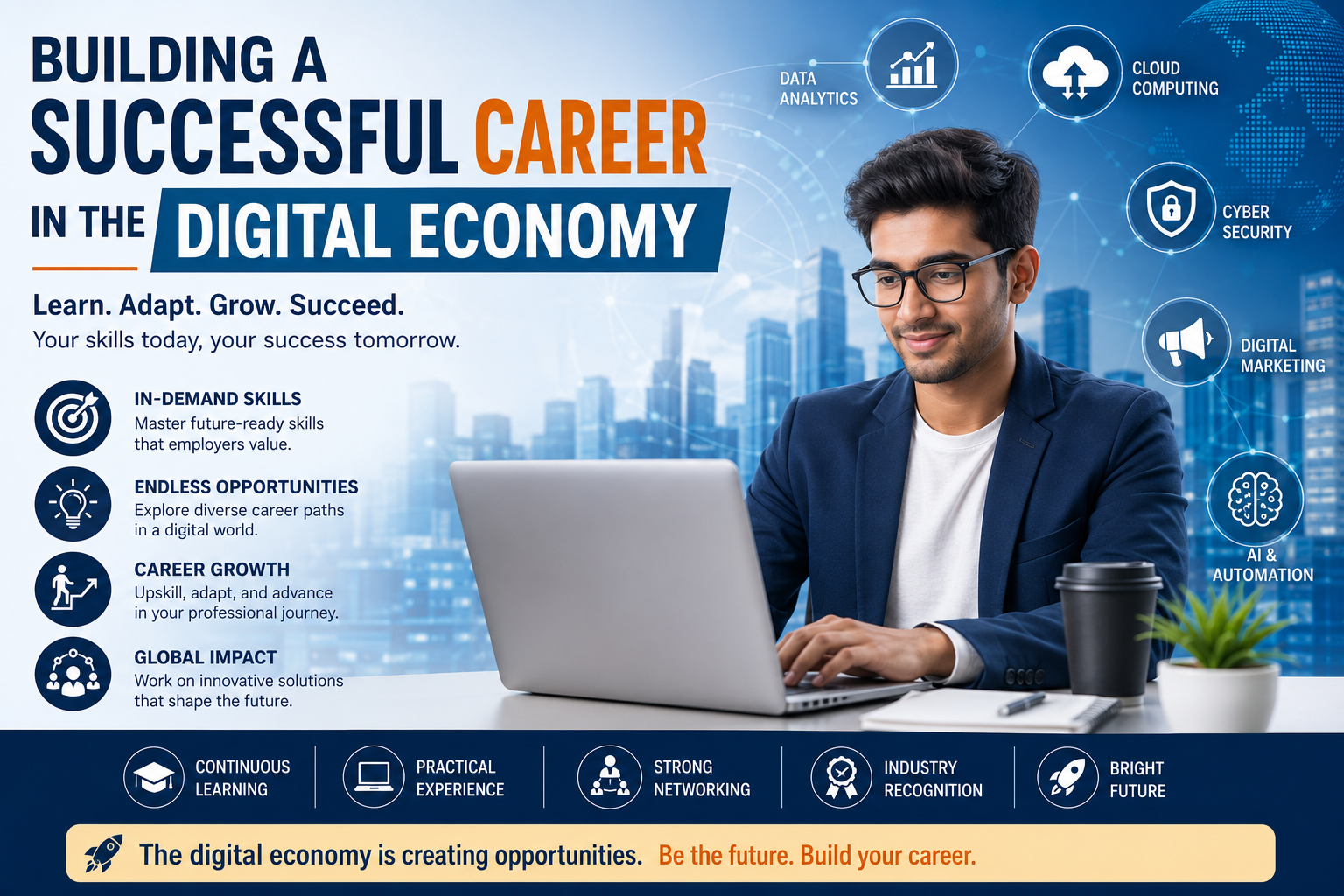
The global economy is undergoing a significant transformation driven by rapid advancements in technology. Businesses, governments, educational institutions, and individuals are increasingly relying on digital tools, data, and online platforms to improve efficiency, enhance customer experiences, and create new opportunities. This shift has given rise to what is commonly known as the digital economy.
The digital economy is no longer limited to technology companies. Today, almost every industry—including healthcare, education, banking, retail, manufacturing, logistics, agriculture, media, and government services—depends on digital technologies to operate effectively. As organizations continue to embrace digital transformation, the demand for professionals with digital skills is growing faster than ever before.
For students, graduates, and working professionals, this presents an exciting opportunity. Traditional career paths are evolving, and new roles are emerging in areas such as artificial intelligence, cybersecurity, cloud computing, digital marketing, software development, data analytics, UI/UX design, e-commerce, and business intelligence. At the same time, employers are looking for individuals who combine technical expertise with problem-solving, communication, creativity, and adaptability.
However, building a successful career in the digital economy requires more than learning a few technical tools. It involves developing the right mindset, continuously upgrading your skills, staying informed about industry trends, and embracing lifelong learning. Professionals who adapt to technological changes and invest in their personal and professional growth are more likely to achieve long-term success.
In this comprehensive guide, we will explore how the digital economy is reshaping careers, the skills required to succeed, and practical strategies that can help you build a future-ready career in an increasingly digital world.
What Is the Digital Economy?
The digital economy refers to economic activities that are powered by digital technologies such as the internet, cloud computing, artificial intelligence (AI), mobile applications, digital payments, data analytics, automation, and connected devices.
Unlike the traditional economy, where most transactions and processes relied on physical systems, the digital economy enables businesses and individuals to interact, communicate, learn, work, and trade through digital platforms.
Examples of digital economy activities include:
Online shopping through e-commerce platforms
Digital banking and online payments
Remote work and virtual collaboration
Cloud-based business operations
Online education and e-learning
Digital marketing and social media advertising
Software and mobile application development
Artificial intelligence-powered services
Data-driven business decision-making
The digital economy has transformed how businesses operate and how professionals build their careers.
Why the Digital Economy Is Transforming Careers
Technology is changing the workplace faster than ever before. Many repetitive tasks are now automated, while new job roles requiring digital expertise continue to emerge.
Several factors are driving this transformation:
Rapid Technological Innovation
Technologies such as AI, machine learning, automation, blockchain, cloud computing, and the Internet of Things (IoT) are reshaping industries and creating demand for new skills.
Professionals who stay updated with these advancements are better positioned for career growth.
Increased Demand for Digital Services
Consumers increasingly prefer digital experiences, including:
Online shopping
Digital payments
Telemedicine
E-learning
Food delivery applications
Online entertainment
Virtual banking
To meet these expectations, organizations need skilled professionals who can develop, manage, and improve digital services.
Remote and Hybrid Work Models
The rise of remote and hybrid work has expanded employment opportunities beyond geographical boundaries.
Today, professionals can collaborate with teams across different cities and countries using digital communication and project management tools.
This has increased the importance of digital literacy and virtual collaboration skills.
Data-Driven Decision Making
Businesses now collect and analyze large volumes of data to improve products, services, and customer experiences.
As a result, careers in data analytics, business intelligence, and data science are becoming increasingly valuable.
Benefits of Building a Career in the Digital Economy
Choosing a career in the digital economy offers several long-term advantages.
High Demand Across Industries
Digital skills are valuable in almost every sector.
Whether you are interested in healthcare, finance, education, retail, manufacturing, or government services, organizations increasingly seek professionals who understand digital technologies.
This broad demand provides greater career flexibility.
Better Career Growth Opportunities
Digital industries often evolve quickly, creating opportunities for faster learning, promotions, and specialization.
Professionals who continuously upgrade their skills can explore leadership positions and emerging roles.
Competitive Salaries
Many digital roles offer attractive compensation because of the growing demand for skilled professionals.
Specialized expertise in areas such as cybersecurity, cloud computing, software engineering, and AI can significantly improve earning potential.
Global Career Opportunities
Digital skills are recognized internationally.
Professionals with relevant expertise may find opportunities to work with multinational organizations, remote teams, or global clients.
This expands career possibilities beyond local markets.
Continuous Learning and Innovation
Working in digital industries encourages ongoing learning.
Professionals regularly explore new technologies, tools, and methodologies, making their careers dynamic and intellectually rewarding.
Industries Driving Digital Growth
The digital economy spans a wide range of industries. Understanding where opportunities exist can help you make informed career decisions.
Information Technology (IT)
The IT sector remains one of the largest employers of digital talent.
Common career roles include:
Software Developer
Full Stack Developer
Cloud Engineer
Cybersecurity Analyst
DevOps Engineer
Quality Assurance Engineer
System Administrator
Digital Marketing
Businesses rely heavily on online marketing to reach customers.
Career opportunities include:
SEO Specialist
Social Media Manager
Content Strategist
Performance Marketer
Email Marketing Specialist
Digital Advertising Expert
E-commerce
Online retail continues to grow rapidly.
Professionals are needed in:
E-commerce Management
Marketplace Operations
Customer Experience
Product Management
Logistics Coordination
Digital Merchandising
Banking and Financial Technology (FinTech)
Digital banking and online financial services have transformed the financial sector.
Career options include:
Financial Analyst
Digital Banking Specialist
Risk Analyst
FinTech Product Manager
Compliance Officer
Payment Systems Specialist
Healthcare Technology
Healthcare organizations increasingly use digital solutions for patient care and administration.
Emerging roles include:
Health Informatics Specialist
Medical Data Analyst
Telemedicine Coordinator
Healthcare IT Consultant
Education Technology (EdTech)
Digital learning platforms have created demand for professionals in:
Instructional Design
Learning Management Systems
Educational Content Development
Online Course Management
Academic Technology Support
Logistics and Supply Chain
Technology has improved inventory management, transportation, and warehouse operations.
Professionals skilled in digital logistics tools and analytics are increasingly valuable.
Essential Mindset for Success in the Digital Age
While technical knowledge is important, mindset often determines long-term career success.
Adaptability
Technology changes rapidly.
Professionals must remain open to learning new tools, processes, and methodologies throughout their careers.
Curiosity
Successful professionals actively seek knowledge rather than waiting for change to happen.
Reading industry news, attending webinars, completing certifications, and experimenting with new technologies support continuous growth.
Problem-Solving
Employers value individuals who can analyze challenges, think critically, and develop practical solutions.
Problem-solving remains one of the most important workplace skills.
Collaboration
Digital workplaces often involve cross-functional teams working across locations and time zones.
Strong teamwork and communication skills improve productivity and project outcomes.
Growth Mindset
A growth mindset means viewing challenges as opportunities to learn rather than obstacles.
Professionals who embrace continuous improvement are better equipped to navigate changing career landscapes.
Why Continuous Learning Is Non-Negotiable
The digital economy evolves constantly. Skills that are highly relevant today may change as new technologies emerge.
To remain competitive, professionals should:
Complete industry-recognized certifications.
Participate in workshops and webinars.
Learn from online courses.
Build practical projects.
Read industry publications.
Follow thought leaders.
Practice new tools regularly.
Lifelong learning is one of the strongest predictors of sustained career success in the digital economy.
Top In-Demand Digital Skills Employers Are Looking For
As businesses continue their digital transformation journeys, employers are seeking professionals who possess a combination of technical expertise and strong interpersonal abilities. While specific requirements vary by industry, certain digital skills have become valuable across almost every sector.
Developing these skills not only improves your employability but also prepares you for long-term career growth in an increasingly technology-driven world.
Artificial Intelligence (AI) and Machine Learning
Artificial Intelligence is transforming industries such as healthcare, finance, retail, education, manufacturing, and customer service. AI-powered tools help businesses automate repetitive tasks, analyze large datasets, and make faster, data-driven decisions.
Professionals who understand AI concepts, machine learning, and generative AI tools are becoming highly sought after.
Career opportunities include:
AI Engineer
Machine Learning Engineer
AI Research Associate
Data Scientist
AI Product Specialist
Even professionals in non-technical roles can benefit from understanding how AI tools improve productivity and decision-making.
Data Analytics
Data has become one of the most valuable business assets. Organizations rely on data to understand customer behavior, improve products, optimize operations, and forecast market trends.
Skills that are increasingly in demand include:
Data visualization
Spreadsheet analysis
SQL
Business Intelligence tools
Dashboard creation
Data interpretation
Professionals who can convert raw data into actionable insights are valuable across industries.
Cybersecurity
As organizations store more information digitally, protecting systems and sensitive data has become a top priority.
Cybersecurity professionals help organizations:
Prevent cyberattacks
Protect customer information
Monitor network security
Respond to security incidents
Ensure regulatory compliance
Demand for cybersecurity specialists continues to grow globally.
Cloud Computing
Cloud technology enables organizations to store data, host applications, and manage business operations efficiently.
Popular cloud platforms include:
Amazon Web Services (AWS)
Microsoft Azure
Google Cloud Platform (GCP)
Cloud-related career opportunities include:
Cloud Engineer
Cloud Administrator
Solutions Architect
DevOps Engineer
Cloud Security Specialist
Cloud expertise is increasingly valuable for both technical and business professionals.
Software and Web Development
Every modern organization relies on websites, applications, and digital platforms.
Skills in demand include:
HTML
CSS
JavaScript
React
Node.js
Python
Java
Mobile application development
API integration
Practical project experience often carries as much weight as formal qualifications.
Digital Marketing
As businesses expand their online presence, digital marketing professionals help them attract, engage, and retain customers.
Key areas include:
Search Engine Optimization (SEO)
Search Engine Marketing (SEM)
Social Media Marketing
Content Marketing
Email Marketing
Performance Marketing
Marketing Analytics
Digital marketing combines creativity with analytical thinking, making it an attractive career option for many graduates.
UI/UX Design
User experience has become a major competitive advantage for businesses.
UI/UX professionals focus on designing products that are visually appealing, intuitive, and user-friendly.
Responsibilities include:
User research
Wireframing
Prototyping
Interface design
Usability testing
As digital products continue to grow, demand for skilled designers remains strong.
Technical Skills vs. Soft Skills
Technical expertise is important, but it is not enough on its own. Employers increasingly look for professionals who can collaborate effectively, solve problems, and communicate clearly.
Technical Skills
These are job-specific abilities that can be learned through education, training, and practical experience.
Examples include:
Programming
Data analysis
Cybersecurity
Cloud computing
Graphic design
Video editing
SEO
Digital advertising
Technical skills demonstrate your ability to perform specific tasks.
Soft Skills
Soft skills help professionals work effectively with others and adapt to changing environments.
Highly valued soft skills include:
Communication
Leadership
Teamwork
Critical thinking
Time management
Adaptability
Emotional intelligence
Creativity
Decision-making
Strong soft skills often distinguish exceptional candidates from equally qualified applicants.
How Students Can Prepare for Digital Careers
Students have a valuable opportunity to begin building digital skills before entering the workforce.
Some practical strategies include:
Learn Beyond the Classroom
Academic education provides a foundation, but employers also value practical knowledge.
Explore:
Online learning platforms
Workshops
Industry certifications
Practical assignments
Skill competitions
Continuous learning demonstrates initiative.
Build Real Projects
Practical projects showcase your abilities far better than theoretical knowledge alone.
Depending on your interests, create:
Websites
Mobile applications
Marketing campaigns
Research projects
Business case studies
Data dashboards
A strong portfolio increases your credibility during interviews.
Gain Internship Experience
Internships provide valuable exposure to professional environments.
Benefits include:
Understanding workplace expectations
Building professional networks
Developing practical skills
Improving communication
Enhancing resumes
Even short internships can significantly improve employability.
Develop a Professional Online Presence
Recruiters frequently review candidates' online profiles.
Students should maintain:
An updated LinkedIn profile
A portfolio website (if applicable)
GitHub repositories for technical projects
Professional achievements and certifications
Your digital presence should reflect your career goals.
How Working Professionals Can Upskill
The digital economy affects professionals at every stage of their careers.
Upskilling helps experienced employees remain competitive and prepare for future opportunities.
Practical approaches include:
Completing industry-recognized certifications
Learning new software tools
Participating in webinars
Attending professional conferences
Reading industry publications
Practicing new technologies through personal projects
Seeking mentorship from experienced professionals
Small, consistent learning efforts often produce significant long-term benefits.
Common Mistakes to Avoid While Building a Digital Career
Many professionals delay career growth by making avoidable mistakes.
Waiting Too Long to Learn New Skills
Technology evolves rapidly.
Delaying skill development can reduce competitiveness in the job market.
Ignoring Soft Skills
Technical knowledge alone rarely guarantees career success.
Communication, collaboration, leadership, and problem-solving remain equally important.
Learning Without Practical Application
Watching tutorials is helpful, but practical implementation is essential.
Apply your knowledge through:
Projects
Freelancing
Internships
Volunteer work
Open-source contributions
Experience reinforces learning.
Focusing Only on One Technology
Technology changes quickly.
Professionals should develop a broad understanding of related tools and concepts while building expertise in one or two specialization areas.
Neglecting Networking
Professional relationships often lead to:
Job referrals
Mentorship
Learning opportunities
Industry insights
Networking is an investment in long-term career growth.
Practical Tips for Long-Term Career Growth
Building a successful career requires consistent effort rather than quick results.
Some practical strategies include:
Set Clear Career Goals
Define where you want to be in:
One year
Three years
Five years
Clear objectives guide your learning priorities.
Build a Personal Brand
Share your expertise through:
LinkedIn posts
Professional blogs
Portfolio websites
Industry discussions
Public speaking opportunities
A strong personal brand increases visibility and credibility.
Stay Updated
Follow:
Industry newsletters
Technology blogs
Professional communities
Podcasts
Webinars
Staying informed helps you anticipate changes rather than react to them.
Seek Feedback
Constructive feedback from mentors, managers, and colleagues helps identify areas for improvement and accelerate professional growth.
Maintain Work-Life Balance
Career success should be sustainable.
Managing stress, maintaining good health, and balancing professional and personal responsibilities contribute to long-term productivity and job satisfaction.
Why Adaptability Is the Most Valuable Career Skill
The future workplace will continue to evolve due to technological advancements, changing customer expectations, and global economic shifts.
Professionals who adapt quickly to change are better equipped to:
Learn emerging technologies.
Transition into new roles.
Solve unfamiliar challenges.
Lead digital transformation initiatives.
Remain valuable throughout their careers.
Adaptability is not simply a skill—it is a mindset that supports continuous growth and resilience in a rapidly changing digital economy.
Future Trends Shaping the Digital Workforce
The digital economy is constantly evolving, creating new opportunities while transforming existing roles. Professionals who understand upcoming trends and prepare accordingly will be better positioned for long-term success. Rather than simply reacting to change, future-ready individuals anticipate industry shifts and continuously adapt their skills.
Below are some of the key trends that will shape the workforce in the coming years.
Artificial Intelligence Will Become a Workplace Assistant
Artificial Intelligence (AI) is no longer limited to large technology companies. Today, businesses across healthcare, education, finance, retail, manufacturing, logistics, and customer service use AI to automate repetitive tasks, analyze data, and improve decision-making.
Instead of replacing every job, AI is changing how work is performed. Professionals who understand how to collaborate with AI tools and use them responsibly will have a competitive advantage.
Learning AI fundamentals and becoming comfortable with AI-powered productivity tools can help improve efficiency and create new career opportunities.
Automation Will Increase the Demand for Higher-Value Skills
As routine tasks become automated, employers will place greater emphasis on skills that technology cannot easily replace.
These include:
Critical thinking
Creativity
Leadership
Emotional intelligence
Complex problem-solving
Strategic decision-making
Innovation
Relationship building
Professionals who combine technical expertise with strong human skills will remain highly valuable.
Lifelong Learning Will Become the New Standard
The traditional model of learning once and using the same knowledge throughout a career is no longer practical.
Industries evolve rapidly, making continuous learning essential.
Professionals should regularly invest in:
Professional certifications
Industry workshops
Online courses
Practical projects
Technical communities
Conferences and webinars
Learning consistently is one of the strongest predictors of long-term career success.
Remote and Global Work Opportunities
The rise of digital collaboration tools has enabled organizations to hire talent regardless of location.
Many professionals now work remotely with clients and teams across different cities and countries.
To succeed in this environment, individuals should strengthen:
Digital communication
Cross-cultural collaboration
Virtual presentation skills
Time management
Self-discipline
Project management
Global opportunities continue to expand for professionals with strong digital capabilities.
Data Literacy Will Become a Core Workplace Skill
Organizations increasingly rely on data to guide decisions. While not everyone needs to become a data scientist, understanding how to interpret data and use analytics tools will be valuable across many roles.
Basic data literacy helps professionals:
Understand business performance
Measure outcomes
Support informed decision-making
Identify trends and opportunities
This skill is becoming important in marketing, HR, finance, operations, healthcare, and many other fields.
How Skill Excellent Helps You Build a Future-Ready Career
Developing a successful career requires more than theoretical knowledge. Practical learning, industry exposure, and career guidance play a vital role in preparing individuals for modern workplaces.
Skill Excellent, a training initiative under SAC Management India Pvt. Ltd., focuses on helping learners build relevant skills through industry-oriented programs.
Depending on your career goals, Skill Excellent supports learners with:
Career counselling
IT and non-IT training programs
Full Stack Web Development
Digital Marketing
Cloud & DevOps
Cybersecurity
HR Training
Foreign language courses
Soft skills development
Practical projects
Industry-relevant certifications
Interview preparation
Placement assistance
By combining practical learning with career guidance, learners are better prepared to meet the expectations of today's employers.
Building Your Personal Career Roadmap
Every successful professional benefits from having a clear plan. A career roadmap helps you stay focused and measure your progress over time.
Consider the following steps:
Define Your Career Vision
Think about where you want to be in the next three, five, or ten years. Your goals may include working in a specific industry, becoming a team leader, starting a business, or developing expertise in a specialized field.
Create a Learning Plan
Identify the skills and certifications that will help you move closer to your goals. Allocate time each month for learning, whether through online courses, books, workshops, or hands-on projects.
Gain Practical Experience
Employers value evidence of your abilities. Build a portfolio of work through internships, freelance assignments, volunteer projects, or personal initiatives that demonstrate your skills.
Build a Professional Network
Networking can open doors to mentorship, collaboration, referrals, and career opportunities. Engage with professionals through LinkedIn, industry events, webinars, and professional associations.
Review and Update Your Goals
Career plans should evolve as industries change and you gain new experiences. Regularly review your objectives and adjust them based on your interests, achievements, and emerging opportunities.
Frequently Asked Questions (FAQs)
1. What is the digital economy?
The digital economy refers to economic activities driven by digital technologies such as the internet, cloud computing, artificial intelligence, data analytics, digital payments, and online platforms.
2. Which careers are in high demand in the digital economy?
Some of the fastest-growing careers include:
Software Developer
Data Analyst
Cybersecurity Specialist
Cloud Engineer
Digital Marketing Specialist
AI Engineer
UI/UX Designer
DevOps Engineer
Business Analyst
Full Stack Developer
3. Do I need a technical degree to build a digital career?
Not always. While some technical roles require specialized education, many careers in areas such as digital marketing, project management, UI/UX design, content creation, and business analysis can be pursued through practical training, certifications, and relevant experience.
4. How important are soft skills in digital careers?
Soft skills are extremely important. Employers value communication, teamwork, adaptability, leadership, and problem-solving alongside technical expertise.
5. How can students prepare for the digital economy?
Students can prepare by developing practical skills, completing certifications, participating in internships, building projects, maintaining a professional LinkedIn profile, and staying informed about industry trends.
6. Why is continuous learning important?
Technology changes rapidly. Continuous learning helps professionals remain relevant, adapt to new tools and processes, qualify for advanced roles, and improve long-term career prospects.
Conclusion
The digital economy has transformed the way people learn, work, communicate, and build their careers. As organizations across every industry embrace digital technologies, the demand for professionals with future-ready skills continues to grow. This presents an incredible opportunity for students, graduates, and working professionals who are willing to adapt, learn, and embrace change.
Building a successful career in the digital economy is not solely about mastering technology. It requires a balanced combination of technical expertise, strong communication, critical thinking, adaptability, creativity, and a commitment to lifelong learning. Professionals who continuously upgrade their knowledge and apply it through practical experience are better positioned to thrive in an evolving workplace.
Whether your interest lies in software development, digital marketing, cybersecurity, cloud computing, data analytics, HR technology, or another digital field, success depends on having a clear career strategy and consistently investing in your professional growth. Creating a learning roadmap, gaining real-world experience, networking with industry professionals, and staying informed about emerging trends will help you remain competitive and confident.
Skill Excellent, under SAC Management India Pvt. Ltd., supports aspiring professionals by offering career counselling, industry-oriented training, practical learning, certification programs, and placement assistance. These resources help bridge the gap between education and employment, enabling learners to build careers aligned with industry needs.
The future belongs to professionals who are curious, adaptable, and proactive. Start developing your digital skills today, embrace continuous learning, and take meaningful steps toward building a successful career in the digital economy.