Introduction
Graduating from college and entering the job market is an exciting milestone, but it can also feel overwhelming. In 2026, the recruitment landscape is more competitive than ever, with employers using artificial intelligence (AI), Applicant Tracking Systems (ATS), skill-based hiring, and virtual interviews to identify the right candidates. Simply uploading a resume to multiple job portals is no longer enough. Freshers need a smart, well-planned job search strategy that combines technology, skill development, networking, and personal branding.
Whether you're looking for your first full-time job, an internship, or a graduate trainee role, following the right approach can significantly improve your chances of getting shortlisted and hired. Here are the most effective job search strategies every fresher should follow in 2026.
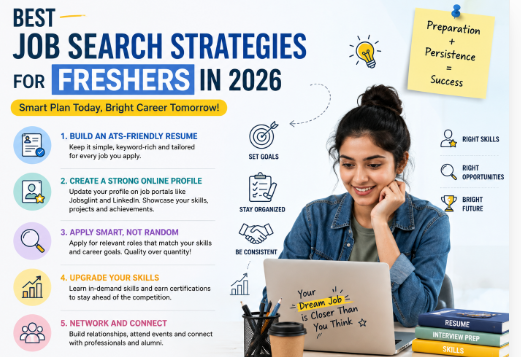
Build an ATS-Friendly Resume
Your resume is your first impression, and in many cases, it is reviewed by an Applicant Tracking System before it reaches a recruiter. An ATS scans resumes for keywords, skills, qualifications, and formatting.
Keep your resume simple, professional, and easy to read. Include relevant technical and soft skills, internships, academic projects, certifications, and achievements. Tailor your resume for every job application by incorporating keywords from the job description. Avoid unnecessary graphics, tables, or overly creative designs that can confuse ATS software.
A well-optimized resume increases your chances of passing the initial screening process and reaching the interview stage.
Create a Strong Online Professional Profile
Recruiters frequently review candidates' online presence before making hiring decisions. Create a complete profile on trusted job portals like Jobsglint, where you can showcase your education, skills, certifications, projects, and career interests.
Additionally, maintain an updated LinkedIn profile with a professional photo, compelling headline, detailed summary, and project portfolio. Request recommendations from professors, internship mentors, or project guides whenever possible.
An active online profile helps recruiters discover you even when you are not actively applying for jobs.
Apply Smart, Not Random
One of the biggest mistakes freshers make is applying to hundreds of jobs without checking eligibility or job requirements. Instead of mass applying, focus on positions that closely match your qualifications, skills, and career goals.
Read every job description carefully and customize your resume accordingly. Write a concise and relevant cover letter whenever required. Quality applications receive better responses than sending the same resume to hundreds of unrelated positions.
A focused application strategy saves time and improves interview conversion rates.
Upgrade Your Skills Continuously
Employers in 2026 prioritize practical skills over academic marks alone. Along with your degree, invest time in learning industry-relevant tools and technologies.
Depending on your career path, consider learning:
1.Data Analytics
2.Artificial Intelligence
3.Python
4.Java
5.Web Development
6.Cloud Computing
7.Digital Marketing
8.UI/UX Design
9.Cybersecurity
10.Business Communication
11.Excel and Power BI
Online certifications, live projects, hackathons, and internships demonstrate your willingness to learn and make your profile more competitive.
Build a Strong Project Portfolio
Companies want proof that you can apply your knowledge in real-world situations. If you lack work experience, showcase academic projects, freelance assignments, open-source contributions, or personal projects.
Develop a portfolio website or maintain repositories on GitHub if you're a technical candidate. Designers can showcase work through Behance or Dribbble, while marketing professionals can highlight campaigns, content samples, or analytics reports.
A strong portfolio often becomes the deciding factor between equally qualified candidates.
Use Networking to Discover Opportunities
Many jobs are filled through referrals and professional networks before they are publicly advertised. Start building your network while you are still in college.
Connect with alumni, professors, recruiters, industry professionals, and hiring managers through LinkedIn and professional events. Attend career fairs, webinars, workshops, and networking sessions.
Don't hesitate to ask for career advice, informational interviews, or referrals when appropriate. Genuine networking creates long-term career opportunities beyond immediate job openings.
Prepare Thoroughly for Interviews
Getting shortlisted is only the beginning. Employers now evaluate candidates through online assessments, technical rounds, HR interviews, group discussions, and behavioral interviews.
Practice common interview questions regularly. Research the company, understand its products or services, and prepare examples that demonstrate your skills, teamwork, leadership, and problem-solving abilities.
Mock interviews with mentors or friends can significantly improve your confidence and communication skills.
Strengthen Your Soft Skills
Technical knowledge alone is no longer sufficient. Employers actively seek candidates with excellent communication, adaptability, teamwork, critical thinking, and problem-solving abilities.
Practice speaking clearly, improve your presentation skills, learn professional email etiquette, and develop active listening habits. These qualities help you perform better during interviews and throughout your career.
Stay Consistent and Organized
Job searching requires discipline and consistency. Maintain a record of every application, interview invitation, follow-up email, and recruiter conversation.
Set daily goals such as applying for five relevant jobs, learning one new skill, updating your profile, or expanding your professional network. Regular progress is more effective than occasional bursts of activity.
Remember that rejection is part of the process. Learn from every interview, improve your profile, and continue applying with confidence.
Leverage AI Tools Responsibly
Artificial intelligence has become an important career companion. Freshers can use AI tools to improve resumes, prepare interview questions, identify skill gaps, and practice communication.
However, avoid relying entirely on AI-generated content. Recruiters appreciate authenticity, originality, and genuine knowledge. Use AI to enhance your preparation rather than replace your own thinking and learning.
Why Jobsglint Can Accelerate Your Job Search
Finding the right opportunity becomes easier when you use a trusted career platform. Jobsglint helps freshers connect with verified employers, discover opportunities that match their skills, and apply through a streamlined recruitment process.
By maintaining a complete profile, regularly updating your resume, and applying strategically through Jobsglint, candidates improve their visibility among recruiters while accessing career resources that support long-term professional growth.
Conclusion
The job market in 2026 rewards preparation, adaptability, and continuous learning. Freshers who combine an ATS-friendly resume, relevant skills, practical projects, professional networking, interview preparation, and strategic job applications are far more likely to secure rewarding career opportunities.
Success doesn't come from applying to the highest number of jobs—it comes from applying to the right jobs with the right preparation. Stay patient, keep improving your skills, and use reliable platforms like Jobsglint to connect with quality employers. Your first job is not just the beginning of your career—it is the foundation for your future professional success.