Introduction
Choosing the right career is one of the most important decisions a person makes in life. A well-chosen career not only provides financial stability but also brings job satisfaction, personal growth, and long-term success. However, with thousands of career options available today, making the right choice has become more challenging than ever before.
The world of work is changing rapidly. New technologies such as Artificial Intelligence (AI), automation, cloud computing, data analytics, and digital marketing are creating entirely new career opportunities while transforming traditional job roles. Industries are evolving, and employers now seek candidates with practical skills, adaptability, and continuous learning rather than relying solely on academic qualifications.
At the same time, students often feel pressured by expectations from family, society, or peers. Many choose careers based on popularity, salary, or trends instead of understanding their own interests, strengths, and long-term aspirations. As a result, they may experience dissatisfaction, low motivation, or frequent career changes later in life.
This is where career counselling plays a vital role.
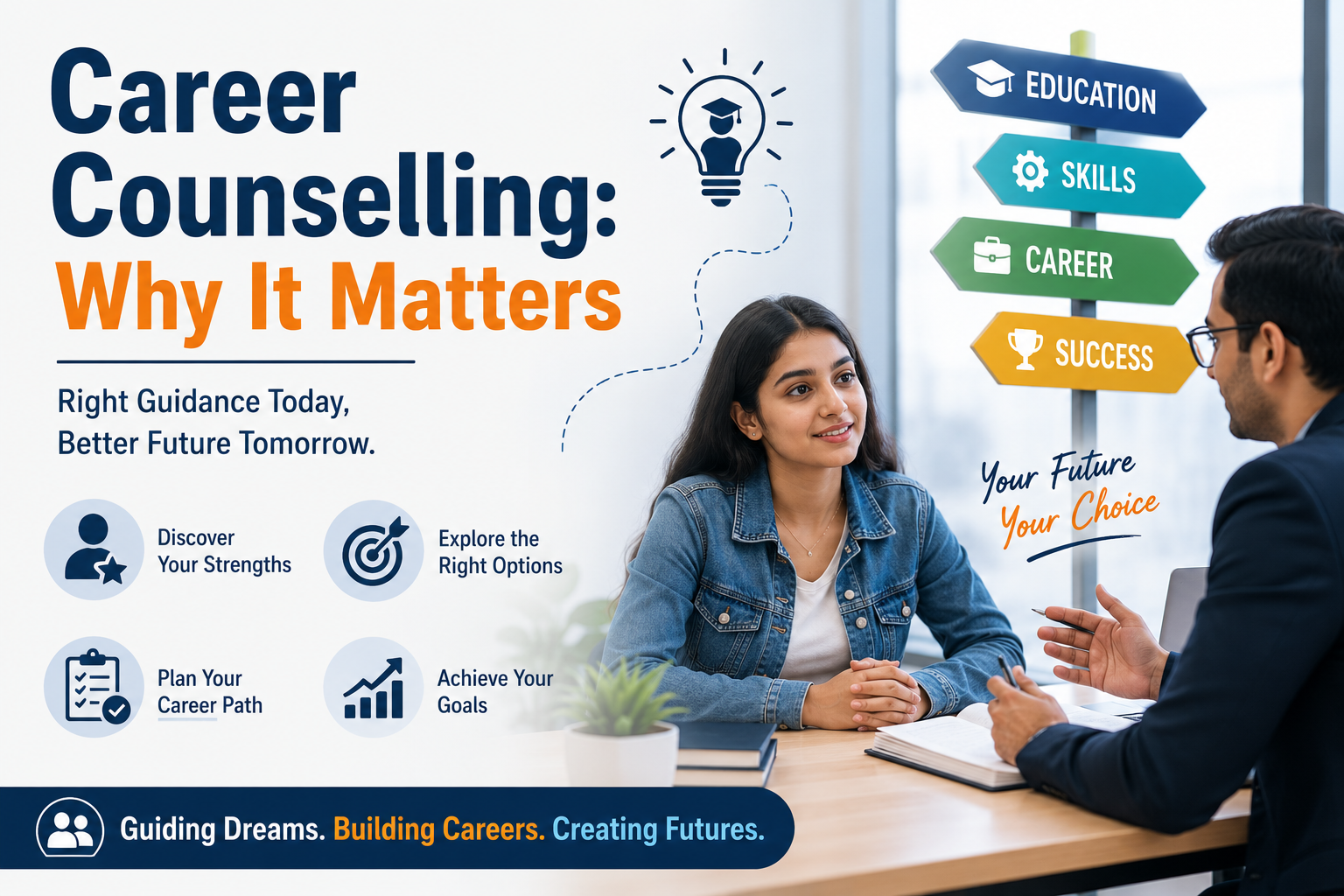
Career counselling is a structured process that helps individuals understand themselves, explore career options, set realistic goals, and make informed decisions about their education and professional journey. It provides guidance based on a person's interests, skills, personality, values, and career aspirations rather than assumptions or external pressure.
Career counselling is valuable not only for school and college students but also for fresh graduates, working professionals, and even entrepreneurs who are considering a career transition or seeking new opportunities.
In this comprehensive guide, we will explore why career counselling matters, who can benefit from it, and how it helps individuals build successful and fulfilling careers.
What Is Career Counselling?
Career counselling is a professional guidance process that helps individuals identify suitable career paths based on their abilities, interests, personality traits, educational background, and long-term goals.
Rather than telling someone which career to choose, a career counsellor helps individuals evaluate different options, understand market trends, and make well-informed decisions.
Career counselling generally includes:
Self-assessment
Career exploration
Goal setting
Skill gap analysis
Educational planning
Career planning
Resume guidance
Interview preparation
Continuous career development
The objective is to empower individuals to make career decisions confidently and strategically.
Why Career Counselling Is More Important Than Ever
The employment landscape has changed significantly over the past decade.
Earlier, career options were limited to a few traditional professions such as engineering, medicine, teaching, or government services. Today, advancements in technology and globalization have created opportunities across diverse industries.
Emerging career fields include:
Artificial Intelligence
Data Science
Cybersecurity
Cloud Computing
Digital Marketing
UI/UX Design
Full Stack Development
Content Creation
Business Analytics
Logistics and Supply Chain
Renewable Energy
Human Resource Analytics
While these opportunities are exciting, they also make career selection more complex.
Without proper guidance, many individuals struggle to understand:
Which career matches their interests?
Which skills are currently in demand?
What qualifications are required?
Which industries offer long-term growth?
How should they prepare for future opportunities?
Career counselling helps answer these questions through structured guidance and personalized planning.
Common Career Challenges Faced by Students and Professionals
Many individuals face uncertainty while making career decisions.
Some of the most common challenges include:
Lack of Career Awareness
Students often know very little about emerging industries or modern career opportunities.
They may only be familiar with a few conventional professions, limiting their career choices.
Confusion Between Interest and Popularity
A career that is popular among friends or family members may not necessarily align with an individual's interests or strengths.
Career counselling helps distinguish between personal aspirations and external influences.
Choosing Courses Without a Career Plan
Many students enroll in degree programs simply because others are doing so or because they believe those courses guarantee employment.
Without a clear career objective, they may later struggle to identify suitable job opportunities.
Skill Gaps
Employers increasingly value practical skills alongside academic qualifications.
Many graduates face difficulties because they lack:
Technical skills
Communication skills
Problem-solving abilities
Industry exposure
Practical experience
Career counsellors often help individuals identify these gaps and recommend ways to bridge them through training and certifications.
Fear of Failure
Career decisions often involve uncertainty.
Fear of making the wrong choice prevents many individuals from exploring new opportunities or changing career paths.
Professional guidance helps reduce this uncertainty by providing structured information and realistic expectations.
Rapidly Changing Job Markets
Technology continues to reshape industries.
Roles that were in demand a few years ago may evolve significantly, while entirely new professions continue to emerge.
Career counselling helps individuals stay informed about these changes and prepare accordingly.
Benefits of Career Counselling
Career counselling provides long-term value by helping individuals make informed and confident decisions.
Better Self-Awareness
One of the first steps in career counselling is understanding yourself.
Through self-assessment, individuals gain clarity about:
Interests
Strengths
Weaknesses
Personality traits
Values
Career preferences
Greater self-awareness leads to better career choices.
Improved Decision-Making
Instead of relying on assumptions or advice from multiple sources, career counselling encourages informed decision-making based on research, self-evaluation, and market trends.
Clear Career Goals
Career counselling helps individuals establish both short-term and long-term career objectives.
Clear goals improve motivation and provide direction throughout the learning and employment journey.
Better Educational Planning
Students receive guidance on selecting:
Courses
Certifications
Skill development programs
Higher education options
Specializations
Educational choices become more aligned with future career aspirations.
Increased Employability
Career counsellors often recommend practical learning opportunities, internships, certifications, and skill development initiatives that improve job readiness.
Greater Confidence
When individuals understand why they have chosen a particular career path, they become more confident in pursuing their goals.
Confidence also improves interview performance and professional communication.
Long-Term Career Satisfaction
A career aligned with personal interests and strengths is more likely to provide job satisfaction, motivation, and long-term growth.
Who Should Consider Career Counselling?
Career counselling is beneficial at various stages of life.
School Students
Students preparing to choose academic streams or future careers can benefit from understanding their interests and abilities before making important educational decisions.
College Students
College students can receive guidance regarding:
Career planning
Internships
Skill development
Industry certifications
Higher education
Placement preparation
Fresh Graduates
Freshers often need assistance with:
Resume building
Interview preparation
Career direction
Job search strategies
Professional skill development
Career counselling helps bridge the transition from education to employment.
Working Professionals
Professionals seeking promotions, career changes, or skill enhancement can benefit from strategic career planning and upskilling recommendations.
Career Changers
Individuals considering a shift into new industries or professions can use career counselling to evaluate transferable skills, understand industry requirements, and plan a smooth transition.
Common Myths About Career Counselling
Despite its growing importance, several misconceptions still exist.
Myth 1: Career Counselling Is Only for Students
Reality: Career counselling benefits professionals at every stage of their careers, including those planning career transitions or leadership roles.
Myth 2: Career Counsellors Choose Careers for You
Reality: A counsellor provides guidance, resources, and insights. The final career decision always remains with the individual.
Myth 3: High Salary Should Be the Main Goal
Reality: While financial stability is important, long-term success also depends on interest, skills, work-life balance, and career satisfaction.
Myth 4: Career Counselling Is Only Needed When You're Confused
Reality: Even individuals with clear career goals can benefit from expert guidance to validate decisions, identify growth opportunities, and create structured career plans.
Myth 5: One Career Choice Lasts Forever
Reality: Today's professionals often change roles or industries during their careers. Career counselling supports continuous growth and adaptation in a dynamic job market.
Why Career Planning Should Begin Early
Career planning does not mean deciding your entire future at a young age. Instead, it involves exploring possibilities, understanding your strengths, and preparing gradually.
Early career planning helps individuals:
Develop relevant skills.
Choose suitable educational pathways.
Gain practical experience.
Build confidence.
Avoid rushed decisions.
Stay aligned with industry trends.
Starting early gives students and professionals more time to prepare for meaningful opportunities.
The Career Counselling Process: Step by Step
Career counselling is not a one-time conversation—it is a structured process that helps individuals make informed career decisions based on their strengths, interests, and aspirations. A well-planned counselling process enables people to gain clarity, set realistic goals, and prepare for long-term success.
Below are the key stages of an effective career counselling journey.
Step 1: Self-Assessment
The first and most important step is understanding yourself. Before choosing a career, you should know what motivates you and where your strengths lie.
A career counsellor helps you evaluate:
Interests and passions
Personality traits
Strengths and weaknesses
Values and work preferences
Natural abilities
Long-term aspirations
Some counsellors also use career assessment tools and aptitude tests to provide additional insights.
Self-awareness forms the foundation of every successful career decision.
Step 2: Career Exploration
Once your strengths and interests are identified, the next step is exploring career options that align with your profile.
This stage involves researching:
Different industries
Job roles
Required qualifications
Salary expectations
Career growth opportunities
Future industry trends
Skills in demand
For example, a student interested in technology may explore careers in software development, cybersecurity, artificial intelligence, cloud computing, or data science rather than limiting themselves to a single role.
Step 3: Skill Gap Analysis
Many individuals have career goals but lack the necessary skills to achieve them.
A career counsellor identifies the gap between your current abilities and the requirements of your desired profession.
The analysis may include:
Technical skills
Communication skills
Leadership skills
Digital literacy
Industry certifications
Practical experience
Once these gaps are identified, a personalized learning plan can be created.
Step 4: Career Planning
After understanding your strengths and identifying the required skills, the next step is developing a practical career roadmap.
A career plan may include:
Educational goals
Certifications
Internship opportunities
Project work
Networking strategies
Resume development
Interview preparation
Timeline for achieving milestones
Having a structured roadmap reduces uncertainty and helps individuals stay focused.
Step 5: Continuous Guidance and Improvement
Career planning is an ongoing process.
As industries evolve, professionals must continuously learn new skills and adapt to changing job requirements.
Regular career guidance helps individuals:
Evaluate progress
Upgrade skills
Explore new opportunities
Prepare for promotions
Transition into leadership roles
Continuous learning is one of the biggest contributors to long-term career success.
How Career Counselling Helps Students
Students often face pressure when choosing subjects, courses, or career paths. Many make decisions based on family expectations, peer influence, or trends rather than their own interests and strengths.
Career counselling helps students make informed choices by providing clarity and direction.
Identifying Interests and Strengths
Counsellors help students discover areas where they naturally perform well and enjoy learning.
Choosing a career aligned with genuine interests often leads to better motivation and long-term satisfaction.
Selecting the Right Academic Stream
Students transitioning from school to higher education often struggle to choose between different streams or specializations.
Career counselling helps evaluate available options and align them with future career goals.
Exploring Emerging Careers
Many students are unaware of rapidly growing fields such as:
Artificial Intelligence
Cybersecurity
Data Science
Digital Marketing
UI/UX Design
Cloud Computing
Renewable Energy
Business Analytics
Counselling introduces students to these opportunities and explains the qualifications and skills required to pursue them.
Building Career Readiness
Students also receive guidance on:
Resume writing
Communication skills
Interview preparation
Internship planning
Professional etiquette
Networking
These skills improve employability before graduation.
How Career Counselling Helps Freshers
The transition from college to the professional world can be overwhelming.
Many graduates struggle because they:
Lack work experience
Are unsure which jobs to apply for
Do not know how to prepare for interviews
Have limited understanding of industry expectations
Career counselling provides practical guidance to overcome these challenges.
Freshers learn how to:
Prepare professional resumes
Build LinkedIn profiles
Identify suitable job opportunities
Develop in-demand skills
Improve interview confidence
Set realistic career goals
This support helps them begin their careers with greater confidence.
How Career Counselling Helps Working Professionals
Career counselling is equally valuable for experienced professionals.
Common reasons professionals seek career guidance include:
Career stagnation
Lack of job satisfaction
Desire for promotion
Career transition
Skill enhancement
Leadership development
Better work-life balance
Professional guidance helps individuals evaluate opportunities objectively and plan future growth.
The Role of Skill Development in Career Growth
Modern employers value practical skills alongside academic qualifications.
Continuous skill development has become essential because industries evolve rapidly.
Important skill categories include:
Technical Skills
Programming
Data Analytics
Artificial Intelligence
Cloud Computing
Cybersecurity
Digital Marketing
Graphic Design
HR Technology
Soft Skills
Communication
Leadership
Problem Solving
Time Management
Teamwork
Emotional Intelligence
Adaptability
Critical Thinking
Professionals who continuously improve both technical and interpersonal skills remain more competitive in the job market.
Choosing the Right Career Path
There is no universal "best" career.
The right career depends on the individual.
Before making a decision, ask yourself:
What activities do I genuinely enjoy?
What are my strengths?
What type of work environment suits me?
Which industries are growing?
What lifestyle do I want?
What opportunities exist in the future?
What skills am I willing to develop?
Career counselling helps answer these questions through structured guidance rather than guesswork.
Common Career Counselling Mistakes to Avoid
Even with guidance, individuals sometimes make avoidable mistakes.
Following Trends Blindly
A career that is popular today may not match your interests or strengths.
Choose based on long-term suitability rather than temporary trends.
Ignoring Personal Interests
Financial rewards are important, but choosing a career you dislike can lead to dissatisfaction over time.
A balance between passion, aptitude, and market demand is essential.
Depending Only on Academic Marks
High grades are valuable, but employers also consider practical skills, communication, adaptability, and problem-solving abilities.
Neglecting Skill Development
Graduation is only the beginning of professional learning.
Continuous upskilling keeps you relevant in a rapidly changing job market.
Avoiding Practical Experience
Internships, freelance work, volunteering, and live projects provide valuable exposure that strengthens your resume and confidence.
Making Decisions Under Pressure
Avoid choosing a career solely because of family expectations, peer influence, or societal trends.
A well-informed decision based on self-awareness is more likely to lead to long-term success.
Practical Tips for Making Better Career Decisions
To make informed career choices:
Research industries before selecting a career path.
Identify your strengths and interests honestly.
Develop both technical and soft skills.
Seek guidance from experienced mentors or career counsellors.
Participate in internships and practical projects.
Build a professional LinkedIn profile.
Stay updated on industry trends.
Continue learning through certifications and workshops.
Set short-term and long-term career goals.
Review your career plan regularly and adapt as needed.
Career planning is a journey that evolves with your experience and aspirations.
Why Lifelong Learning Matters
The modern workplace is constantly changing. New technologies, evolving business models, and shifting market demands mean that learning cannot stop after graduation.
Professionals who invest in lifelong learning are better prepared to:
Adapt to new roles
Embrace technological changes
Qualify for promotions
Increase earning potential
Remain competitive in the job market
Continuous learning is not just a career advantage—it has become a necessity.
The Future of Career Counselling in the AI and Digital Era
The world of work is changing at an unprecedented pace. Technologies such as Artificial Intelligence (AI), machine learning, automation, cloud computing, and data analytics are transforming industries and creating entirely new career opportunities. While these advancements offer exciting possibilities, they also make career planning more complex.
Today's professionals are expected to adapt quickly, continuously upgrade their skills, and stay informed about industry trends. As a result, career counselling has evolved beyond helping students choose a course—it now focuses on preparing individuals for lifelong career development.
Modern career counsellors help individuals:
Understand emerging career opportunities.
Identify future-ready skills.
Plan continuous learning pathways.
Navigate career transitions.
Build professional networks.
Develop adaptability and resilience.
Career counselling is no longer a one-time activity but an ongoing process that supports individuals throughout different stages of their professional journey.
Emerging Career Trends to Watch
Understanding future workplace trends helps individuals make informed career decisions and prepare for long-term success.
Artificial Intelligence and Automation
AI is transforming sectors such as healthcare, finance, education, manufacturing, retail, and customer service.
Rather than replacing all jobs, AI is changing the nature of work by automating repetitive tasks and increasing demand for professionals who can work alongside intelligent technologies.
Professionals with AI literacy, data analysis, and problem-solving skills will continue to be in demand.
Digital Transformation
Businesses across industries are investing in digital technologies to improve efficiency and customer experience.
As a result, careers related to:
Software Development
Cloud Computing
Cybersecurity
Digital Marketing
UI/UX Design
Business Analytics
Data Science
continue to experience strong growth.
Skills-First Hiring
Many employers now evaluate candidates based on practical abilities rather than academic qualifications alone.
Recruiters increasingly consider:
Industry certifications
Portfolios
Live projects
Technical assessments
Problem-solving abilities
Communication skills
This shift makes continuous skill development essential.
Hybrid and Remote Work
Flexible work models have expanded employment opportunities beyond geographical boundaries.
Professionals who develop strong digital communication, collaboration, and time management skills are better prepared for remote and hybrid work environments.
Entrepreneurship and Freelancing
Digital platforms have made it easier for individuals to start businesses, work independently, or offer specialized services as freelancers.
Career counselling now also supports aspiring entrepreneurs by helping them evaluate opportunities, identify skill requirements, and develop business plans.
How Skill Excellent Supports Career Growth
Career counselling is most effective when combined with practical skill development. This is where Skill Excellent, a training and professional development initiative under SAC Management India Pvt. Ltd., plays an important role.
Skill Excellent focuses on preparing learners for real workplace challenges through industry-oriented training and career support.
Its approach includes:
Career counselling
Industry-relevant training
Practical learning
Live projects
Professional certifications
Resume-building guidance
Interview preparation
Placement assistance
Soft skills development
By integrating guidance with hands-on learning, Skill Excellent helps students and professionals become more confident and job-ready.
Building a Long-Term Career Strategy
Career success is rarely achieved through a single decision. It results from continuous planning, learning, and improvement.
A long-term career strategy should include:
Setting Clear Goals
Define both short-term and long-term objectives.
Examples include:
Completing a certification within six months.
Securing an internship during college.
Transitioning into a leadership role within five years.
Clear goals provide direction and motivation.
Investing in Continuous Learning
Industries evolve rapidly.
Regularly upgrade your knowledge through:
Professional certifications
Workshops
Online courses
Industry conferences
Practical projects
Reading professional publications
Learning should become a lifelong habit.
Expanding Your Professional Network
Strong professional relationships often lead to:
Mentorship
Career guidance
Referrals
Collaboration opportunities
Leadership development
Attend networking events, participate in webinars, and maintain an active presence on professional platforms such as LinkedIn.
Reviewing Your Career Plan Regularly
Career goals may change as you gain experience or discover new interests.
Review your progress periodically and adjust your learning plan based on industry developments and personal aspirations.
Flexibility is one of the most valuable qualities in today's workplace.
Frequently Asked Questions (FAQs)
1. What is career counselling?
Career counselling is a structured guidance process that helps individuals understand their strengths, interests, personality, and career options so they can make informed education and employment decisions.
2. Who should take career counselling?
Career counselling is beneficial for:
School students
College students
Fresh graduates
Working professionals
Career changers
Individuals returning to work after a career break
3. Is career counselling only for students?
No. Professionals seeking promotions, career transitions, leadership roles, or skill enhancement can also benefit from career counselling.
4. How does career counselling improve employability?
Career counselling helps individuals identify skill gaps, choose relevant training, prepare professional resumes, improve interview performance, and develop career strategies aligned with market demand.
5. How often should I seek career guidance?
Career planning is an ongoing process. Reviewing your career goals every year—or whenever you face a major educational or professional decision—can help you stay aligned with changing opportunities.
6. Why is skill development important for career success?
Continuous learning enables professionals to remain competitive, adapt to technological changes, qualify for new opportunities, and achieve long-term career growth.
Conclusion
Choosing a career is one of the most significant decisions in a person's life, and making that choice without proper guidance can lead to uncertainty, dissatisfaction, and missed opportunities. In today's fast-changing world, where technology, industry requirements, and job roles continue to evolve, career counselling has become an essential tool for making informed and confident career decisions.
Career counselling goes beyond selecting a course or finding a job. It helps individuals understand their strengths, interests, personality, values, and aspirations while providing clarity about the skills and qualifications needed for future success. Whether you are a school student exploring career options, a college graduate preparing to enter the workforce, or a professional planning a career transition, structured guidance can help you navigate your journey with confidence.
At the same time, career counselling is most effective when combined with continuous learning and practical skill development. Employers increasingly seek candidates who possess technical expertise, communication skills, adaptability, and real-world experience. By investing in upskilling, gaining practical exposure, and staying informed about industry trends, individuals can improve their employability and build sustainable careers.
Skill Excellent supports this journey by combining career counselling with industry-oriented training, practical learning, certification programs, and placement assistance. This integrated approach enables learners to develop the knowledge, skills, and confidence needed to succeed in today's competitive job market.
Ultimately, there is no single "perfect" career for everyone. The right career is one that aligns with your interests, strengths, values, and long-term goals. With the right guidance, continuous learning, and a willingness to adapt, every individual can build a fulfilling career and contribute meaningfully to the future workforce.
Take the time to understand yourself, explore opportunities, and invest in your professional growth. The career decisions you make today can shape a successful and rewarding future for years to come.