Introduction
In today's competitive job market, speed has become a major advantage in recruitment. The best candidates often receive multiple job offers within days, making delayed hiring decisions a costly mistake. However, hiring quickly should never mean lowering recruitment standards. A rushed hiring process can result in poor candidate selection, increased employee turnover, reduced productivity, and higher replacement costs.
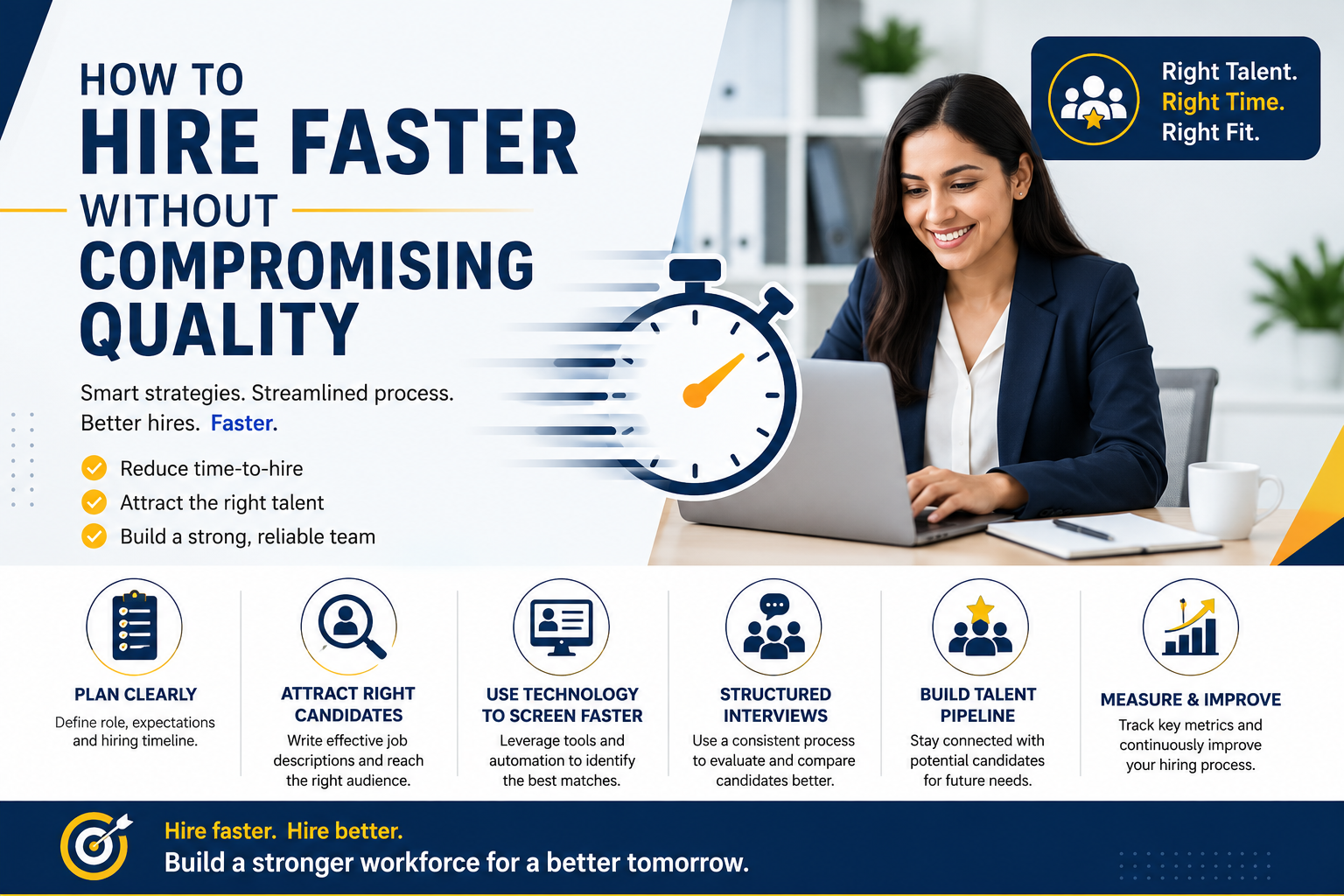
The key is to build a recruitment strategy that balances speed with quality. Organizations that streamline their hiring process, leverage technology, and follow structured recruitment practices can attract top talent without sacrificing candidate quality. At Jobsglint, we believe that fast hiring is not about cutting corners—it's about eliminating unnecessary delays while maintaining a thorough evaluation process.
Why Speed Matters in Hiring
The modern recruitment landscape has changed dramatically. Skilled professionals are in high demand, and many qualified candidates remain available in the job market for only a short period. Companies that take weeks to schedule interviews or finalize decisions often lose their preferred candidates to competitors.
A slow hiring process can also affect employer branding. Candidates who experience long response times may lose interest in the organization and develop a negative perception of its professionalism. On the other hand, a responsive and well-organized hiring process creates a positive candidate experience and increases offer acceptance rates.
Fast hiring also helps businesses maintain productivity by reducing vacancy periods. Open positions often increase workloads for existing employees, affecting morale and overall business performance.
Build a Clear Hiring Plan Before You Recruit
One of the biggest reasons hiring gets delayed is poor planning. Before posting a vacancy, recruiters and hiring managers should clearly define the role, responsibilities, required skills, experience level, salary range, and interview process.
A detailed job description helps attract the right applicants from the beginning. When expectations are clearly communicated, recruiters spend less time filtering unsuitable applications, making the recruitment process significantly faster.
Creating a hiring timeline with predefined interview dates and decision deadlines also prevents unnecessary delays between recruitment stages.
Write Job Descriptions That Attract the Right Candidates
Many organizations unintentionally discourage qualified applicants by publishing lengthy or confusing job descriptions. Instead of listing every possible responsibility, focus on the skills and qualifications that truly matter. Use simple language, highlight career growth opportunities, explain company culture, and clearly mention mandatory requirements. Well-written job postings generate higher-quality applications, reducing screening time and improving recruitment efficiency.
Platforms like Jobsglint help employers reach verified candidates whose skills closely match job requirements, making the hiring process even more effective.
Use Technology to Screen Candidates Faster
Technology has transformed recruitment by automating repetitive tasks. Applicant Tracking Systems (ATS), AI-powered resume screening, automated interview scheduling, and recruitment analytics significantly reduce manual work.
Instead of reviewing hundreds of resumes individually, recruiters can filter candidates based on skills, qualifications, experience, certifications, and keywords. This allows HR teams to focus their time on evaluating the most suitable applicants.
Automation also speeds up communication by sending interview invitations, reminders, and status updates instantly, improving the candidate experience while reducing administrative effort.
Create a Structured Interview Process
An unstructured interview process often causes delays and inconsistent hiring decisions. Every interviewer may evaluate candidates differently, leading to confusion and repeated discussions.
A structured interview framework helps solve this problem. Prepare standardized interview questions based on the job role, assess candidates using predefined evaluation criteria, and involve only the necessary decision-makers. Panel interviews or back-to-back interview rounds can further reduce the hiring timeline without compromising assessment quality. When everyone follows the same evaluation standards, hiring decisions become faster and more objective.
Build a Strong Talent Pipeline
Recruitment becomes much easier when companies maintain a database of qualified candidates instead of starting from scratch every time a vacancy arises.
Building a talent pipeline involves staying connected with previous applicants, passive candidates, interns, employee referrals, and professionals within your industry. These candidates may already be familiar with your organization and can often be hired much faster.
Recruitment platforms like Jobsglint make it easier to access a large pool of verified talent, helping employers fill vacancies quickly whenever hiring needs arise.
Improve Communication Throughout the Hiring Process
Poor communication is one of the leading reasons candidates withdraw from recruitment processes. Delayed responses create uncertainty and encourage candidates to accept offers from other organizations.
Maintain regular communication by acknowledging applications, providing interview updates, sharing timelines, and informing candidates about the next steps. Even when a candidate is not selected, timely communication leaves a positive impression and strengthens your employer brand.
Fast communication demonstrates professionalism and shows candidates that the organization values their time.
Focus on Skills, Not Just Qualifications
Many companies spend weeks searching for candidates with very specific educational backgrounds or years of experience while overlooking highly capable professionals with relevant skills.
Skills-based hiring expands the available talent pool and helps organizations identify candidates who can perform effectively from day one. Practical assessments, case studies, and skill tests often provide a more accurate measure of job readiness than resumes alone.
By focusing on competencies instead of rigid qualification criteria, employers can make faster and better hiring decisions.
Use Recruitment Metrics to Improve Hiring Speed
Successful recruitment is driven by data rather than assumptions. Organizations should regularly monitor key hiring metrics such as:
1.Time-to-Hire
2.Time-to-Fill
3.Cost-per-Hire
4.Offer Acceptance Rate
5.Candidate Drop-off Rate
6.Quality of Hire
These metrics help identify bottlenecks in the recruitment process and highlight opportunities for improvement. Continuous monitoring enables HR teams to refine hiring strategies while maintaining quality standards.
Partner with Recruitment Experts
Internal HR teams often manage multiple responsibilities simultaneously, making rapid hiring difficult during periods of high recruitment demand. Working with an experienced recruitment partner can significantly reduce hiring timelines while ensuring access to qualified candidates.
Professional recruitment platforms like Jobsglint provide employers with verified talent, streamlined recruitment support, efficient candidate screening, and faster hiring solutions across multiple industries. This allows organizations to focus on business growth while experienced recruitment professionals manage the hiring process efficiently.
Conclusion
Hiring quickly and hiring well are no longer mutually exclusive. Organizations that invest in strategic workforce planning, structured interviews, recruitment technology, strong candidate communication, and data-driven decision-making can significantly reduce hiring time without compromising candidate quality.
The goal is not simply to fill vacancies quickly but to hire individuals who contribute to long-term organizational success. By adopting modern recruitment practices and partnering with trusted hiring platforms like Jobsglint, businesses can build stronger teams, improve productivity, reduce recruitment costs, and secure top talent before competitors do.
In today's fast-moving employment market, organizations that combine speed with smart hiring strategies will always have a competitive advantage.