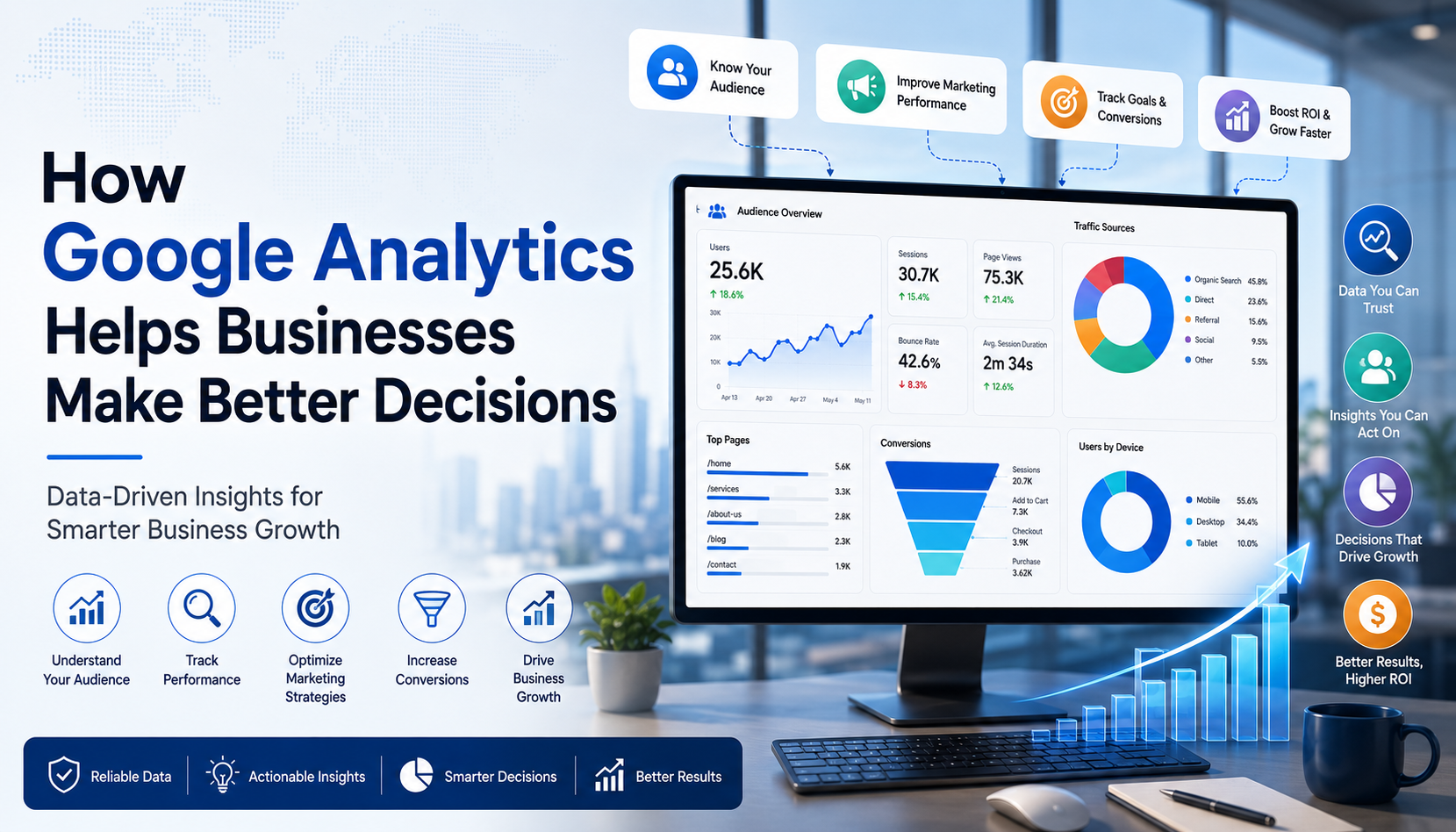
Introduction
In today's highly competitive digital landscape, businesses generate massive amounts of data through their websites, marketing campaigns, and customer interactions. However, collecting data alone is not enough. The real advantage comes from analyzing that data and using it to make informed business decisions. This is where Google Analytics becomes an essential tool. It helps businesses understand how visitors interact with their websites, measure marketing performance, identify growth opportunities, and improve customer experiences. At Softechedge, we believe that data-driven decision-making is the key to digital success, and Google Analytics provides the insights businesses need to grow strategically.
What is Google Analytics?
Google Analytics is a powerful web analytics platform that tracks and analyzes website traffic and user behavior. It provides valuable insights into how visitors find your website, which pages they visit, how long they stay, what devices they use, and whether they complete important actions such as making a purchase, submitting a contact form, or signing up for a newsletter.
Instead of making decisions based on assumptions, businesses can rely on real-time and historical data to understand customer behavior and improve their digital strategies. Whether you own a small business, an e-commerce store, or a large enterprise, Google Analytics provides actionable information that supports better business planning.
Understanding Customer Behavior
One of the biggest strengths of Google Analytics is its ability to reveal how customers interact with a website. Businesses can identify which pages attract the most visitors, where users spend the most time, and where they leave the website.
For example, if a particular webpage has a high bounce rate, it may indicate that the content is not relevant, the page loads too slowly, or the user experience needs improvement. On the other hand, pages with high engagement often contain valuable information that resonates with visitors. These insights help businesses optimize website design, improve navigation, and create content that better meets customer expectations.
Identifying the Best Traffic Sources
Not all website visitors come from the same source. Google Analytics helps businesses understand where their traffic originates, whether it is from search engines, paid advertisements, social media platforms, email campaigns, referral websites, or direct visits.
By comparing the performance of different traffic sources, businesses can identify which marketing channels generate the highest-quality visitors and the best return on investment. If organic SEO consistently delivers qualified leads while a paid campaign underperforms, marketing budgets can be adjusted accordingly. This ensures that resources are invested where they produce the greatest business impact.
Measuring Marketing Campaign Performance
Every marketing campaign should deliver measurable results. Google Analytics enables businesses to track the effectiveness of campaigns by monitoring website visits, user engagement, conversions, and customer actions. Whether launching a new product, promoting a seasonal sale, or running a lead generation campaign, businesses can evaluate which campaigns attract the most qualified customers. This data allows marketing teams to refine their messaging, improve targeting, and maximize campaign performance over time.
Tracking Business Goals and Conversions
Website traffic alone does not determine success. The real objective is converting visitors into customers.
Google Analytics allows businesses to define specific goals, such as:
1.Online purchases
2.Contact form submissions
3.Newsletter subscriptions
4.Appointment bookings
5.Phone call clicks
6.File downloads
By tracking these conversions, businesses gain a clear understanding of how effectively their website supports business objectives. If conversion rates are lower than expected, businesses can identify weaknesses and optimize landing pages, calls-to-action, or user journeys to improve results.
Gaining Valuable Audience Insights
Understanding your audience is essential for effective marketing. Google Analytics provides demographic and geographic information that helps businesses identify who their customers are.
Businesses can discover:
1.Visitor locations
2.Device usage (desktop, mobile, tablet)
3.Browser preferences
4.Language settings
5.User interests
6.Returning vs. new visitors
These insights enable businesses to create personalized marketing campaigns, optimize mobile experiences, and better serve their target audience.
Improving Website Performance
A slow or poorly designed website can drive potential customers away. Google Analytics helps businesses monitor key website performance metrics, including page load speed, engagement time, bounce rate, and navigation flow. By identifying technical issues and user experience challenges, businesses can improve website functionality, enhance customer satisfaction, and reduce visitor abandonment. Better website performance also contributes to improved search engine rankings and higher conversion rates.
Using Data to Make Smarter Business Decisions
One of the greatest advantages of Google Analytics is that it replaces guesswork with reliable data.
Interactive dashboards and customized reports allow business owners and marketing teams to monitor trends, compare historical performance, and identify opportunities for growth. Instead of relying on assumptions, organizations can make confident decisions supported by measurable evidence.
Whether deciding where to invest marketing budgets, which products to promote, or how to improve customer engagement, Google Analytics provides the information needed for strategic planning.
Enhancing E-commerce Performance
For online businesses, Google Analytics offers even more detailed insights into customer purchasing behavior. Businesses can monitor:
1.Product performance
2.Shopping cart abandonment
3.Revenue by traffic source
4.Checkout completion rates
5.Customer lifetime value
These insights help identify opportunities to improve product pages, simplify checkout processes, and increase online sales through continuous optimization.
Creating Targeted Marketing Campaigns
Every customer has different preferences and behaviors. Google Analytics allows businesses to segment their audience based on demographics, location, device usage, interests, and purchasing behavior.
This segmentation enables marketers to create highly targeted campaigns that deliver relevant content to the right audience. Personalized marketing generally leads to higher engagement, improved customer relationships, and better conversion rates.
Integrating Google Analytics with Other Marketing Tools
Google Analytics becomes even more powerful when integrated with other digital marketing platforms.
It seamlessly connects with:
1.Google Ads
2.Google Search Console
3.Google Tag Manager
4.CRM platforms
5.E-commerce platforms
These integrations provide a complete view of the customer journey, allowing businesses to track performance across multiple channels and optimize every stage of the marketing funnel.
How Softechedge Helps Businesses Leverage Google Analytics
At Softechedge, we help businesses transform raw website data into meaningful business insights. Our digital marketing experts configure Google Analytics correctly, set up conversion tracking, create customized dashboards, monitor key performance indicators (KPIs), and provide actionable recommendations that improve marketing performance.
Rather than simply delivering reports, we focus on helping businesses understand the story behind the data and use those insights to increase website traffic, generate qualified leads, improve customer engagement, and maximize return on investment.
Conclusion
In today's data-driven business environment, making informed decisions is more important than ever. Google Analytics empowers businesses with valuable insights into customer behavior, website performance, marketing effectiveness, and conversion opportunities. By understanding what works and identifying areas for improvement, organizations can optimize their digital strategies and achieve sustainable growth.
Whether your goal is increasing website traffic, generating more leads, boosting online sales, or improving customer experiences, Google Analytics provides the intelligence needed to make smarter business decisions. With the expertise of Softechedge, businesses can unlock the full potential of Google Analytics and transform valuable data into measurable digital success.