Introduction
A resume is more than a summary of your qualifications—it is your personal marketing document that introduces you to potential employers before you ever step into an interview. In today's highly competitive job market, recruiters spend only a few seconds scanning each resume before deciding whether to shortlist a candidate. This means every section of your resume must be carefully crafted to communicate your skills, experience, and achievements effectively. A well-structured, ATS-friendly resume not only improves your chances of passing automated screening systems but also leaves a strong impression on hiring managers. Understanding the purpose of each section and presenting the right information in the right way can make the difference between getting noticed and being overlooked.
Contact Information
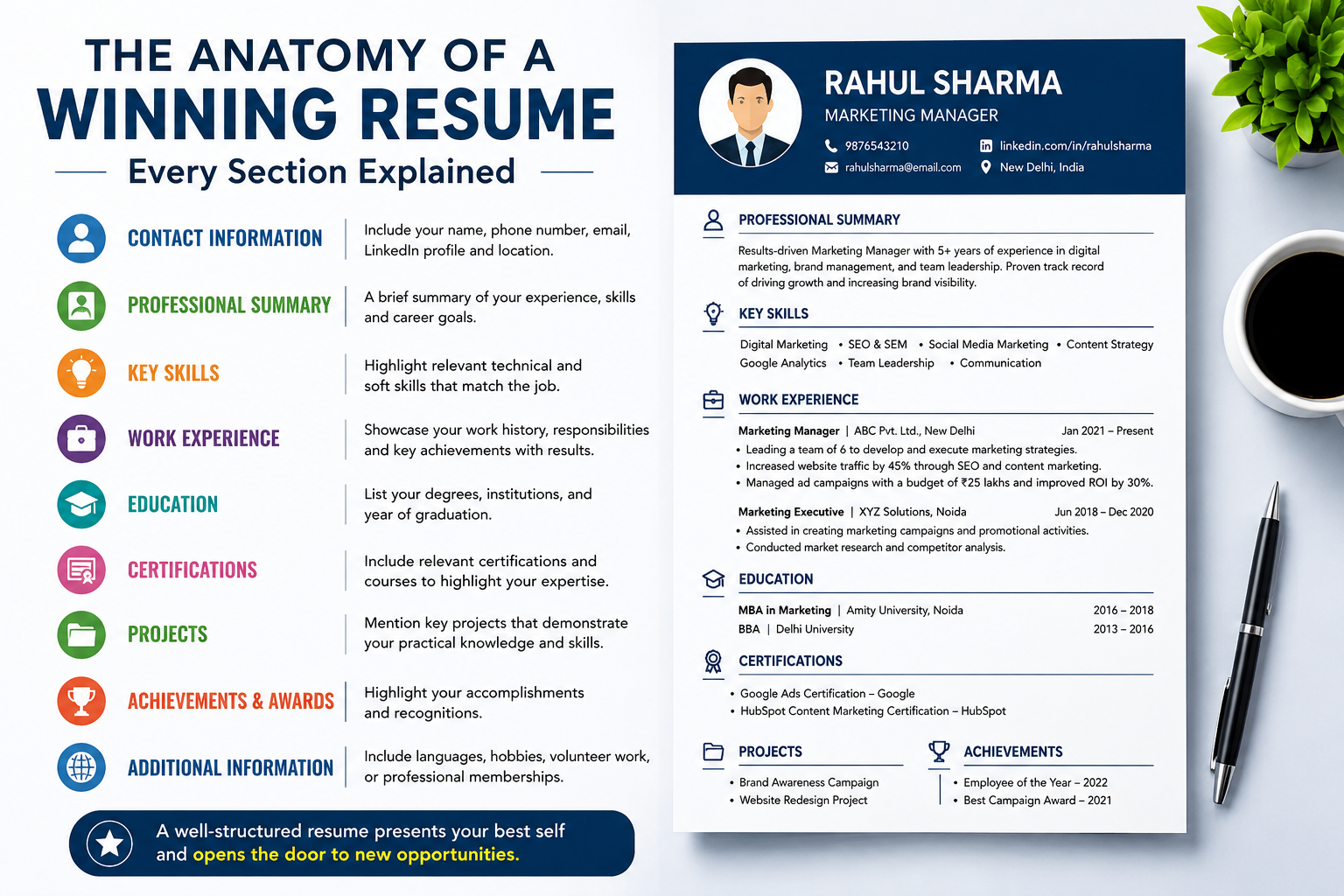
The contact information section is the foundation of your resume and should always appear at the top. It should include your full name, mobile number, professional email address, LinkedIn profile, and your city or state of residence. This section should be clean, accurate, and easy to read. Avoid using informal email addresses or including unnecessary personal details such as age, religion, marital status, or photographs unless specifically requested by the employer. Providing professional and up-to-date contact details ensures recruiters can easily reach you and creates a positive first impression.
Professional Summary
Immediately below your contact details, your professional summary serves as a brief introduction that highlights your career profile. This section should summarize your years of experience, core competencies, major achievements, and career objectives in three to five concise sentences. Instead of using generic statements like "hardworking individual seeking opportunities," focus on your unique strengths and measurable accomplishments. For example, mentioning that you increased sales by 30% or managed successful projects demonstrates your value more effectively than vague descriptions. A compelling summary encourages recruiters to continue reading the rest of your resume.
Key Skills
The skills section provides recruiters with a quick overview of your abilities and should be tailored to the job you are applying for. Include a balanced mix of technical and soft skills relevant to your industry, such as project management, data analysis, communication, leadership, programming languages, or digital marketing tools. Reviewing the job description and incorporating relevant keywords not only makes your resume more appealing to recruiters but also improves its compatibility with Applicant Tracking Systems (ATS). Avoid listing skills that you cannot confidently demonstrate during an interview.
Work Experience
The work experience section is often the most influential part of a resume because it demonstrates how you have applied your knowledge in real-world situations. List your work history in reverse chronological order, beginning with your most recent position. Include your job title, company name, employment dates, and a concise description of your responsibilities and achievements. Rather than simply listing daily tasks, focus on measurable results and contributions. For example, instead of writing "Handled customer service," mention that you "Improved customer satisfaction by 25% through faster query resolution." Using numbers and specific outcomes makes your accomplishments more credible and impactful.
Education
Your education section should clearly present your academic qualifications, including the degree obtained, institution name, graduation year, and relevant academic performance if applicable. Fresh graduates may place this section before work experience, while experienced professionals generally position it afterward. If you have completed specialized courses or earned academic distinctions relevant to your career, they can also be included here. A well-organized education section demonstrates your academic foundation and supports your professional qualifications.
Certifications
Professional certifications show employers that you are committed to continuous learning and staying updated with industry trends. Whether you have completed certifications in cloud computing, digital marketing, project management, HR, cybersecurity, or data analytics, include the certification name, issuing organization, and completion date. Certifications from recognized platforms like Google, Microsoft, AWS, Coursera, HubSpot, or PMI can significantly strengthen your profile and demonstrate your willingness to develop new skills.
Projects
Projects provide valuable evidence of your practical knowledge and problem-solving abilities, particularly for fresh graduates and professionals in technical fields. Include projects that are relevant to your target role, describing the objective, your responsibilities, technologies or tools used, and the outcomes achieved. Whether it is a software application, marketing campaign, research study, or business initiative, showcasing successful projects helps recruiters understand your hands-on experience and ability to deliver results beyond theoretical knowledge.
Achievements and Awards
Highlighting achievements and awards helps distinguish you from other applicants by showcasing your excellence and dedication. Include professional recognitions, academic honors, performance awards, leadership accomplishments, scholarships, or industry certifications that demonstrate exceptional performance. Whenever possible, quantify your achievements to provide context and strengthen their impact. Recruiters appreciate candidates who consistently exceed expectations and contribute positively to organizational success.
Technical Skills
For roles in technology, engineering, finance, or analytics, a dedicated technical skills section can improve readability and help recruiters quickly assess your expertise. Organize technical skills into categories such as programming languages, software applications, databases, frameworks, cloud platforms, or business tools. Presenting your technical competencies in a structured format enables hiring managers to evaluate your qualifications efficiently and improves ATS recognition.
Additional Information
The additional information section should only include details that add value to your application. You may mention languages spoken, volunteer experience, professional memberships, published articles, conferences attended, portfolios, GitHub repositories, or personal websites if they are relevant to your profession. Avoid filling this section with unrelated hobbies or personal interests that do not contribute to your professional image. Every piece of information included should support your candidacy and reinforce your skills or experience.
ATS Optimization
Many organizations rely on Applicant Tracking Systems to filter resumes before they reach recruiters. To maximize your chances of passing ATS screening, use standard section headings such as "Work Experience," "Education," and "Skills." Incorporate keywords from the job description naturally throughout your resume without overstuffing them. Avoid complex tables, graphics, text boxes, or unusual fonts that ATS software may struggle to interpret. Keeping your formatting simple, professional, and keyword-rich significantly improves your visibility during the recruitment process.
Resume Formatting
Presentation is just as important as content. A professional resume should be clean, organized, and easy to read. Use consistent fonts, appropriate spacing, bullet points, and logical headings to improve readability. Fresh graduates should generally limit their resume to one page, while experienced professionals can extend it to two pages if necessary. Proofreading is equally important because spelling and grammatical errors can create a negative impression and suggest a lack of attention to detail.
Common Resume Mistakes
Many qualified candidates fail to secure interviews because of common resume mistakes. These include using the same resume for every job application, writing lengthy paragraphs instead of concise bullet points, including irrelevant or outdated information, failing to quantify achievements, ignoring ATS keywords, or submitting resumes with grammatical and spelling errors. Another common mistake is exaggerating qualifications or providing inaccurate information, which can damage credibility during the hiring process. Taking the time to customize your resume for each application greatly improves your chances of success.
Conclusion
A winning resume is not created by chance—it is built strategically, with every section contributing to a clear and compelling professional story. From your contact information and professional summary to your work experience, certifications, projects, and achievements, each component should demonstrate your value to potential employers. A resume that is tailored to the job, optimized for ATS, and focused on measurable accomplishments can significantly improve your chances of receiving interview calls. If creating such a resume feels challenging, professional resume writing services can help. Jobsglint's Resume Writing Services specialize in developing ATS-friendly, recruiter-approved resumes that showcase your strengths, align with industry expectations, and help you stand out in today's competitive job market. Investing in a professionally written resume is an investment in your career and can be the first step toward landing your dream job.