Introduction
In today's digital-first world, a website is often the first interaction a customer has with a business. Whether someone is shopping online, searching for services, reading a blog, or exploring a company's portfolio, they expect web pages to load almost instantly. If a website takes too long to load, visitors are likely to leave before engaging with the content, resulting in lost opportunities, lower conversions, and reduced customer trust.
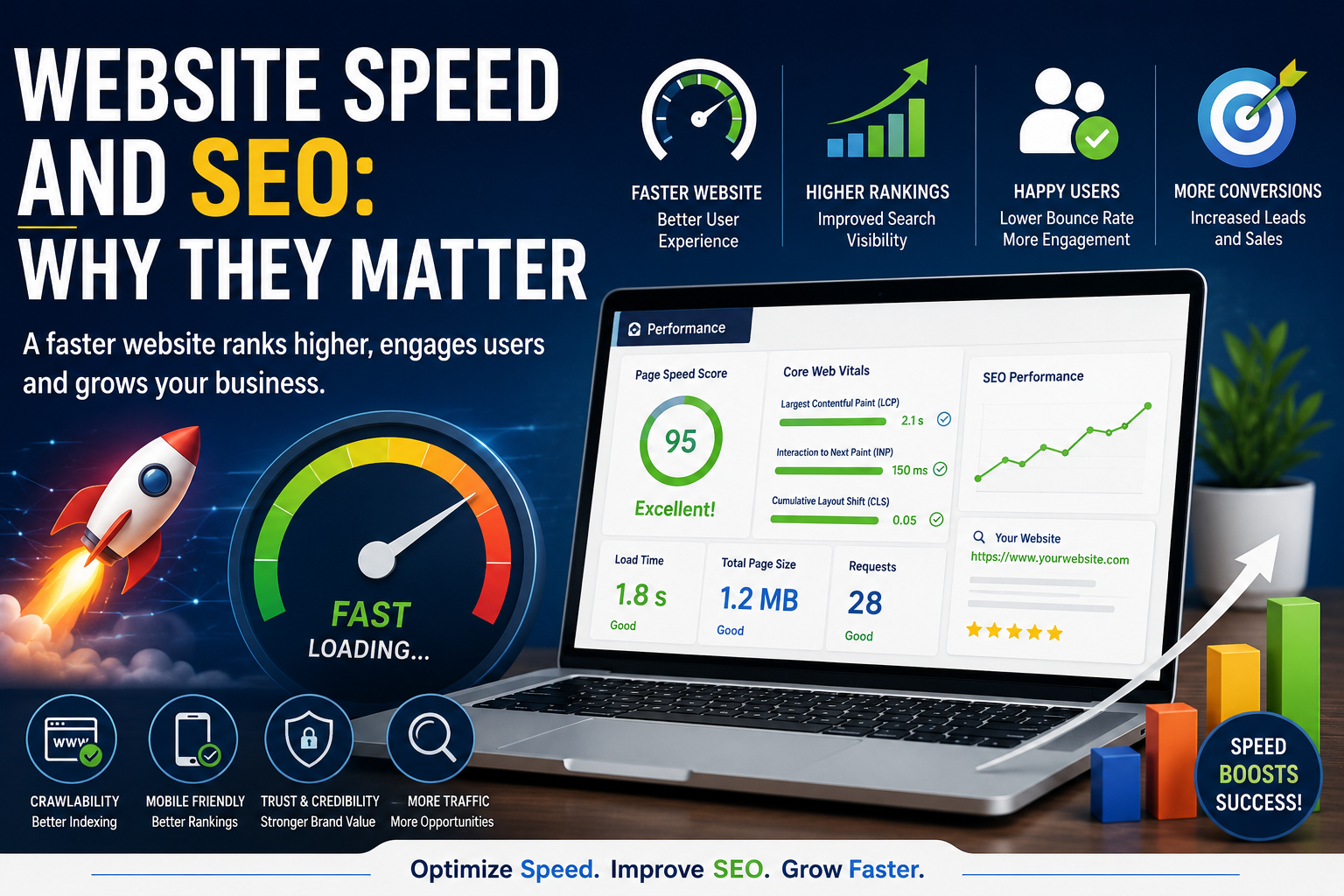
Website speed is no longer just a technical concern—it is a critical factor that influences Search Engine Optimization (SEO), user experience, and overall business success. Search engines like Google aim to provide users with the best possible experience, which includes directing them to websites that are fast, secure, and easy to navigate. As a result, page speed has become an important ranking signal, especially on mobile devices.
A slow-loading website can negatively affect search engine rankings, increase bounce rates, lower user engagement, and reduce sales or lead generation. On the other hand, a fast and optimized website improves visitor satisfaction, encourages users to explore more pages, and increases the likelihood of achieving business goals.
Whether you own a business website, an e-commerce store, a corporate portal, or a personal blog, understanding the connection between website speed and SEO is essential for long-term online growth.
In this blog, we'll explore why website speed matters, how it impacts SEO, and the best practices to improve your website's performance.
What Is Website Speed?
Website speed refers to the amount of time it takes for a webpage to load and become fully usable for visitors. It includes how quickly the browser receives information from the server, displays visible content, and allows users to interact with buttons, forms, menus, and other elements.
Website speed is influenced by several factors, including:
Server response time
Image sizes
Website code (HTML, CSS, JavaScript)
Hosting quality
Browser caching
Content Delivery Networks (CDNs)
Third-party plugins and scripts
Database performance
A website may appear visually loaded but still take time before users can interact with it. Therefore, modern performance measurement goes beyond simple loading time and evaluates the overall user experience.
What Is SEO?
Search Engine Optimization (SEO) is the process of improving a website so that it ranks higher in search engine results pages (SERPs) for relevant keywords. Effective SEO helps attract organic (non-paid) traffic by making a website more useful, accessible, and trustworthy.
SEO generally consists of four major areas:
1. On-Page SEO
On-page SEO focuses on optimizing the content and structure of individual pages. It includes:
High-quality, informative content
Keyword optimization
Title tags and meta descriptions
Header tags (H1, H2, H3)
Internal linking
Image optimization
Readable URLs
2. Off-Page SEO
Off-page SEO involves activities outside your website that improve its authority and credibility, such as:
Backlink building
Brand mentions
Social media engagement
Guest blogging
Online reputation management
3. Technical SEO
Technical SEO ensures that search engines can efficiently crawl, index, and understand your website.
Key technical SEO factors include:
Website speed
Mobile responsiveness
Secure HTTPS connection
XML sitemap
Robots.txt configuration
Structured data (Schema Markup)
Canonical URLs
Crawlability and indexability
4. Local SEO
Local SEO helps businesses appear in location-based searches by optimizing:
Business profiles
Local keywords
Customer reviews
Location pages
Contact information consistency
How Website Speed and SEO Are Connected
Website speed and SEO are closely linked because search engines prioritize websites that deliver a smooth and efficient user experience.
Google's primary goal is to provide users with the most relevant and satisfying results. If two websites offer similar quality content, the faster website often has an advantage because it enables users to access information more quickly.
A fast website helps improve:
Search engine rankings
User satisfaction
Time spent on site
Page views per session
Conversion rates
Mobile usability
Overall website performance
Conversely, slow websites may struggle to rank well, especially in competitive industries where user experience is a key differentiator.
Why Google Prioritizes Fast Websites
Google has consistently emphasized the importance of website performance as part of its ranking systems. While content relevance remains the most important factor, page speed contributes to how Google evaluates user experience.
Google favors fast websites because they:
Reduce waiting time for users
Improve browsing experiences
Lower bounce rates
Increase accessibility on slower internet connections
Perform better on mobile devices
Encourage visitors to engage with more content
A website that loads quickly is more likely to retain visitors and satisfy search intent, making it a better candidate for higher rankings.
Understanding Core Web Vitals
To measure real-world page experience, Google introduced Core Web Vitals—a set of performance metrics that evaluate how users experience a webpage.
1. Largest Contentful Paint (LCP)
LCP measures how long it takes for the largest visible element on a page (such as a banner image or headline) to load.
A good LCP score indicates that users can quickly see the primary content of the page.
Target: Within 2.5 seconds.
2. Interaction to Next Paint (INP)
INP measures how responsive a webpage is when users interact with it, such as clicking a button, opening a menu, or submitting a form.
Lower interaction delays contribute to a smoother and more enjoyable browsing experience.
3. Cumulative Layout Shift (CLS)
CLS measures the visual stability of a webpage by tracking unexpected layout changes while the page is loading.
Examples include:
Buttons moving before being clicked
Images loading without reserved space
Text shifting unexpectedly
Advertisements pushing content downward
A low CLS score ensures that pages remain stable and easy to interact with.
Why User Experience Matters
Website speed is one of the most important aspects of user experience (UX).
Imagine visiting two websites:
The first loads almost instantly, with smooth navigation and responsive interactions.
The second takes several seconds to load, displays content slowly, and feels unresponsive.
Most users naturally prefer the faster website.
A positive user experience encourages visitors to:
Stay longer
Explore additional pages
Read blog articles
Complete purchases
Submit inquiries
Share content
Return in the future
These positive engagement signals indirectly support stronger SEO performance over time.
Bounce Rate and Website Speed
Bounce rate refers to the percentage of visitors who leave a website after viewing only one page without taking any further action.
Slow websites often experience higher bounce rates because users lose patience before the content fully loads.
Common reasons visitors leave slow websites include:
Long loading times
Poor mobile performance
Unresponsive pages
Large images
Confusing navigation
Slow server response
Reducing page load times helps keep visitors engaged and encourages them to interact with more content, improving overall website performance.
Why Website Speed Matters for Businesses
Website speed is more than a technical metric—it directly affects business outcomes.
A fast website can:
Improve search engine visibility
Increase organic traffic
Generate more qualified leads
Boost online sales
Enhance customer satisfaction
Strengthen brand credibility
Reduce bounce rates
Improve user retention
Support digital marketing campaigns
Deliver a competitive advantage
Whether you operate an e-commerce store, a service-based business, or a corporate website, investing in website performance can significantly improve your online success.
Benefits of a Fast Website for SEO and Business Growth
Website speed is more than just a technical metric—it directly impacts how users interact with your website and how search engines evaluate its quality. Faster websites tend to rank better, retain visitors for longer, and convert more users into customers.
Let's explore the key benefits of maintaining a fast, optimized website.
1. Higher Search Engine Rankings
Google aims to provide users with the best possible search experience. Since page speed contributes to user satisfaction, it has become an important ranking factor, particularly for mobile searches.
A fast website allows search engines to:
Crawl pages more efficiently
Index content faster
Deliver a better user experience
Improve overall website quality signals
While great content remains the most important ranking factor, a slow website can prevent that content from reaching its full ranking potential.
2. Better User Experience (UX)
Users expect websites to load quickly and respond instantly.
When a website performs well, visitors can:
Navigate smoothly
Read content without delays
Complete forms easily
Browse products effortlessly
Enjoy a frustration-free experience
Positive user experiences encourage repeat visits and strengthen brand trust.
3. Lower Bounce Rate
Every extra second of loading time increases the likelihood that visitors will leave before interacting with your content.
Reducing page load times helps:
Keep visitors engaged
Increase page views
Encourage exploration
Improve session duration
Lower bounce rates send positive engagement signals that can support SEO performance over time.
4. Increased Conversion Rates
Whether your goal is generating leads, selling products, or encouraging newsletter sign-ups, website speed plays a major role.
Fast websites encourage users to:
Complete purchases
Fill out inquiry forms
Download resources
Register for services
Contact your business
Even small improvements in loading speed can positively affect conversion rates.
5. Stronger Mobile Performance
Most internet users now browse websites using smartphones.
A slow desktop website becomes even slower on mobile networks.
Optimized websites provide:
Faster mobile loading
Better touch responsiveness
Improved readability
Higher mobile engagement
Since Google primarily uses mobile-first indexing, mobile optimization is essential for SEO success.
6. Improved Crawl Efficiency
Search engines allocate a crawl budget to every website.
When pages load quickly:
More pages can be crawled.
Updated content is indexed faster.
Technical issues are detected more efficiently.
Large websites especially benefit from faster crawling.
7. Better Brand Reputation
Users often associate website quality with company professionalism.
A fast website creates impressions such as:
Trustworthy
Reliable
Professional
Modern
Customer-focused
A slow website can have the opposite effect, even if the products or services are excellent.
How Slow Websites Hurt SEO
Many businesses invest heavily in content creation and digital marketing but overlook website performance.
Here are some common ways slow websites negatively affect SEO.
Higher Bounce Rates
Visitors rarely wait for slow pages to load.
If users leave immediately, search engines may interpret the page as providing a poor user experience.
Reduced User Engagement
Slow-loading websites often experience:
Lower average session duration
Fewer pages viewed
Reduced interactions
Lower return visits
These engagement metrics influence overall website performance.
Lower Conversion Rates
Customers expect speed.
If checkout pages, contact forms, or landing pages load slowly, users may abandon the process before completing their desired action.
Poor Mobile Rankings
Google evaluates websites primarily from the mobile perspective.
Slow mobile performance can reduce:
Search visibility
Organic traffic
Mobile conversions
Missed Business Opportunities
Slow websites can result in:
Lost customers
Lower sales
Fewer inquiries
Reduced revenue
Higher advertising costs
Performance directly impacts profitability.
Common Causes of Slow Website Speed
Understanding why websites become slow is the first step toward optimization.
1. Large Image Files
Uploading oversized, uncompressed images is one of the biggest causes of slow websites.
High-resolution images consume more bandwidth and increase loading times.
Best practices include:
Compress images
Resize before uploading
Use modern formats like WebP or AVIF where supported
Enable lazy loading
2. Poor Web Hosting
Your hosting provider significantly affects website performance.
Low-quality hosting may result in:
Slow server response
Downtime
Limited resources
Poor scalability
Choosing reliable hosting is a long-term investment.
3. Too Many Plugins
This is especially common on WordPress websites.
Excessive plugins may:
Load unnecessary scripts
Increase database queries
Slow page rendering
Introduce compatibility issues
Only keep plugins that provide real value.
4. Unoptimized Code
Large or inefficient HTML, CSS, and JavaScript files increase page load times.
Optimization techniques include:
Minification
Code compression
Removing unused CSS
Deferring non-critical JavaScript
Combining files where appropriate
5. No Browser Caching
Without browser caching, returning visitors must download the same resources repeatedly.
Caching stores frequently used files locally, allowing pages to load much faster on subsequent visits.
6. Too Many HTTP Requests
Every image, font, stylesheet, and script generates a request to the server.
Reducing unnecessary requests improves overall page speed.
7. Render-Blocking Resources
Some CSS and JavaScript files prevent browsers from displaying page content until they finish loading.
Optimizing these resources helps pages appear faster to users.
8. Large Databases
Over time, website databases accumulate:
Revisions
Spam comments
Temporary data
Expired sessions
Regular database optimization improves performance.
Practical Website Speed Optimization Tips
Improving website speed doesn't always require rebuilding your site. Many optimizations can deliver significant improvements.
Optimize Images
Use:
WebP or AVIF image formats
Compression tools
Responsive image sizing
Lazy loading
Images should balance quality with performance.
Enable Browser Caching
Caching reduces repeated downloads and speeds up page loading for returning visitors.
Most modern content management systems support caching plugins or server-level caching.
Use a Content Delivery Network (CDN)
A CDN stores copies of your website across multiple global servers.
Benefits include:
Faster loading worldwide
Lower latency
Better reliability
Reduced server load
Minify CSS, JavaScript, and HTML
Minification removes unnecessary characters such as:
Extra spaces
Comments
Line breaks
Smaller files load more quickly.
Enable GZIP or Brotli Compression
Compression significantly reduces file sizes before they are transferred from the server to the browser.
Smaller files mean faster downloads.
Reduce Redirects
Each redirect adds extra loading time.
Only use redirects when necessary and avoid redirect chains.
Optimize Fonts
Web fonts can slow websites.
Best practices include:
Loading only required font weights
Using modern font formats
Preloading important fonts
Limiting font families
Upgrade Hosting
If your website has grown, upgrading to better hosting can dramatically improve speed.
Options include:
Managed WordPress hosting
VPS hosting
Cloud hosting
Dedicated servers
Mobile Speed Optimization
Since mobile users account for a significant share of web traffic, optimizing for smartphones is essential.
Recommendations include:
Responsive website design
Lightweight layouts
Compressed images
Mobile-friendly navigation
Fast-loading buttons
Optimized forms
Reduced pop-ups
A smooth mobile experience improves both SEO and user satisfaction.
Best Tools to Measure Website Speed
Regular testing helps identify performance issues before they affect users.
Popular tools include:
Google PageSpeed Insights
Provides:
Core Web Vitals scores
Mobile performance analysis
Optimization recommendations
Google Lighthouse
Measures:
Performance
Accessibility
SEO
Best Practices
Progressive Web App readiness
GTmetrix
Offers detailed reports on:
Loading times
Waterfall analysis
File sizes
Performance recommendations
Pingdom Website Speed Test
Useful for monitoring:
Load speed
Uptime
Performance trends
WebPageTest
Provides advanced testing from multiple locations, browsers, and network conditions, making it valuable for technical analysis.
Advanced Website Speed Optimization Strategies
Once you've implemented the basic speed optimization techniques, the next step is to adopt advanced strategies that can further improve website performance and strengthen your SEO efforts.
1. Implement Lazy Loading
Lazy loading is a technique where images, videos, and other media elements are loaded only when they become visible in the user's browser window.
Benefits:
Faster initial page load
Reduced bandwidth usage
Better user experience
Improved Core Web Vitals
This is particularly useful for image-heavy websites, blogs, and e-commerce stores.
2. Optimize Critical Rendering Path
The Critical Rendering Path determines how quickly browsers display visible content.
You can improve it by:
Loading above-the-fold content first
Deferring non-essential JavaScript
Inlining critical CSS
Removing unused CSS and JavaScript
These optimizations help users see meaningful content sooner, improving perceived performance.
3. Use a Content Delivery Network (CDN)
A CDN distributes your website's static files across multiple servers located in different geographic regions.
Advantages:
Faster loading for global visitors
Lower latency
Reduced server load
Improved availability during traffic spikes
Enhanced website security through DDoS mitigation (depending on the provider)
For businesses serving customers across multiple cities or countries, a CDN can significantly improve user experience.
4. Optimize Your Database
Dynamic websites often accumulate unnecessary data over time.
Regular database maintenance includes:
Removing old revisions
Deleting spam comments
Clearing temporary files
Optimizing database tables
A well-maintained database improves server response times and overall website performance.
5. Monitor Website Performance Regularly
Website optimization is not a one-time task.
Regularly monitor:
Core Web Vitals
Page load speed
Mobile usability
Broken links
Crawl errors
Server uptime
Security issues
Continuous monitoring helps identify and resolve problems before they impact users or search rankings.
Website Speed Best Practices
To maintain a fast, SEO-friendly website, follow these best practices consistently:
Choose reliable, high-performance hosting.
Keep your CMS, themes, and plugins updated.
Compress and optimize all images before uploading.
Use modern image formats such as WebP or AVIF.
Minify CSS, JavaScript, and HTML files.
Enable browser caching.
Activate GZIP or Brotli compression.
Reduce unnecessary redirects.
Remove unused plugins and scripts.
Limit third-party tracking scripts where possible.
Use a CDN for global performance.
Optimize fonts and preload critical resources.
Regularly audit your website using performance tools.
Ensure your website is fully responsive across all devices.
Maintain HTTPS security certificates.
Following these practices creates a strong technical foundation that supports both SEO and user experience.
The Future of Website Speed and SEO
Search engines continue to evolve, placing greater emphasis on delivering high-quality user experiences.
Several emerging trends are shaping the future of website performance.
1. AI-Powered Search
Artificial intelligence is helping search engines better understand user intent and evaluate website quality.
Fast, user-friendly websites are more likely to align with these evolving algorithms.
2. Mobile-First Experiences
With most users browsing on smartphones, mobile optimization will remain a top priority.
Businesses should design websites with mobile users in mind from the beginning rather than treating mobile optimization as an afterthought.
3. Core Web Vitals Will Continue to Matter
Google regularly refines its performance metrics to reflect real-world user experiences.
Maintaining strong Core Web Vitals scores will remain an important part of technical SEO.
4. Faster Hosting Technologies
Modern hosting solutions continue to improve through:
SSD and NVMe storage
Edge computing
HTTP/3 support
Server-side caching
Cloud-native infrastructure
Businesses that adopt these technologies can deliver faster, more reliable websites.
5. Sustainability Through Efficient Websites
Efficient websites consume fewer server resources and transfer less data, contributing to lower energy usage. While performance should primarily focus on user experience and business outcomes, efficient optimization can also support broader sustainability goals.
Common Website Speed Mistakes to Avoid
Many website owners unknowingly make decisions that reduce performance.
Avoid these common mistakes:
Uploading large, uncompressed images
Using too many plugins
Choosing low-quality hosting
Ignoring mobile optimization
Failing to update software
Loading excessive third-party scripts
Embedding too many videos on a single page
Using complex animations unnecessarily
Not enabling browser caching
Ignoring regular performance testing
Correcting these issues can often lead to noticeable improvements in speed.
Frequently Asked Questions (FAQs)
1. Does website speed affect SEO?
Yes. Website speed is an important ranking signal, especially when combined with good content and a positive user experience. Faster websites are also more likely to retain visitors and improve engagement.
2. What is a good website loading time?
As a general benchmark, pages that become usable within 2–3 seconds provide a better user experience. The ideal target depends on the type of website, device, and network conditions, but faster is generally better.
3. Can a slow website reduce sales?
Yes. Slow-loading pages can increase abandonment rates, reduce trust, and discourage users from completing purchases or submitting inquiries.
4. How often should I test my website speed?
It's a good practice to test performance:
After major website updates
Before launching marketing campaigns
At least once every month
Whenever users report performance issues
5. Is website speed more important than content?
No. High-quality, relevant content remains the foundation of SEO. However, even excellent content can underperform if users abandon a slow website before engaging with it. The best results come from combining valuable content with strong technical performance.
Conclusion
Website speed and SEO are closely connected, and together they play a crucial role in determining the success of any online business. In an increasingly competitive digital landscape, users expect websites to load quickly, function smoothly, and provide a seamless experience across all devices.
A fast website improves more than just search rankings. It enhances user satisfaction, reduces bounce rates, increases conversions, strengthens brand credibility, and supports long-term business growth. Whether you're running a corporate website, an e-commerce platform, or a personal blog, investing in website performance is an investment in your online success.
Businesses should view speed optimization as an ongoing process rather than a one-time task. Regular performance audits, image optimization, efficient coding practices, reliable hosting, and continuous monitoring help ensure that your website remains competitive as technologies and search engine expectations evolve.
At SoftTechEdge, we understand that a high-performing website is the foundation of digital success. From responsive website development and technical SEO to performance optimization and custom web solutions, our goal is to help businesses build websites that are fast, secure, user-friendly, and optimized for search engines.
By combining quality content with technical excellence, your website can attract more visitors, improve engagement, and convert more opportunities into measurable business growth.