Introduction
Changing careers can be exciting, but it also comes with one major challenge—convincing employers that you're the right fit, even if your previous job title doesn't match the role you're applying for. Many professionals assume they need years of direct experience to switch industries, but that's not always true. Employers today value adaptable professionals who bring strong, transferable skills that can help businesses succeed.
The key to a successful career transition is creating a resume that focuses on what you can do, rather than what you have done. A well-crafted career change resume highlights your strengths, achievements, and skills that are relevant across industries.
At Jobsglint, we help professionals create ATS-friendly resumes that showcase transferable skills and increase interview opportunities. Here's how you can build a resume that supports your career change.
What Are Transferable Skills?
Transferable skills are abilities you've developed through previous jobs, education, internships, volunteering, or personal projects that can be applied to different industries and roles.
Unlike technical skills that are specific to one profession, transferable skills remain valuable regardless of your career path.
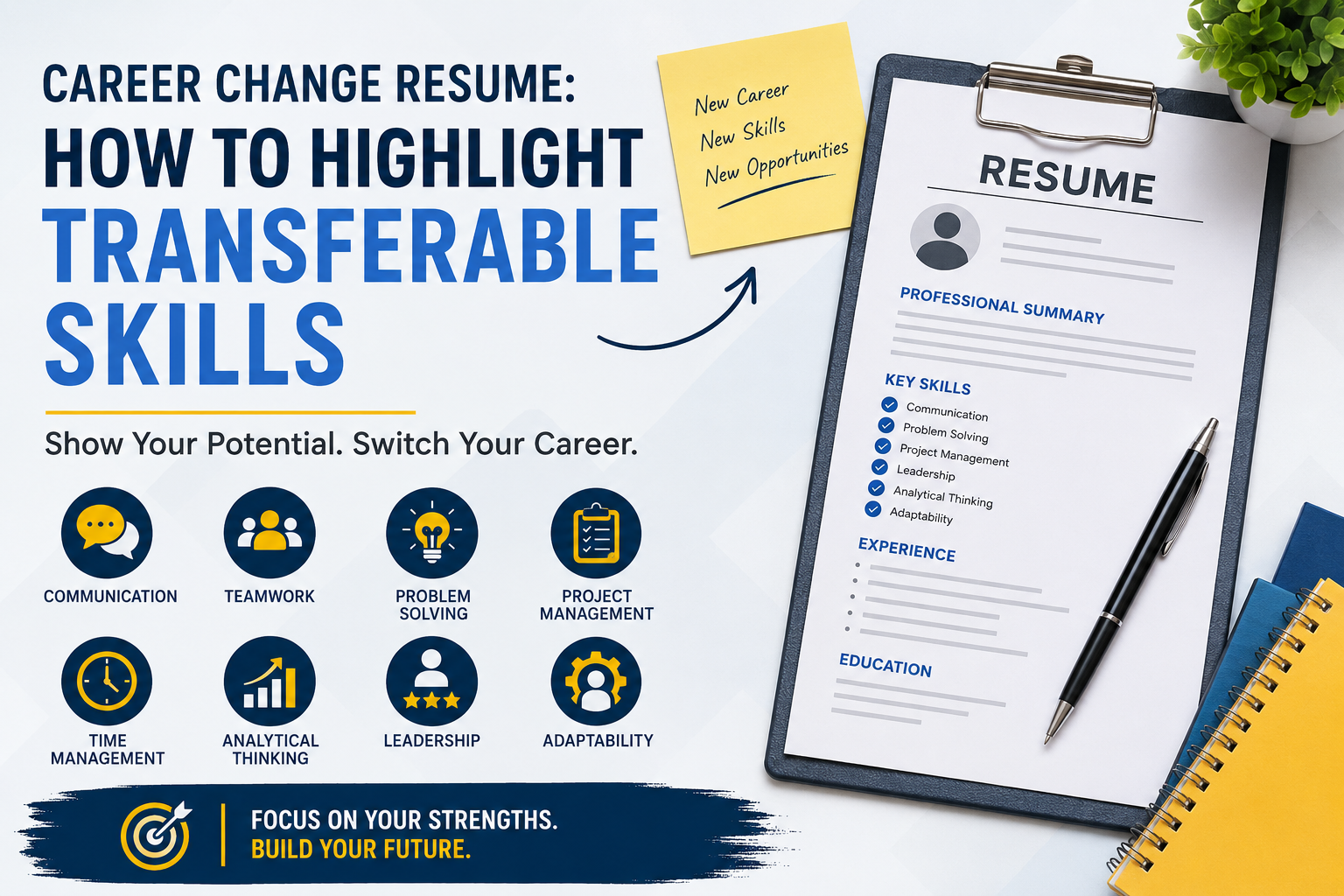
Some common transferable skills include:
1.Communication
2.Leadership
3.Problem-solving
4.Project management
5.Customer service
6.Team collaboration
7.Time management
8.Analytical thinking
9.Adaptability
10.Conflict resolution
11.Presentation skills
12.Decision-making
These skills demonstrate your ability to learn quickly and contribute effectively in a new role.
Why Transferable Skills Matter
Recruiters understand that many professionals change careers. Instead of focusing solely on industry experience, they often look for candidates who can adapt, solve problems, and work effectively with teams.
For example:
A teacher moving into HR already possesses communication, training, mentoring, documentation, and conflict management skills.
A sales professional transitioning into digital marketing brings customer understanding, relationship building, negotiation, and market analysis experience.
A customer support executive applying for operations can showcase multitasking, process improvement, documentation, and client management.
The right resume helps employers recognize these strengths.
Start with a Strong Professional Summary
Your professional summary should immediately explain your career transition and highlight your value.
Instead of writing:
"Experienced sales executive seeking a marketing job."
Write:
"Results-driven professional with five years of experience in customer engagement, market analysis, and relationship management. Passionate about transitioning into digital marketing, bringing strong communication, analytical, and campaign coordination skills to support business growth."
This approach shifts attention from your previous designation to your future potential.
Focus on Skills Before Experience
If you're changing careers, consider using a combination resume format.
This format places your key skills near the top, allowing recruiters to see your strengths before reviewing your work history.
Create a section titled:
Core Skills
1.Project Coordination
2.Client Relationship Management
3.Data Analysis
4.Team Leadership
5.Process Improvement
6.Communication
7.Problem Solving
8.Microsoft Excel
9.CRM Tools
10.Presentation Skills
This immediately aligns your profile with the new position.
Rewrite Your Experience Around Achievements
Don't simply list daily responsibilities.
Instead, emphasize accomplishments that demonstrate transferable abilities.
For example:
Instead of:
"Handled customer complaints."
Write:
"Resolved over 95% of customer issues successfully while maintaining high client satisfaction through effective communication and problem-solving."
Instead of:
"Managed team members."
Write:
"Led a team of eight employees, improved workflow efficiency, and ensured timely project completion." Achievements speak louder than job titles.
Highlight Relevant Projects
Projects can help bridge the experience gap.
Include:
1.Freelance work
2.Volunteer experience
3.Personal projects
4.Online certifications
5.Internship assignments
6.Case studies
7.Portfolio work
For example, someone transitioning into web development can showcase websites they've built, while an aspiring HR professional can mention recruitment simulations or HR certification projects.
These experiences demonstrate initiative and practical knowledge.
Add Industry-Relevant Certifications
Certifications reassure employers that you've invested in learning your new field.
Examples include:
1.Google Digital Marketing Certification
2.HR Analytics Certification
3.AWS Cloud Practitioner
4.Microsoft Power BI
5.PMP Foundation
6.Data Analytics Courses
7.Web Development Bootcamps
Adding certifications shows commitment to continuous learning.
Use Keywords from the Job Description
Most companies use Applicant Tracking Systems (ATS) to filter resumes.
Read the job description carefully and naturally include important keywords such as:
1.Project Management
2.Stakeholder Communication
3.Recruitment
4.SEO
5.Financial Analysis
6.Customer Success
7.Process Optimization
Using relevant keywords improves your chances of passing ATS screening and reaching recruiters.
Showcase Soft Skills with Evidence
Avoid listing generic terms like:
1.Hardworking
2.Honest
3.Dedicated
Instead,
support your skills with measurable achievements.
For example:
"Collaborated with cross-functional teams to complete projects 20% ahead of schedule." "Designed training materials that reduced onboarding time by 30%."
Evidence builds credibility.
Tailor Every Resume
One common mistake career changers make is sending the same resume to every employer.
Customize your resume by:
1.Updating the professional summary
2.Matching skills with the job description
3.Rearranging achievements based on relevance
4.Adding industry-specific keywords
5.Removing unrelated information
A targeted resume significantly improves interview chances.
Don't Forget Your Cover Letter
Your resume highlights your qualifications, while your cover letter explains your motivation.
Use it to answer:
1.Why are you changing careers?
2.What transferable skills make you suitable?
3.Why are you interested in the company?
4.How can you contribute immediately?
Together, your resume and cover letter create a compelling story.
How Jobsglint Can Help
A career transition is easier when your resume tells the right story. At Jobsglint, our professional resume writing experts understand what recruiters and Applicant Tracking Systems look for. We create customized, ATS-friendly resumes that emphasize your transferable skills, achievements, and career goals while aligning your profile with your target industry.
Whether you're moving from teaching to HR, sales to marketing, finance to data analytics, or any other career path, our experts help position your experience in a way that builds confidence with employers and improves your chances of securing interviews.
Final Thoughts
Changing careers doesn't mean starting from zero. Every role you've held has equipped you with valuable skills that can be applied in new industries. The secret lies in presenting those skills effectively through a professionally written resume.
Focus on your achievements, demonstrate your adaptability, and align your experience with the employer's needs. With the right strategy—and expert guidance from Jobsglint—your resume can become a powerful tool that opens doors to exciting new career opportunities.
Ready to make your career switch with confidence? Let Jobsglint craft a professional, ATS-friendly resume that highlights your strengths and helps you land your next opportunity.