Introduction
In today's fast-paced business environment, payroll management has become much more than simply calculating salaries and transferring payments to employees. It is now a critical compliance function that directly impacts an organization's financial health, legal standing, and employee satisfaction. As Indian labour laws continue to evolve and businesses increasingly adopt digital payroll systems, ensuring payroll compliance has become a top priority for HR professionals and employers alike. A single payroll error—whether related to statutory deductions, delayed salary payments, or tax calculations—can result in legal penalties, financial losses, and reduced employee trust. Therefore, every organization, regardless of its size, should establish a robust payroll compliance process.
What is Payroll Compliance?
Payroll compliance refers to the process of managing employee compensation while adhering to all applicable labour laws, tax regulations, and statutory obligations. It involves accurate salary calculations, timely statutory deductions, tax payments, and maintaining payroll records in accordance with government regulations. Compliance ensures that employees receive their rightful salaries and benefits while employers fulfill their legal responsibilities under various labour and taxation laws.
An effective payroll system not only minimizes legal risks but also creates transparency within the organization. Employees are more confident when they receive accurate payslips, timely salary payments, and proper deductions, while employers benefit from smooth audits and hassle-free regulatory inspections.
Why Payroll Compliance is Important
Payroll compliance plays a vital role in maintaining the credibility and financial stability of a business. Organizations that follow payroll regulations are less likely to face government notices, penalties, or litigation. Moreover, compliant payroll practices enhance employee confidence, strengthen employer branding, and improve operational efficiency.
In today's competitive job market, employees expect transparency regarding salary structures, tax deductions, provident fund contributions, and other statutory benefits. Failure to meet these expectations can negatively impact employee morale and increase attrition. Therefore, payroll compliance is not merely a legal requirement but also an essential part of employee experience and organizational culture.
Maintain Accurate Employee Records
The foundation of payroll compliance begins with maintaining complete and updated employee records. HR departments should ensure that essential documents such as Aadhaar, PAN, bank account details, employment contracts, salary structures, nomination forms, UAN details, and ESIC information are accurately recorded. Regularly updating employee information helps prevent payroll errors and ensures statutory deductions are calculated correctly. Incomplete or outdated records often lead to compliance issues during audits or government inspections.
Classify Employees Correctly
Proper employee classification is another crucial aspect of payroll compliance. Organizations must clearly distinguish between permanent employees, contractual workers, consultants, freelancers, apprentices, and interns, as each category is governed by different statutory provisions and tax implications. Incorrect classification may result in compliance violations, tax disputes, and financial penalties. HR teams should periodically review employment contracts and workforce classifications to ensure they align with applicable labour laws.
Design a Legally Compliant Salary Structure
A well-structured salary package contributes significantly to payroll compliance. Every salary structure should include components such as Basic Salary, House Rent Allowance (HRA), Dearness Allowance (where applicable), Special Allowances, Incentives, Bonuses, and employer contributions toward statutory benefits. A carefully designed compensation structure ensures legal compliance while optimizing tax benefits for employees. HR professionals should periodically review salary structures to ensure they comply with the latest government regulations and industry standards.
Ensure Accurate Income Tax (TDS) Deductions
One of the employer's primary responsibilities is deducting Tax Deducted at Source (TDS) from employee salaries as per the Income Tax Act. HR and payroll teams should collect tax declarations from employees at the beginning of the financial year, verify investment proofs, determine the applicable tax regime, calculate monthly TDS accurately, deposit taxes within prescribed timelines, and issue Form 16 annually. Even minor errors in tax calculations can create financial liabilities for both employers and employees, making careful tax planning essential.
Verify EPF Compliance
The Employees' Provident Fund (EPF) remains one of the most important statutory obligations for eligible establishments. Employers should ensure timely employee registration, UAN generation, monthly contribution deposits, Electronic Challan cum Return (ECR) filing, and regular updating of employee records. Proper EPF compliance not only fulfills legal requirements but also provides long-term financial security to employees. Delays in depositing provident fund contributions can attract interest, penalties, and legal action from regulatory authorities.
Check ESIC Eligibility
Organizations covered under the Employees' State Insurance (ESI) Act must identify eligible employees and complete their registration promptly. Monthly contributions should be accurately calculated and deposited within stipulated timelines. Payroll teams should also maintain proper wage records and employee insurance details. ESIC offers valuable medical and social security benefits to eligible employees, making compliance beneficial for both employers and their workforce.
Monitor Minimum Wages and Labour Law Updates
Minimum wage rates are revised periodically by both Central and State Governments depending on the industry, skill category, and geographical location. HR professionals should stay updated with these revisions to ensure employees receive wages that comply with statutory requirements. Paying below the prescribed minimum wage may result in serious legal consequences, including financial penalties and labour disputes.
Ensure Timely Salary Payments
Timely salary disbursement is one of the simplest yet most critical compliance requirements. Employees rely on predictable salary payments to manage their financial commitments. Delays not only affect employee morale but may also damage the company's reputation and increase employee turnover. Implementing automated payroll software helps organizations process salaries accurately and on schedule while minimizing manual intervention.
Comply with Bonus, Gratuity, and Other Statutory Benefits
Organizations should also ensure compliance with statutory employee benefits such as bonuses and gratuity wherever applicable. HR teams must verify employee eligibility, calculate benefits accurately, maintain supporting documentation, and release payments within prescribed timelines. Transparent communication regarding these benefits further strengthens employee trust and minimizes disputes.
Maintain Proper Payroll Documentation
Payroll compliance extends beyond salary calculations. Employers are legally required to maintain salary registers, attendance records, leave records, payslips, tax filings, statutory challans, payroll reports, and employee declarations for future reference. Digital record management systems have made documentation significantly easier while improving accessibility during internal and external audits.
File Statutory Returns on Time
Processing payroll is only one part of compliance. Organizations must also submit various statutory returns within specified deadlines, including EPF returns, ESIC returns, TDS returns, Professional Tax returns (where applicable), and state-specific labour welfare filings. Missing statutory deadlines can result in penalties, interest charges, and unnecessary compliance complications. Creating a compliance calendar helps HR teams monitor due dates efficiently.
Protect Employee Payroll Data
With increasing digitalization, payroll data security has become equally important. Payroll systems contain highly confidential employee information, including salary details, tax records, bank account information, and identity documents. Businesses should implement role-based access controls, data encryption, secure payroll software, regular backups, and multi-factor authentication to protect sensitive information from cyber threats and unauthorized access.
Common Payroll Compliance Mistakes
Many organizations unintentionally make payroll mistakes that later become costly. Common errors include incorrect PF deductions, inaccurate TDS calculations, delayed salary payments, employee misclassification, incomplete attendance records, missed statutory deadlines, and poor documentation. Regular payroll audits and compliance reviews help identify these issues before they result in financial or legal consequences.
How Payroll Software Improves Compliance
Modern payroll software has transformed payroll management by automating salary calculations, tax deductions, statutory contributions, leave management, attendance integration, payslip generation, and compliance reporting. Automation significantly reduces manual errors, improves accuracy, and saves valuable time for HR professionals. Cloud-based payroll solutions also provide real-time compliance updates whenever government regulations change, helping organizations remain compliant without extensive manual effort.
Best Practices for HR Professionals
HR professionals should adopt a proactive approach toward payroll compliance by staying informed about labour law amendments, conducting regular payroll audits, maintaining standardized payroll policies, investing in employee training, and leveraging reliable payroll technology. Close coordination between HR, finance, and compliance teams ensures smoother payroll operations while reducing organizational risks. Transparent communication with employees regarding salary components and statutory deductions further strengthens workplace trust.
Conclusion
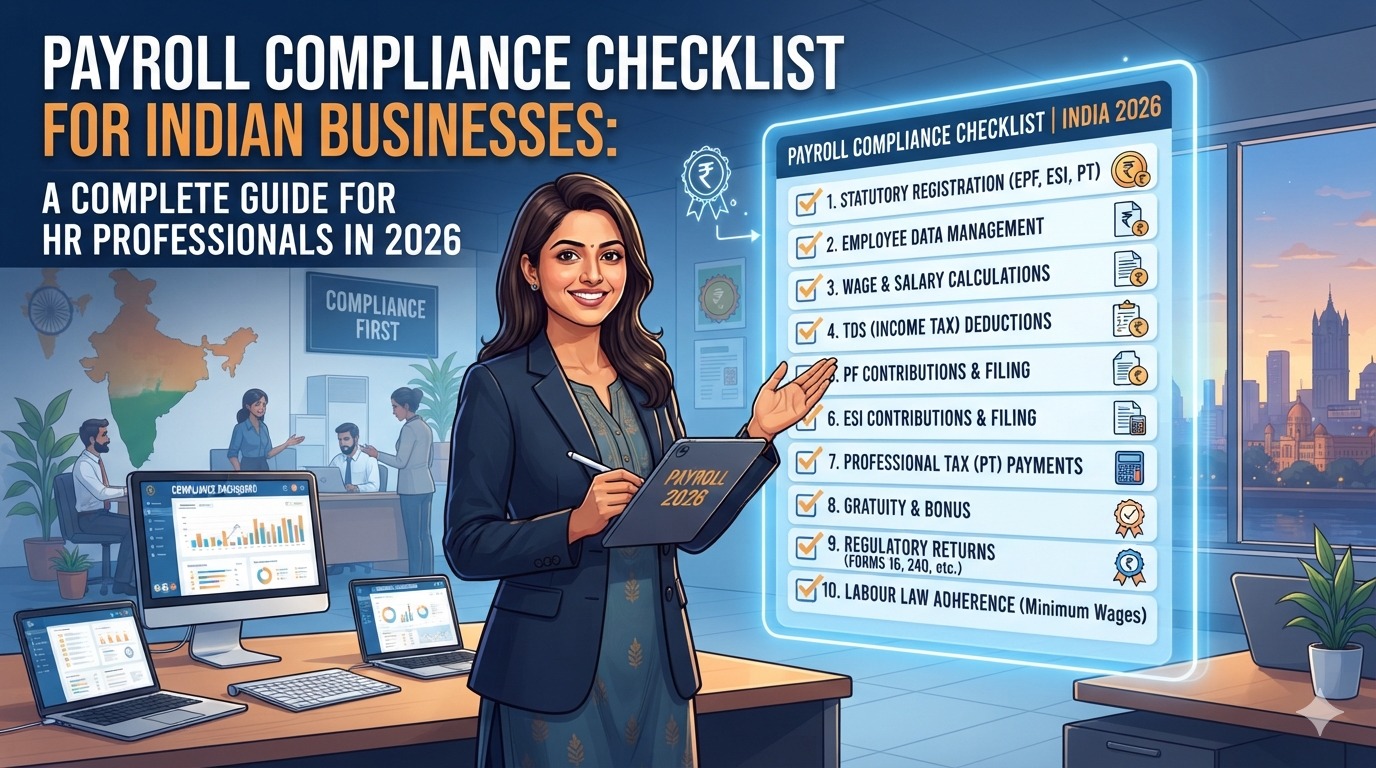
Payroll compliance is no longer just an operational responsibility—it is a strategic function that supports legal compliance, employee satisfaction, and business sustainability. As Indian businesses continue to embrace digital transformation and regulatory frameworks become more dynamic in 2026, organizations must build efficient payroll processes that prioritize accuracy, transparency, and compliance. By following a comprehensive payroll compliance checklist, employers can reduce legal risks, improve operational efficiency, and foster greater confidence among employees.
At Jobsglint, we believe that effective payroll management is one of the cornerstones of successful human resource management. Organizations that invest in compliant payroll practices today will not only avoid future compliance challenges but also create a stronger, more trustworthy workplace that supports long-term business growth.