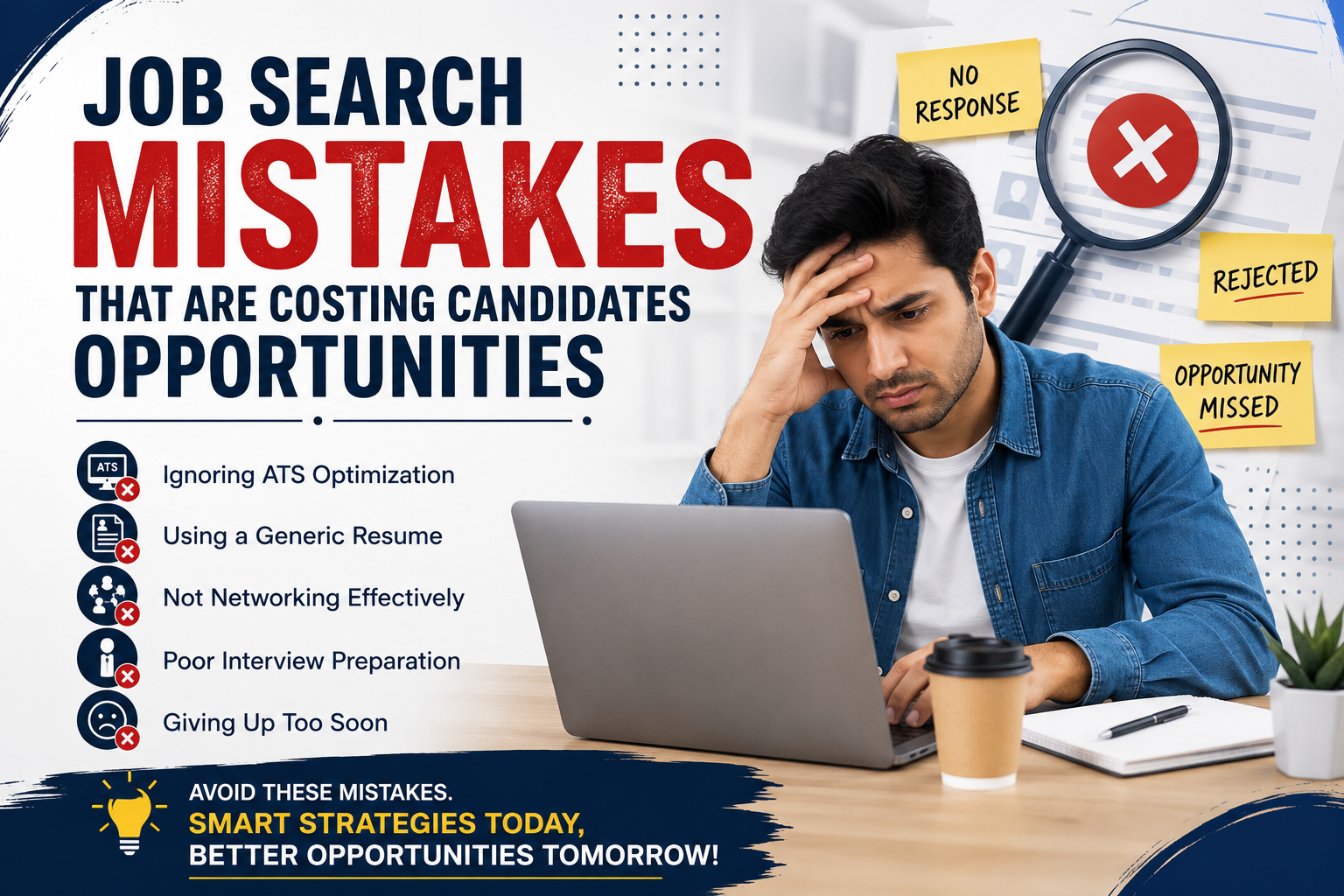
Introduction
Finding a job in today's competitive market is no longer just about submitting applications and waiting for a response. Employers are using advanced recruitment technologies, AI-powered screening systems, and skill-based hiring practices to identify the best candidates. While many job seekers focus on improving their qualifications, they often overlook critical mistakes that can significantly reduce their chances of getting hired.
A strong resume, relevant skills, and experience are important, but avoiding common job search mistakes can be equally valuable. Understanding these errors can help candidates stand out, secure more interviews, and ultimately land better job opportunities.
Applying to Too Many Jobs Without a Strategy
One of the biggest mistakes candidates make is sending the same resume to dozens or even hundreds of job openings. While this approach may seem productive, it often leads to poor results.
Employers look for candidates whose qualifications align with specific job requirements. Generic applications rarely make a strong impression and are more likely to be filtered out by Applicant Tracking Systems (ATS).
How to Avoid It
1.Focus on quality rather than quantity.
2.Carefully read job descriptions before applying.
3.Customize your resume and cover letter for each role.
4.Highlight skills and achievements that match the employer's requirements.
A targeted approach often produces better outcomes than mass applications.
Ignoring Applicant Tracking Systems (ATS)
Many companies use ATS software to screen resumes before they reach a recruiter. Candidates who fail to optimize their resumes for ATS may never have their applications reviewed by a human.
Common ATS mistakes include using complicated designs, graphics, tables, and missing important keywords from the job description.
How to Avoid It
1.Use a clean and professional resume format.
2.Include relevant keywords naturally throughout your resume.
3.Use standard section headings such as "Work Experience" and "Skills."
4.Save your resume in the preferred format requested by the employer.
ATS-friendly resumes significantly improve the chances of reaching the interview stage.
Neglecting LinkedIn and Online Presence
In 2026, recruiters often review a candidate's online presence before scheduling interviews. A poorly maintained LinkedIn profile or inactive professional presence can create a negative impression.
Many candidates spend hours updating their resumes but ignore their digital profiles.
How to Avoid It
1.Keep your LinkedIn profile complete and updated.
2.Use a professional profile photo.
3.Showcase certifications, achievements, and projects.
4.Engage with industry-related content regularly.
A strong online presence can attract recruiters even when you're not actively applying for jobs.
Failing to Network Effectively
Many job seekers rely solely on job portals and online applications. However, a significant number of opportunities are filled through professional networks and referrals.
Networking is not just about asking for jobs; it's about building meaningful professional relationships.
How to Avoid It
1.Connect with professionals in your industry.
2.Attend webinars, conferences, and networking events.
3.Participate in professional communities and discussion groups.
4.Reach out to former colleagues and mentors.
Strong professional connections often lead to valuable career opportunities.
Not Researching the Employer
Candidates sometimes apply for positions without learning about the company. This lack of preparation often becomes evident during interviews and can make candidates appear uninterested.
Employers prefer individuals who understand their business, values, and industry challenges.
How to Avoid It
1.Visit the company's website.
2.Review recent news and developments.
3.Understand the company's products, services, and culture.
4.Prepare thoughtful questions for the interview.
Demonstrating genuine interest can significantly improve interview performance.
Overlooking Skill Development
The modern job market evolves rapidly. Candidates who rely solely on their existing qualifications may struggle to compete with those who continuously upgrade their skills.
Employers increasingly prioritize practical skills over traditional credentials.
How to Avoid It
1.Identify in-demand skills in your industry.
2.Complete online courses and certifications.
3.Learn relevant digital tools and technologies.
4.Stay informed about industry trends.
Continuous learning increases employability and career growth potential.
Submitting a Weak Resume
A resume is often the first impression a candidate makes. Unfortunately, many resumes contain vague descriptions, spelling errors, outdated information, or irrelevant details.
Recruiters typically spend only a few seconds reviewing each application.
How to Avoid It
1.Use clear and concise language.
2.Quantify achievements whenever possible.
3.Remove outdated or unnecessary information.
4.Proofread carefully before submission.
A professional resume can significantly improve response rates from employers.
Lack of Interview Preparation
Receiving an interview invitation is only the first step. Many candidates fail because they underestimate the importance of preparation.
Poor communication, weak answers, and lack of confidence can quickly eliminate otherwise qualified applicants. How to Avoid It
1.Practice answering common interview questions.
2.Prepare examples that demonstrate your skills.
3.Research the interviewer and company.
4.Conduct mock interviews to improve confidence.
Preparation helps candidates communicate their value more effectively.
Giving Up Too Soon
Job searching can be challenging, especially in competitive industries. Rejections are common, but many candidates become discouraged and stop applying before finding the right opportunity.
Persistence is often a key factor in job search success.
How to Avoid It
1.Set realistic job search goals.
2.Track applications and follow up professionally.
3.Learn from feedback and improve continuously.
4.Stay positive and maintain consistency.
Every rejection provides an opportunity to refine your strategy.
Conclusion
The job market in 2026 rewards candidates who combine strong skills with smart job search strategies. While qualifications remain important, avoiding common mistakes can make a significant difference in career outcomes.
By optimizing resumes for ATS, maintaining a professional online presence, networking effectively, continuously upgrading skills, and preparing thoroughly for interviews, candidates can dramatically improve their chances of success. Job searching is not simply about finding vacancies—it's about presenting yourself as the best solution to an employer's needs. Those who adopt a strategic and proactive approach will be better positioned to secure rewarding career opportunities in today's evolving workplace.