Introduction
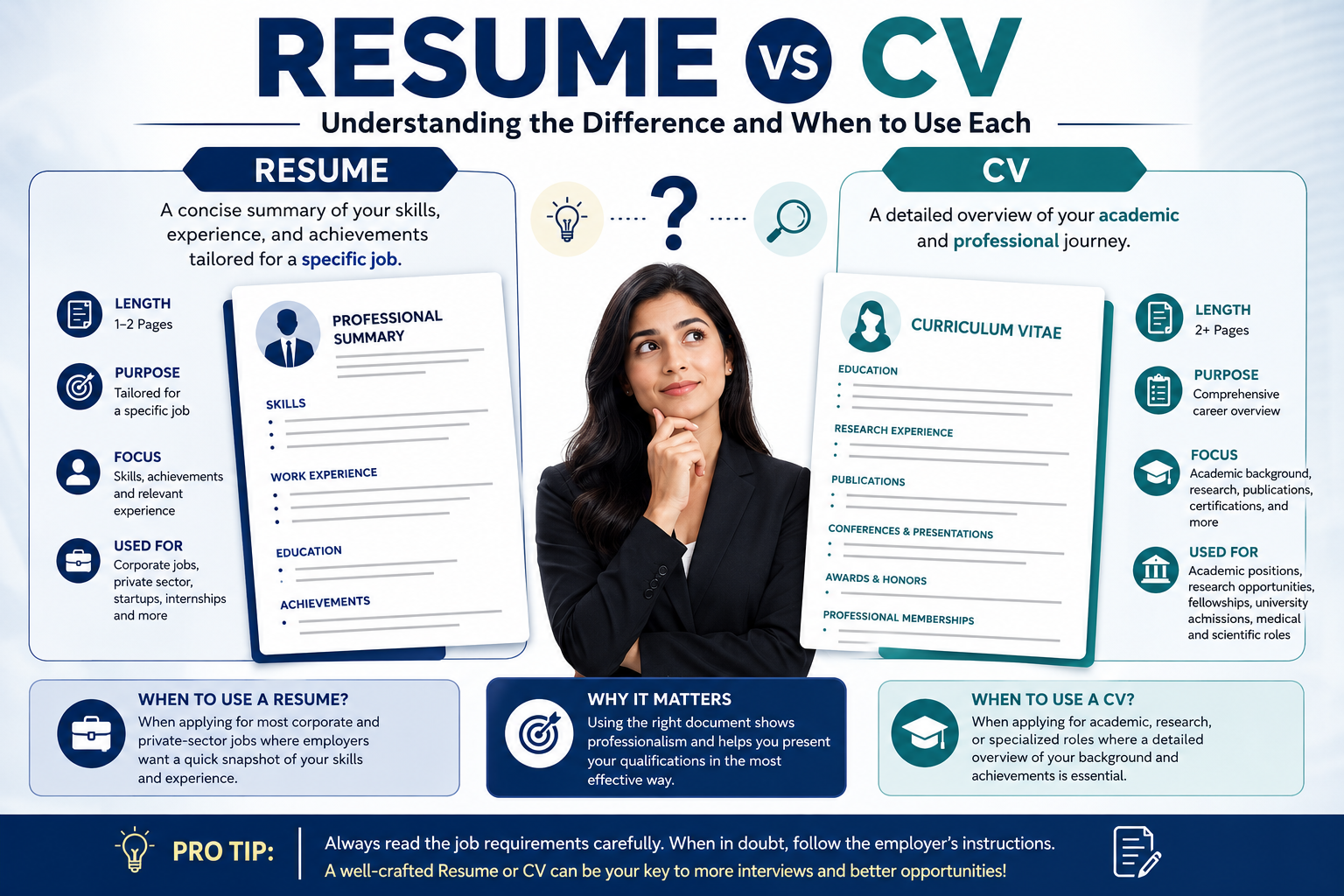
When applying for jobs, many candidates use the terms Resume and CV (Curriculum Vitae) interchangeably. While both documents are designed to showcase your qualifications, skills, and professional experience, they serve different purposes and are used in different situations.
Understanding the difference between a resume and a CV can significantly improve your job application strategy and increase your chances of securing interviews. Choosing the right document demonstrates professionalism and ensures that recruiters receive the information they expect.
At JobsGlint, we often encounter job seekers who are unsure whether they need a resume or a CV. This guide explains the key differences between the two and helps you determine when to use each.
What Is a Resume?
A resume is a concise document that summarizes your professional background, skills, achievements, and work experience. It is specifically tailored for a particular job position and highlights the qualifications most relevant to the role.
Key Characteristics of a Resume
1.Typically 1-2 pages long
2.Customized for each job application
3.Focuses on skills, accomplishments, and relevant experience
4.Designed to quickly capture a recruiter's attention
5.Commonly used in corporate and private-sector jobs
Recruiters often spend only a few seconds reviewing a resume. Therefore, it must be clear, concise, and optimized with relevant keywords.
What Is a CV?
A Curriculum Vitae (CV) is a detailed document that provides a comprehensive overview of your educational background, professional experience, research work, publications, certifications, awards, and other academic achievements.
Unlike a resume, a CV is not usually tailored for each application and often grows throughout your career.
Key Characteristics of a CV
1.Usually 2 or more pages long
2.Provides detailed career history
3.Includes academic qualifications and research work
4.Contains publications, presentations, and professional memberships
5.Commonly used in academia, research, education, and certain government sectors
A CV focuses on documenting your entire professional journey rather than summarizing only the most relevant information.
Major Differences Between a Resume and a CV
1. Length
Resume:
A resume is short and concise, generally limited to one or two pages.
CV:
A CV is more detailed and can extend to several pages depending on experience and accomplishments.
2. Purpose
Resume:
Created to target a specific job opening.
CV:
Provides a complete overview of your academic and professional career.
3. Content
Resume Includes:
1.Professional summary
2.SkillsWork experience
3.Education
4.Key achievements
CV Includes:
1.Educational qualifications
2.Research projects
3.Publications
4.Conferences attended
5.Certifications
6.Awards and honors
7.Teaching experience
8.Professional affiliations
4. Customization
Resume:
Should be customized for every job application.
CV:
Generally remains consistent, with periodic updates as new achievements are added.
5. Industries Where They Are Used
Resume:
1.Information Technology
2.Finance
3.Marketing
4.Sales
5.Human Resources
6.Operations
7.Corporate Management
CV:
1.Academia
2.Research
3.Medical professions
4.Scientific fields
5.Government research institutions
6.International educational opportunities
When Should You Use a Resume?
A resume is the preferred choice when applying for most private-sector jobs and corporate positions.
Use a Resume When:
1.Applying for corporate jobs
2.Seeking employment in startups
3.Applying through online job portals
4.Responding to recruiter outreach
5.Applying for internships
6.Pursuing career changes
Since recruiters receive hundreds of applications, a focused and well-structured resume helps you stand out from the competition.
When Should You Use a CV?
A CV is typically required when applying for positions that emphasize academic credentials, research contributions, or specialized expertise.
Use a CV When:
1.Applying for academic positions
2.Seeking research opportunities
3.Applying for fellowships
4.Pursuing doctoral programs
5.Applying for university admissions abroad
6.Seeking medical or scientific research roles
In these situations, employers need a detailed overview of your qualifications rather than a brief summary.
Why Choosing the Right Document Matters
Using the wrong document can reduce your chances of getting shortlisted.
For example, submitting a lengthy CV for a corporate sales position may overwhelm recruiters with unnecessary information. Similarly, providing a short resume for a university faculty position may fail to demonstrate your academic achievements adequately.
Understanding employer expectations helps you present your qualifications in the most effective manner.
How Professional Resume Writing Services Can Help
Many job seekers struggle to determine which information should be included and how to structure their documents effectively.
Professional resume writing services can help by:
Creating ATS-Friendly Documents
Modern companies use Applicant Tracking Systems (ATS) to screen applications. Professional writers optimize resumes with industry-relevant keywords to improve visibility.
Highlighting Achievements
Instead of listing responsibilities, professionals focus on measurable accomplishments that demonstrate value. Improving Presentation A professionally designed resume enhances readability and creates a strong first impression.
Customizing for Career Goals
Whether you need a resume for a corporate role or a CV for academic opportunities, expert guidance ensures your document aligns with employer expectations.
Why Job Seekers Trust JobsGlint
At JobsGlint, we understand that every career journey is unique. Our professional resume writing services help candidates create compelling resumes and CVs that effectively showcase their strengths.
Our experts focus on:
1.ATS optimization
2.Industry-specific content
3.Achievement-based writing
4.Modern formatting
5.Personal branding strategies
By presenting your experience in the most impactful way, we help you increase your chances of attracting recruiters and securing interviews.
Conclusion
Although resumes and CVs serve a similar purpose, they are fundamentally different documents. A resume is a concise, targeted summary designed for corporate and professional roles, while a CV provides a comprehensive record of academic and professional accomplishments.
Understanding when to use each can strengthen your job applications and improve your chances of career success. Whether you are a recent graduate, experienced professional, researcher, or executive, choosing the right document is a critical step toward achieving your career goals.
If you're unsure whether you need a resume or a CV, JobsGlint's professional writing experts can help you create a document that aligns perfectly with your career aspirations and today's hiring standards.