Introduction
The global workforce is undergoing a rapid transformation. Advances in artificial intelligence, automation, digital technologies, and evolving business models are changing the skills employers need from their workforce. While innovation is creating new opportunities, it is also widening a challenge that organizations across industries continue to face—the skills gap.
In 2026, many employers are struggling to find candidates with the right combination of technical expertise, digital literacy, and soft skills. At the same time, job seekers are finding it difficult to keep pace with changing workplace demands. The result is a growing mismatch between available talent and employer expectations.
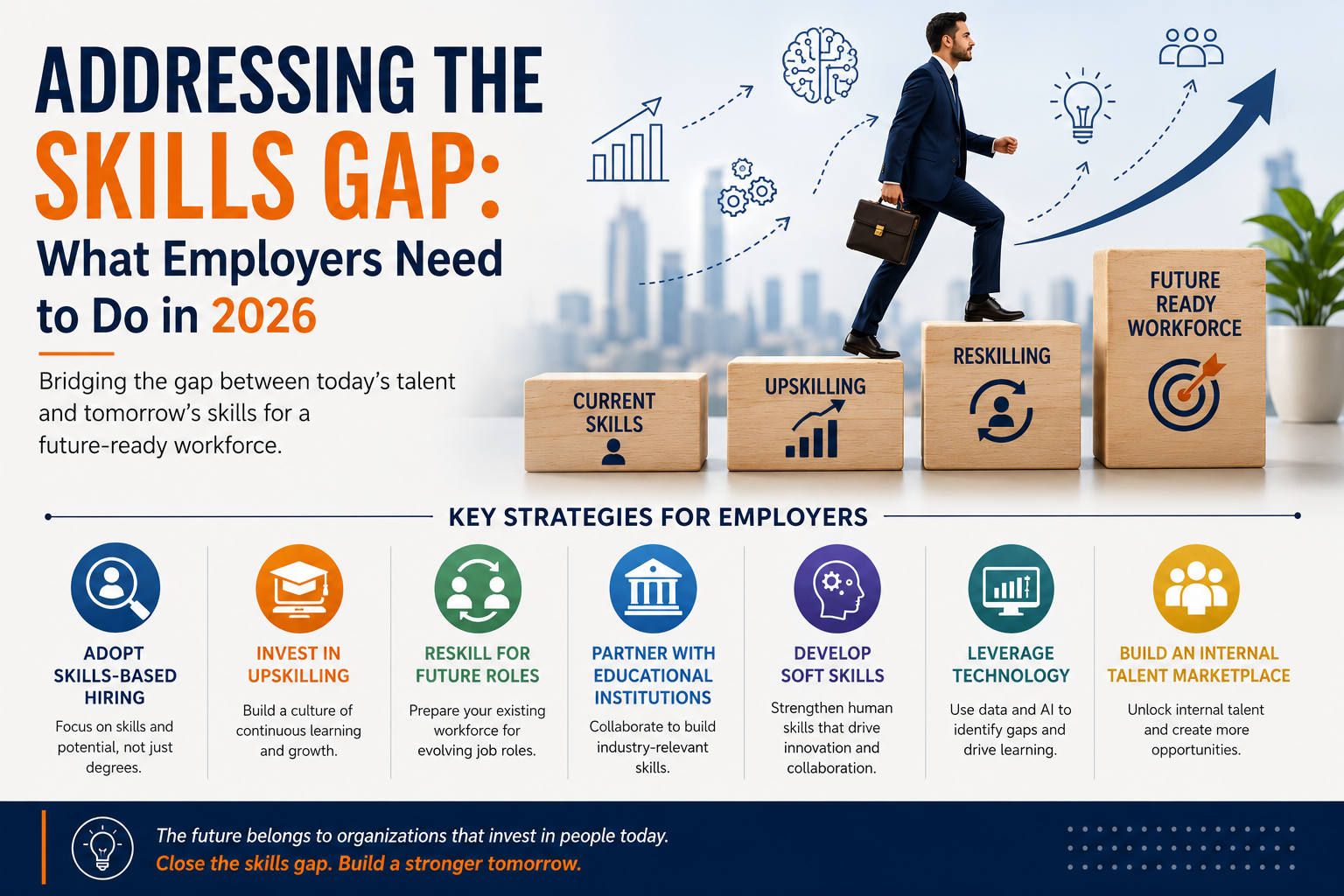
To remain competitive and future-ready, organizations must adopt proactive strategies to address the skills gap. Here's what employers need to do in 2026 to build a stronger, more capable workforce.
Understanding the Skills Gap
The skills gap occurs when the skills required for a job do not match the skills possessed by available candidates or current employees. This challenge affects businesses of all sizes and industries, from technology and healthcare to manufacturing and finance.
Several factors contribute to the skills gap, including:
1.Rapid technological advancements
2.Increased adoption of AI and automation
3.Evolving job roles and responsibilities
4.Outdated educational curricula
5.Insufficient workplace training programs
6.Changing workforce expectations
As industries continue to evolve, employers must recognize that traditional hiring approaches alone may no longer solve the problem.
Shift Toward Skills-Based Hiring
One of the most effective ways to address the skills gap is by moving away from rigid degree-based hiring requirements and embracing skills-based recruitment.
Instead of focusing solely on educational qualifications, employers should evaluate candidates based on their practical abilities, certifications, project experience, and demonstrated competencies.
Benefits of Skills-Based Hiring
1.Expands the talent pool
2.Increases workforce diversity
3.Reduces hiring bias
4.Identifies candidates with job-ready capabilities
5.Improves employee performance and retention
By prioritizing skills over credentials, organizations can discover qualified candidates who may otherwise be overlooked.
Invest in Continuous Learning and Upskilling
The pace of change in today's workplace means that learning cannot stop after onboarding. Employers must create a culture of continuous learning where employees regularly develop new skills and adapt to emerging technologies.
Effective Upskilling Strategies
Offer Online Learning Platforms
Provide employees access to industry-recognized learning platforms, certification programs, and digital courses.
Encourage Cross-Functional Training
Allow employees to gain exposure to different departments and responsibilities, helping them build versatile skill sets.
Create Personalized Learning Paths
Different employees have different career goals. Customized development plans help workers stay engaged while addressing organizational skill needs.
Companies that invest in employee development often experience higher productivity, stronger retention rates, and improved workforce agility.
Focus on Reskilling for Future Roles
Many existing jobs are evolving due to automation and AI integration. Rather than replacing workers, forward-thinking organizations are helping employees transition into new roles through reskilling initiatives.
For example, employees performing repetitive administrative tasks can be trained in data analysis, customer success, cybersecurity support, or digital operations.
Why Reskilling Matters
1.Reduces talent shortages
2.Preserves institutional knowledge
3.Improves employee loyalty
4.Lowers recruitment costs
5.Supports workforce transformation
Reskilling enables organizations to meet future workforce demands while creating growth opportunities for employees.
Strengthen Partnerships with Educational Institutions
Employers can play a more active role in shaping future talent by collaborating with universities, colleges, vocational institutes, and training providers.
Collaborative Approaches Include:
1.Internship programs
2.Apprenticeships
3.Industry-sponsored certifications
4.Curriculum development partnerships
5.Campus mentorship initiatives
Such partnerships help ensure that students graduate with skills that align more closely with real-world industry requirements.
Prioritize Soft Skills Development
While technical skills remain important, employers increasingly value soft skills that contribute to workplace success.
Essential Soft Skills in 2026
1.Communication
2.Critical thinking
3.Problem-solving
4.Adaptability
5.Emotional intelligence
6.Leadership
7.Collaboration
As AI handles more routine tasks, human-centric skills become even more valuable. Organizations should include soft skills training as part of their employee development programs.
Leverage Technology for Talent Development
Modern HR technologies can help employers identify skill gaps, track employee progress, and personalize learning opportunities.
Useful Technology Solutions
Skills Assessment Platforms
These tools evaluate current workforce capabilities and identify areas for improvement.
Learning Management Systems (LMS)
LMS platforms streamline training delivery and employee development tracking.
AI-Powered Workforce Analytics
Advanced analytics help organizations predict future skill requirements and make data-driven workforce planning decisions.
Technology enables employers to move from reactive hiring to proactive talent development.
Build an Internal Talent Marketplace
Many organizations overlook the talent they already have. Internal talent marketplaces allow employees to explore new projects, temporary assignments, and career opportunities within the company.
This approach helps organizations:
1.Fill skill gaps faster
2.Improve employee engagement
3.Retain top talent
4.Reduce external hiring costs
Employees gain valuable experience while employers maximize the potential of their existing workforce.
Create a Future-Ready Workforce Strategy
Addressing the skills gap requires long-term planning rather than short-term hiring fixes. Employers should regularly assess future workforce needs and align talent strategies with business objectives.
A future-ready workforce strategy should include:
1.Workforce planning
2.Skills forecasting
3.Leadership development
4.Continuous learning programs
5.Diversity and inclusion initiatives
6.Technology adoption plans
Organizations that plan ahead are better positioned to adapt to market changes and maintain a competitive advantage.
Conclusion
The skills gap is one of the most significant workforce challenges facing employers in 2026. However, it also presents an opportunity for organizations to rethink how they attract, develop, and retain talent.
By embracing skills-based hiring, investing in upskilling and reskilling, strengthening educational partnerships, leveraging technology, and fostering a culture of continuous learning, employers can build resilient and future-ready teams.
The companies that succeed in the coming years will not necessarily be those with the largest workforce, but those with the most adaptable, skilled, and empowered employees. Addressing the skills gap today is an investment in long-term business growth, innovation, and workforce sustainability.