Introduction
Mobile applications have become an essential part of modern business operations. From customer engagement and online shopping to financial transactions and internal communication, mobile apps help organizations connect with users more efficiently than ever before. However, as mobile app usage continues to grow, so do cybersecurity threats. Data breaches, malware attacks, unauthorized access, and privacy violations can significantly impact a company's reputation and financial stability.
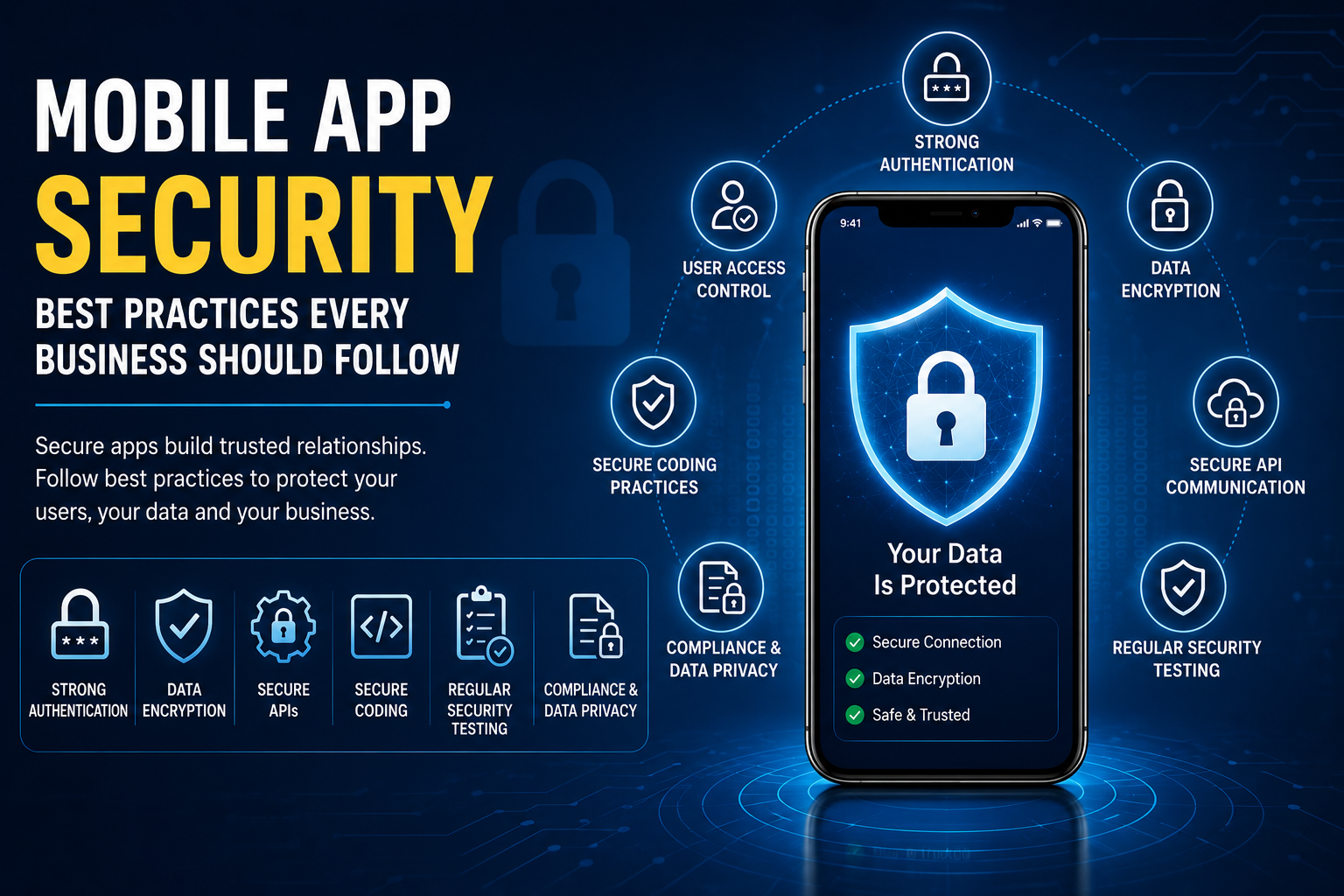
For businesses investing in mobile app development, security should never be an afterthought. Implementing robust security measures from the beginning can protect sensitive user data, ensure regulatory compliance, and build customer trust. In this article, we'll explore the most important mobile app security best practices every business should follow.
Why Mobile App Security Matters
A single security vulnerability can expose confidential customer information, payment details, and business data. Cybercriminals often target mobile applications because they contain valuable user information and may have weak security controls. Strong mobile app security helps businesses:
1.Protect sensitive customer data
2.Prevent financial losses from cyberattacks
3.Maintain brand reputation
4.Ensure compliance with data protection regulations
5.Build user trust and loyalty
By prioritizing security throughout the development lifecycle, businesses can reduce risks and create a safer digital experience for users.
1. Implement Strong Authentication Mechanisms
One of the most effective ways to secure a mobile application is through strong user authentication. Weak login systems can make it easier for attackers to gain unauthorized access.
Best Practices:
1.Enable Multi-Factor Authentication (MFA)
2.Use biometric authentication such as fingerprint or facial recognition
3.Enforce strong password policies
4.Implement session timeout features
5.Use secure token-based authentication systems
Strong authentication significantly reduces the chances of account compromise.
2. Encrypt Sensitive Data
Data encryption is a fundamental security measure that protects information both during transmission and while stored on devices or servers.
Data That Should Be Encrypted:
1.User credentials
2.Personal information
3.Financial data
4.Transaction records
Business-sensitive information
Businesses should use modern encryption standards such as AES-256 for data storage and SSL/TLS protocols for data transmission. Encryption ensures that even if data is intercepted, it remains unreadable to unauthorized individuals.
3. Secure API Communications
Most mobile applications rely on APIs to communicate with servers and third-party services. APIs often become prime targets for cyberattacks if not properly secured.
API Security Best Practices:
1.Use HTTPS for all API communications
2.Implement authentication and authorization controls
3.Validate all incoming requests
4.Limit API access through rate limiting
5.Regularly monitor API activity
Secure APIs help prevent data leaks, unauthorized access, and service disruptions.
4. Follow Secure Coding Practices
Security should be integrated into every stage of mobile app development. Poor coding practices can introduce vulnerabilities that hackers can exploit.
Key Secure Coding Techniques:
1.Validate all user inputs
2.Avoid hardcoded credentials
3.Use secure libraries and frameworks
4.Regularly update dependencies
5.Follow platform-specific security guidelines
Conducting regular code reviews and security audits helps identify vulnerabilities before they become serious threats.
5. Minimize Data Storage on Devices
Storing excessive user data on mobile devices increases security risks. If a device is lost, stolen, or compromised, attackers may gain access to sensitive information.
Recommendations:
1.Store only essential data locally
2.Use encrypted storage solutions
3.Remove unnecessary cached information
4.Implement automatic logout features
Reducing local data storage minimizes potential exposure in case of device compromise.
6. Conduct Regular Security Testing
Security testing should be a continuous process rather than a one-time activity. Regular assessments help businesses identify vulnerabilities before attackers do.
Types of Security Testing:
1.Penetration Testing
2.Vulnerability Assessments
3.Static Application Security Testing (SAST)
4.Dynamic Application Security Testing (DAST)
5.Mobile App Penetration Testing
Frequent testing ensures that security measures remain effective as the application evolves.
7. Keep Third-Party Integrations Secure
Many mobile applications depend on third-party SDKs, APIs, analytics tools, and payment gateways. While these integrations improve functionality, they can also introduce security risks.
Best Practices:
1.Use trusted third-party providers
2.Regularly update SDKs and libraries
3.Review third-party security policies
4.Limit permissions granted to external services
Businesses should carefully evaluate all third-party components before integrating them into their applications.
8. Implement Role-Based Access Control (RBAC)
Not every user or employee should have access to all application features and data. Role-Based Access Control helps limit access based on responsibilities.
Benefits of RBAC:
1.Reduces insider threats
2.Protects sensitive information
3.Improves compliance
4.Simplifies access management
Granting users only the permissions they need minimizes the risk of unauthorized actions.
9. Ensure Compliance with Privacy Regulations
Businesses must comply with various data protection regulations depending on their industry and geographic location.
Common Regulations:
1.GDPR (General Data Protection Regulation)
2.CCPA (California Consumer Privacy Act)
3.HIPAA (Healthcare Industry)
4.PCI DSS (Payment Processing)
Compliance not only helps avoid legal penalties but also demonstrates a commitment to user privacy and data protection.
10. Monitor and Respond to Security Threats
Even with strong security measures in place, businesses must continuously monitor applications for suspicious activity.
Essential Monitoring Practices:
1.Real-time threat detection
2.Security event logging
3.User activity monitoring
4.Automated alert systems
5.Incident response planning
A proactive security monitoring strategy helps businesses respond quickly to potential threats and minimize damage.
Future of Mobile App Security
As mobile technology continues to evolve, new security challenges will emerge. Artificial Intelligence, machine learning, biometric authentication, and zero-trust security frameworks are expected to play an increasingly important role in protecting mobile applications.
Businesses that stay ahead of evolving threats and invest in modern security practices will be better positioned to safeguard user data and maintain customer confidence.
Conclusion
Mobile app security is no longer optional—it's a business necessity. As cyber threats become more sophisticated, organizations must take a proactive approach to protecting their applications and user data. By implementing strong authentication, encrypting sensitive information, securing APIs, conducting regular testing, and maintaining compliance with privacy regulations, businesses can significantly reduce security risks.
At Softechedge, we believe that security should be built into every stage of mobile app development. A secure application not only protects your business but also enhances user trust, strengthens your brand reputation, and supports long-term growth in an increasingly digital world.