Introduction
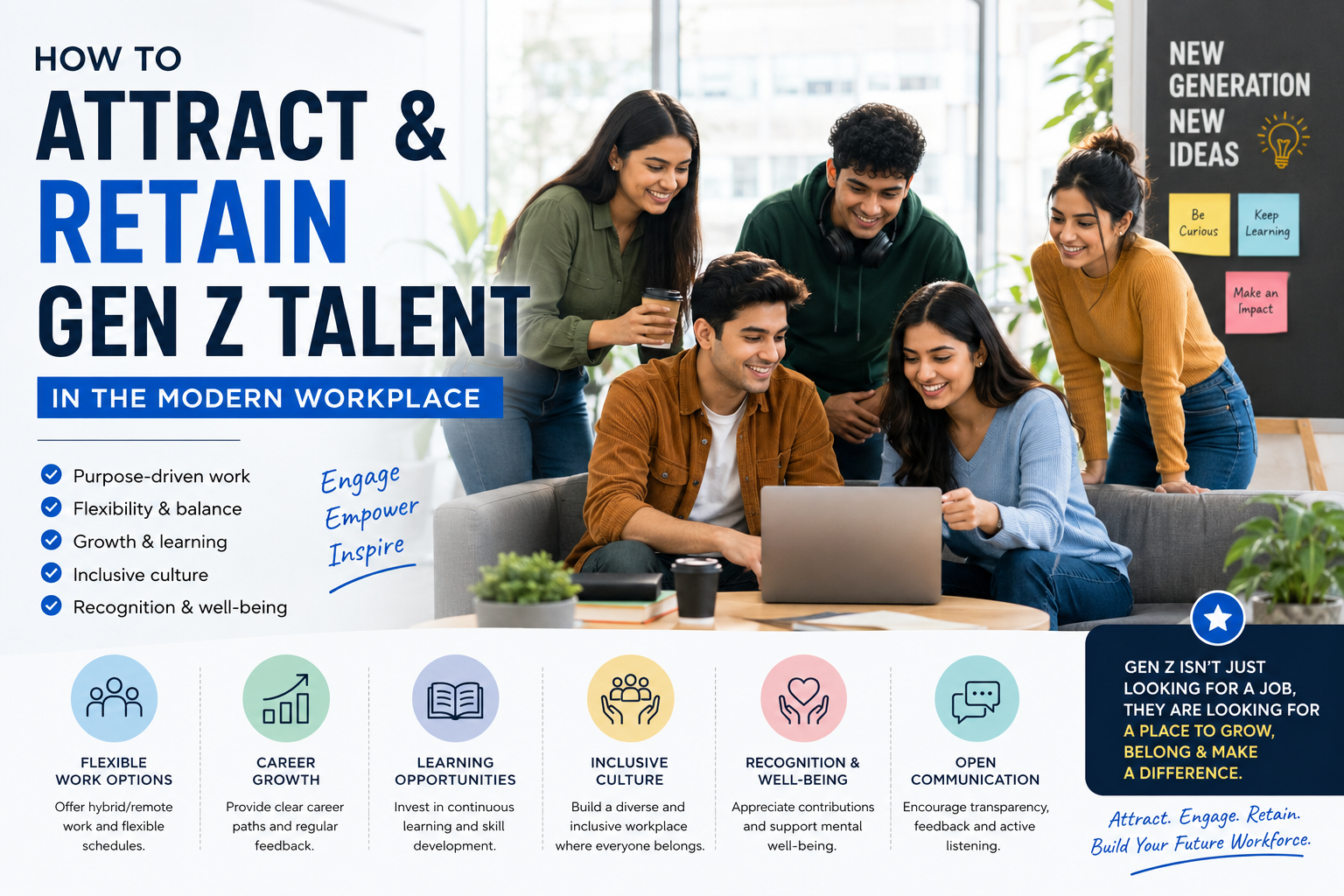
As Generation Z enters the workforce in growing numbers, organizations are facing a new challenge: attracting and retaining a generation with different expectations, values, and career aspirations. Born roughly between 1997 and 2012, Gen Z employees are digital natives who prioritize flexibility, purpose, career growth, and workplace culture as much as salary.
For employers, understanding what motivates Gen Z is no longer optional—it's essential for building a future-ready workforce. Companies that adapt their hiring and retention strategies to meet the needs of this generation will gain a significant competitive advantage in today's talent-driven market.
Understanding Gen Z: What Makes Them Different?
Unlike previous generations, Gen Z has grown up in a world shaped by technology, social media, economic uncertainty, and rapid change. As a result, they bring unique expectations to the workplace.
Gen Z values:
1.Meaningful work and social impact
2.Work-life balance and flexibility
3.Continuous learning opportunities
4.Diversity, equity, and inclusion
5.Transparent communication
6.Career growth and development
They are not just looking for jobs—they are looking for workplaces that align with their values and support their personal and professional growth.
Building a Strong Employer Brand
A strong employer brand is one of the most effective ways to attract Gen Z talent. Before applying for a position, many young candidates research company culture, employee reviews, social responsibility initiatives, and leadership practices.
How to Strengthen Your Employer Brand
1.Showcase company culture on social media platforms.
2.Share employee success stories and testimonials.
3.Highlight diversity and inclusion initiatives.
4.Demonstrate commitment to sustainability and social causes.
5.Maintain transparency about workplace policies and values.
Gen Z wants to work for organizations they can trust and proudly associate themselves with.
Offer Flexible Work Arrangements
Flexibility has become one of the top priorities for Gen Z employees. The traditional 9-to-5 office model is no longer the preferred option for many young professionals.
Flexible Work Options Include:
1.Hybrid work models
2.Remote work opportunities
3.Flexible working hours
4.Results-oriented performance measurement
Providing flexibility not only attracts Gen Z candidates but also improves employee satisfaction and productivity.
Create Clear Career Growth Opportunities
Career advancement is a major factor influencing Gen Z's decision to stay with an employer. This generation seeks continuous development and wants to see a clear path for progression.
Effective Growth Strategies
1.Structured onboarding programs
2.Regular performance feedback
3.Mentorship opportunities
4.Leadership development programs
5.Access to training and certification courses
Employees who see opportunities for growth are more likely to remain engaged and committed to the organization.
Prioritize Learning and Skill Development
The modern job market is evolving rapidly, and Gen Z understands the importance of staying relevant. They actively seek employers who invest in learning and development.
Organizations can attract and retain young talent by offering:
1.Online learning platforms
2.Industry-specific training
3.Upskilling and reskilling programs
4.Cross-functional projects
5.Professional development workshops
A culture of learning helps employees grow while ensuring businesses remain competitive.
Foster an Inclusive and Diverse Workplace
Gen Z is the most diverse generation in history and places significant importance on workplace inclusivity. They expect organizations to create environments where all employees feel respected, valued, and empowered.
Key Areas of Focus
1.Equal opportunities for all employees
2.Inclusive hiring practices
3.Diversity training programs
4.Employee resource groups
5.Fair and transparent workplace policies
An inclusive culture not only improves retention but also strengthens innovation and collaboration.
Embrace Technology and Digital Tools
As digital natives, Gen Z employees expect modern workplaces equipped with efficient technology. Outdated systems and complicated processes can negatively impact their employee experience.
Companies should invest in:
1.Digital collaboration tools
2.AI-powered HR solutions
3.Mobile-friendly communication platforms
4.Automated workflows
5.Modern recruitment technologies
Technology enhances productivity and creates a workplace environment that aligns with Gen Z expectations.
Encourage Open Communication
Gen Z appreciates transparency and regular communication from leaders. They value constructive feedback and want to feel heard within the organization.
Best Practices
1.Conduct regular one-on-one meetings Encourage employee feedback
2.Create open communication channels
3.Recognize achievements frequently
4.Share company updates transparently
Strong communication builds trust and fosters a positive workplace culture.
Recognize and Reward Contributions
Recognition plays a crucial role in employee engagement and retention. Gen Z employees appreciate acknowledgment for their efforts and achievements.
Recognition can include:
1.Employee appreciation programs
2.Performance-based rewards
3.Public recognition
4.Career advancement opportunities
5.Personalized incentives
When employees feel valued, they are more likely to remain loyal to the organization.
Focus on Employee Well-Being
Mental health and overall well-being are top priorities for Gen Z. Organizations that actively support employee wellness create stronger and more resilient teams.
Wellness Initiatives May Include:
1.Mental health support programs
2.Employee assistance services
3.Wellness workshops
4.Flexible leave policies
5.Work-life balance initiatives
A healthy workforce contributes to higher productivity, engagement, and retention.
Conclusion
Attracting and retaining Gen Z talent requires more than competitive salaries. Today's young professionals seek purpose, flexibility, growth opportunities, inclusivity, and meaningful workplace experiences. Organizations that invest in modern hiring practices, employee development, workplace culture, and well-being will be better positioned to attract top Gen Z talent and retain them for the long term.
As the workforce continues to evolve, businesses that understand and adapt to the expectations of Gen Z will not only strengthen their talent pipeline but also build a more innovative, engaged, and future-ready organization.