Introduction
For decades, college degrees were considered the most important requirement for getting a good job. Employers often judged candidates based on where they studied and what qualifications they had. But today, the hiring landscape is changing rapidly. Companies are now focusing more on skills, practical experience, and real-world abilities rather than just academic degrees.
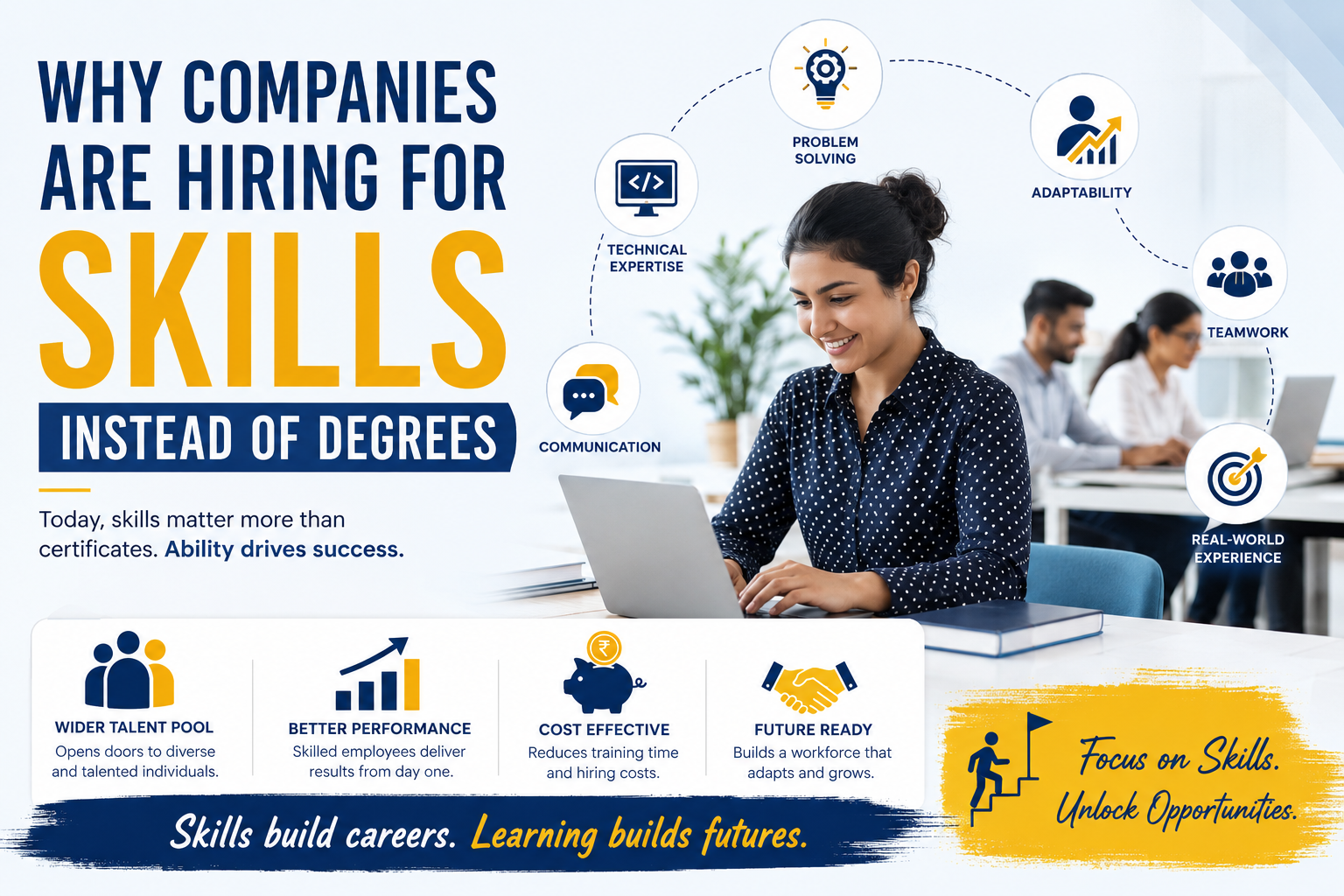
In 2026, businesses across industries are adopting skills-based hiring to find employees who can deliver results from day one. Employers are realizing that having a degree does not always guarantee the right skills for modern jobs. As technology evolves and industries become more competitive, organizations need professionals who can adapt quickly, solve problems, and continuously learn new things.
This shift is creating new opportunities for job seekers who may not have traditional degrees but possess valuable skills and hands-on experience.
What Is Skills-Based Hiring?
Skills-based hiring is a recruitment approach where companies evaluate candidates based on their abilities, experience, and competencies instead of focusing only on educational qualifications.
Employers assess whether a candidate can perform the required tasks effectively rather than simply checking their degree certificates. This includes technical expertise, communication abilities, leadership qualities, creativity, problem-solving, and industry-specific knowledge.
For example, a software company may prefer a candidate with strong coding skills and project experience even if they do not hold a computer science degree.
Why Companies Are Moving Beyond Degrees
1. Degrees Do Not Always Reflect Real Skills
Many employers have discovered that academic qualifications alone are not enough to measure a person’s ability to perform in a real work environment. Some candidates may have excellent degrees but lack practical knowledge, communication skills, or adaptability.
At the same time, many self-taught professionals, online learners, and experienced workers possess strong industry-relevant skills despite not having formal degrees.
This has encouraged companies to focus more on what candidates can actually do rather than what certificates they hold.
2. Technology Is Changing Jobs Rapidly
The modern workplace is evolving faster than ever before. Artificial Intelligence, automation, cloud computing, cybersecurity, digital marketing, and data analytics are constantly creating new job roles and skill requirements. Traditional college programs often struggle to keep up with these rapid industry changes. By the time students graduate, some skills taught in classrooms may already be outdated.
As a result, employers now value candidates who continuously upgrade themselves through certifications, online courses, workshops, and practical experience.
3. Companies Want Job-Ready Employees
Businesses today prefer employees who can contribute immediately without requiring long training periods. Skills-based hiring helps organizations find candidates who already possess the required technical and soft skills.
This improves productivity and reduces hiring and training costs.
For example, companies hiring graphic designers now focus more on portfolios, creativity, and software expertise rather than only educational qualifications.
The Growing Importance of Practical Experience
Hands-On Experience Matters
Real-world experience has become one of the most valuable assets in the job market. Internships, freelance work, live projects, and industry exposure help candidates build practical knowledge that employers appreciate.
Many companies now ask candidates to complete skill tests, practical assignments, or portfolio reviews during the hiring process.
This allows recruiters to evaluate actual capabilities instead of relying only on resumes and degrees.
Online Learning Has Changed Recruitment
The rise of online learning platforms has made skill development more accessible than ever. People can now learn coding, digital marketing, graphic design, video editing, AI tools, and many other professional skills from anywhere in the world.
As a result, employers are increasingly accepting certifications and practical expertise gained through online platforms and self-learning programs.
This has opened career opportunities for millions of talented individuals who may not have traditional educational backgrounds.
Industries Leading the Skills-Based Hiring Trend
Information Technology (IT)
The IT sector is one of the biggest supporters of skills-based hiring. Companies prioritize coding ability, software expertise, cybersecurity knowledge, and project experience over degrees.
Many successful developers and tech professionals today are self-taught or trained through bootcamps and certifications.
Digital Marketing
In digital marketing, practical skills matter more than academic qualifications. Employers look for candidates who understand SEO, social media marketing, paid advertising, content strategy, and analytics tools.
A strong portfolio and proven results often carry more value than a degree certificate.
Creative Industries
Fields such as graphic design, animation, video editing, photography, and content creation depend heavily on creativity and practical ability.
Employers judge candidates based on portfolios and previous work rather than formal education.
Benefits of Skills-Based Hiring for Companies
Better Hiring Decisions
By focusing on skills, companies can identify candidates who are genuinely capable of performing the job effectively.
This reduces the risk of bad hiring decisions and improves employee performance.
Access to a Larger Talent Pool
When companies remove strict degree requirements, they gain access to a wider range of talented individuals from diverse backgrounds.
This includes self-taught professionals, career changers, freelancers, and skilled workers from non-traditional educational paths.
Improved Workplace Diversity
Skills-based hiring promotes equal opportunities by giving candidates a fair chance based on their abilities rather than academic status.
This creates a more inclusive and diverse workforce.
What Job Seekers Should Focus On
Learn High-Demand Skills
Candidates should focus on developing industry-relevant skills that employers are actively looking for. Some high-demand skills in 2026 include:
1.Artificial Intelligence (AI)
2.Data Analytics
3.Cybersecurity
4.Digital Marketing
5.UI/UX Design
6.Cloud Computing
7.Video Editing
8.Communication Skills
Build a Strong Portfolio
A portfolio showcasing projects, achievements, certifications, and practical work can significantly improve job opportunities.
Employers want proof of skills, not just claims on a resume.
Keep Learning Continuously
The modern job market rewards people who constantly upgrade themselves. Continuous learning through online courses, certifications, webinars, and practical projects is becoming essential for career growth.
The Future of Hiring
The future of recruitment will likely combine both education and practical skills. Degrees will still have value in many professions, but they may no longer be the only pathway to success.
Employers are increasingly recognizing that talent can come from anywhere. What matters most is the ability to learn, adapt, solve problems, and contribute effectively to the organization.
Skills-based hiring is not just a temporary trend — it is becoming the future of recruitment.
Conclusion
The hiring world is changing rapidly, and companies are now prioritizing skills over degrees more than ever before. Businesses want professionals who can deliver results, adapt to changing technologies, and continue learning throughout their careers.
For job seekers, this shift creates exciting opportunities. Even without a traditional degree, individuals with the right skills, practical experience, and dedication can build successful careers.
In today’s competitive job market, your abilities, creativity, and willingness to grow may matter more than the title on your certificate.