Introduction
In today’s competitive job market, having a well-designed resume is no longer enough. Recruiters and hiring managers receive hundreds of applications for a single position, making it difficult to manually review every resume in detail. This is where keywords play a crucial role in modern resume writing.
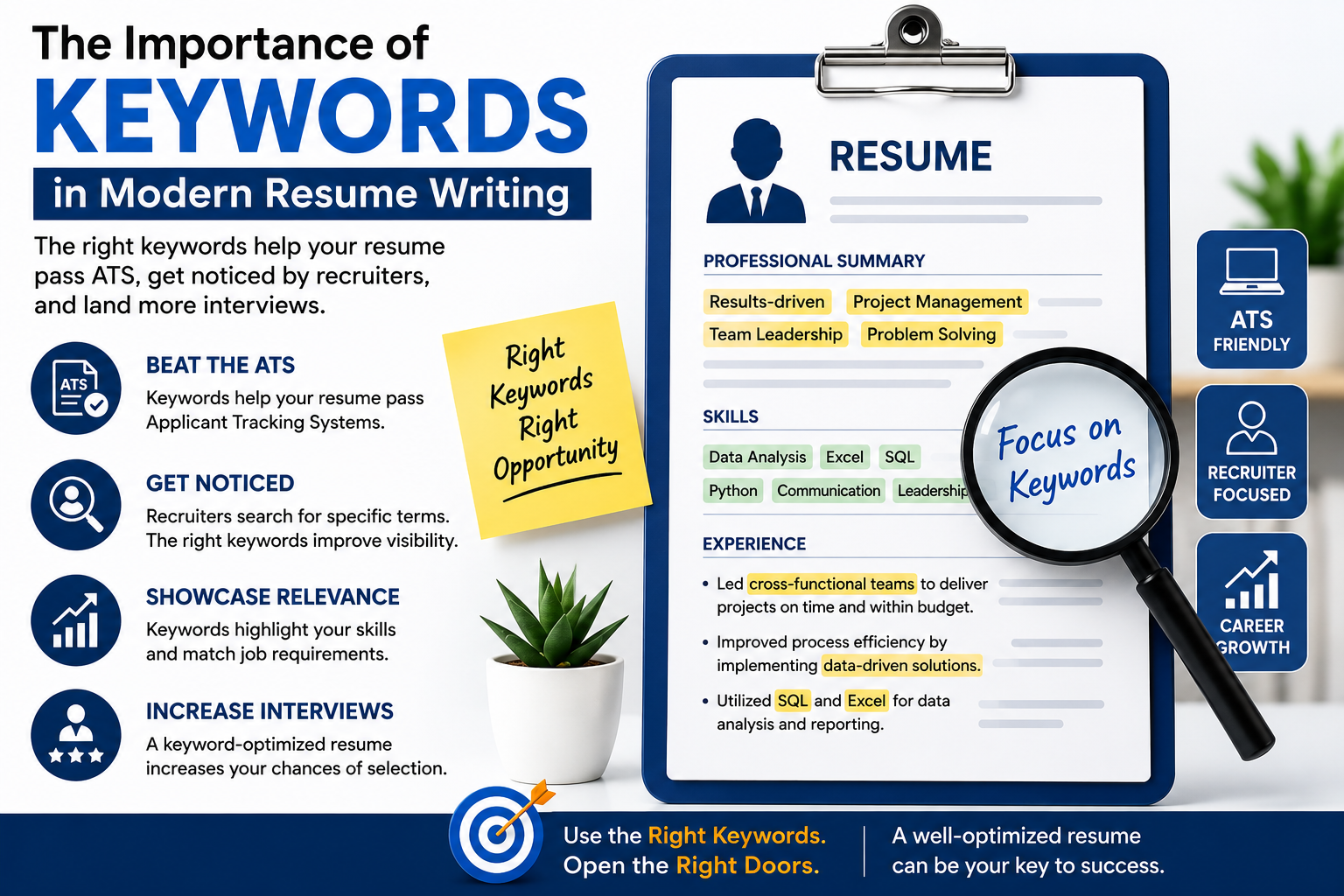
Keywords are specific words or phrases related to job skills, qualifications, industry terms, and experiences that employers look for while screening applications. They help your resume pass through Applicant Tracking Systems (ATS) and increase your chances of reaching the recruiter’s desk.
At Jobsglint, we understand how important keyword optimization is for creating interview-winning resumes. A resume with the right keywords can significantly improve visibility and help candidates stand out in today’s digital hiring process.
What Are Resume Keywords?
Resume keywords are terms that describe your:
1.Skills
2.Qualifications
3.Job titles
4.Certifications
5.Technical expertise
6.Industry-specific knowledge
7.Work experience
For example, if a company is hiring for a Digital Marketing Executive role, common keywords may include:
1.SEO
2.Social Media Marketing
3.Google Analytics
4.Content Strategy
5.PPC Campaigns
6.Lead Generation
Recruiters and ATS software search for these keywords to identify suitable candidates. If your resume lacks these important terms, it may never reach the hiring manager, even if you are qualified for the job.
Why Keywords Matter in Modern Hiring
1. Helps Pass Applicant Tracking Systems (ATS)
Most companies today use ATS software to filter resumes before they are reviewed by recruiters. These systems scan resumes for relevant keywords based on the job description.
If your resume contains the required keywords, the ATS ranks your application higher. Without proper keyword optimization, your resume may get rejected automatically.
This is one of the biggest reasons why keyword-focused resume writing has become essential.
2. Improves Resume Visibility
Recruiters often search databases using specific terms to find candidates. Including relevant keywords improves your resume’s visibility in online job portals and recruitment systems.
For example, if a recruiter searches for “Project Management” or “Python Developer,” resumes containing those keywords are more likely to appear in search results.
3. Demonstrates Industry Knowledge
Using the right keywords shows that you understand your industry and role requirements. It reflects professionalism and awareness of current market expectations.
A well-optimized resume communicates that you are familiar with industry tools, technologies, and responsibilities.
How to Identify the Right Keywords
Analyze Job Descriptions
The best source for resume keywords is the job description itself. Carefully read the posting and identify repeated terms related to:
1.Skills
2.Qualifications
3.Responsibilities
4.Software
5.Certifications
These repeated words are usually the keywords recruiters and ATS systems prioritize.
Research Industry Trends
Different industries use different terminology. Stay updated with current trends and commonly used terms in your field.
For example:
1.IT professionals may need keywords like Cloud Computing, AI, Data Analysis, or Cybersecurity.
2.HR professionals may use Talent Acquisition, Employee Engagement, or Payroll Management.
3.Sales professionals may focus on Client Relationship Management, Revenue Growth, and Negotiation Skills.
Use Professional Networking Platforms
Platforms
like LinkedIn can help identify trending skills and keywords used by professionals in your target industry.
Review profiles of successful professionals and observe the keywords used in their summaries and experience sections.
Where to Place Keywords in Your Resume
Keyword placement is just as important as keyword selection. Adding keywords naturally throughout the resume improves effectiveness.
Professional Summary
Your summary should contain role-specific keywords that highlight your expertise.
Example:
“Results-driven Digital Marketing Professional with expertise in SEO, PPC campaigns, social media strategy, and content marketing.”
Skills Section
This is one of the most important sections for ATS optimization. Include both technical and soft skills relevant to the role.
Example:
1.Project Management
2.Data Analysis
3.Team Leadership
4.Communication Skills
5.CRM Software
Work Experience
Use keywords while describing your achievements and responsibilities.
Instead of writing:
“Handled online campaigns.”
Write:
“Managed SEO and PPC campaigns to increase website traffic and lead generation.”
Certifications and Education
Include certifications, courses, and qualifications that match the job description.
Example:
1.Google Ads Certification
2.AWS Certified Solutions Architect
3.PMP Certification
Common Mistakes to Avoid
Keyword Stuffing
Adding too many keywords unnaturally can make your resume look unprofessional. Recruiters can easily identify keyword stuffing.
Use keywords naturally within meaningful content.
Using Irrelevant Keywords
Only include keywords relevant to your skills and experience. Misleading information can create problems during interviews.
Ignoring Soft Skills
Many candidates focus only on technical skills and ignore soft skills like communication, leadership, and teamwork. Modern employers value both technical expertise and interpersonal abilities.
The Role of Professional Resume Writing Services
Creating a keyword-optimized resume requires strategy, research, and understanding of ATS systems. This is why many job seekers prefer professional resume writing services.
At Jobsglint, our experts create customized resumes tailored to specific industries and job roles. We carefully analyze job requirements and include the right keywords to improve ATS performance and recruiter visibility.
Our resume writing services help candidates:
1.Build ATS-friendly resumes
2.Improve keyword optimization
3.Highlight achievements effectively
4.Increase interview opportunities
5.Create professional and modern resume formats
Whether you are a fresher, experienced professional, or someone changing careers, a professionally written resume can make a significant difference.
Future of Resume Writing
As recruitment technology continues to evolve, keyword optimization will become even more important. AI-driven hiring systems are already changing the way companies screen applications.
Job seekers who understand how to use keywords effectively will have a major advantage in the hiring process. Modern resume writing is no longer just about listing qualifications — it is about presenting your skills strategically to match employer expectations.
Conclusion
Keywords have become a powerful element in modern resume writing. They help resumes pass ATS filters, improve visibility, and increase the chances of getting shortlisted for interviews.
A strong keyword strategy ensures that your resume aligns with job requirements and stands out in a crowded job market. However, effective keyword usage requires balance, relevance, and proper placement.
With professional support from Jobsglint, job seekers can create impactful, ATS-friendly resumes that improve their chances of career success. In today’s digital hiring world, the right keywords can be the key to unlocking new job opportunities.