Introduction
In today’s fast-moving digital world, smartphones have become an essential part of everyday life. From shopping and banking to entertainment and communication, people now rely heavily on mobile devices for almost everything. This shift in consumer behavior has encouraged businesses to rethink how they connect with customers. As a result, mobile commerce apps, commonly known as m-commerce apps, are becoming a major investment priority for businesses across industries.
Companies are no longer depending only on websites to sell products or services. Instead, they are focusing on creating mobile applications that provide a faster, smoother, and more personalized shopping experience. Businesses of all sizes — from startups to large enterprises — are realizing that mobile commerce apps are no longer optional; they are necessary for long-term growth and customer engagement.
What Is a Mobile Commerce App?
A mobile commerce app is an application that allows users to browse, purchase, and manage products or services directly through their smartphones or tablets. These apps are designed to make online shopping easier, faster, and more convenient.
Popular examples include apps for e-commerce stores, food delivery, fashion brands, grocery services, travel booking platforms, and digital payment systems. With features like secure payment gateways, real-time notifications, order tracking, and personalized recommendations, mobile commerce apps provide a complete digital shopping experience.
Growing Smartphone Usage Is Driving M-Commerce
One of the biggest reasons behind the growth of mobile commerce is the rapid increase in smartphone users worldwide. Consumers spend a significant amount of time on mobile devices every day, making smartphones the primary platform for online shopping.
People prefer shopping through apps because they are quick, user-friendly, and accessible anytime from anywhere. Whether someone wants to order groceries, book tickets, buy clothes, or make online payments, mobile apps provide instant access with just a few taps.
Businesses understand this changing behavior and are investing in mobile commerce apps to stay connected with customers where they spend most of their time — on their phones.
Better User Experience Increases Customer Engagement
Customer experience plays a major role in business success. Mobile commerce apps offer a smoother and more personalized experience compared to traditional websites.
Apps load faster, provide easier navigation, and remember user preferences. Features like one-click checkout, saved payment methods, product recommendations, and customized offers improve convenience for users. This encourages customers to spend more time on the app and increases the chances of repeat purchases.
Businesses that provide a seamless mobile experience are more likely to build strong customer relationships and brand loyalty.
Mobile Apps Help Businesses Increase Sales
One of the biggest advantages of mobile commerce apps is their ability to drive higher sales and conversions. Mobile apps simplify the buying process, reducing the chances of customers abandoning their carts.
Push notifications also play an important role in boosting sales. Businesses can instantly inform users about discounts, special offers, flash sales, or new product launches. These notifications encourage users to return to the app and make purchases.
Additionally, mobile apps allow businesses to create personalized marketing campaigns based on user behavior and shopping patterns, which helps improve conversion rates and overall revenue.
Personalized Shopping Experience Builds Loyalty
Modern consumers expect personalized experiences from brands. Mobile commerce apps make personalization easier by collecting customer data such as browsing history, purchase behavior, and preferences.
Using this information, businesses can recommend products that match customer interests, send targeted offers, and create customized shopping experiences. Personalization makes customers feel valued and understood, increasing satisfaction and loyalty.
When users receive relevant recommendations and offers, they are more likely to continue using the app and become long-term customers.
Secure and Convenient Payment Options
Today’s customers want quick and secure payment methods. Mobile commerce apps support multiple payment options such as credit cards, debit cards, digital wallets, UPI payments, and net banking.
Advanced security technologies like biometric authentication, OTP verification, and encrypted transactions help build customer trust. Secure payment systems reduce concerns about online fraud and encourage more people to shop through apps.
The convenience of fast and secure payments improves the overall shopping experience and supports higher transaction volumes.
Mobile Commerce Supports Business Growth
Mobile commerce apps are not only beneficial for customers but also for businesses looking to expand their reach. Apps help businesses connect with customers across different locations without requiring physical stores.
Small businesses and startups can use mobile apps to compete with larger brands by offering direct access to products and services. With digital marketing strategies integrated into the app, businesses can attract new users and grow their customer base efficiently.
Moreover, mobile apps provide valuable analytics and customer insights that help businesses make smarter marketing and operational decisions.
Integration with Emerging Technologies
Modern mobile commerce apps are becoming smarter with the integration of advanced technologies such as Artificial Intelligence (AI), Augmented Reality (AR), chatbots, and voice search.
AI-powered recommendations improve product discovery, while chatbots provide instant customer support. AR features allow users to visualize products before purchasing, especially in industries like fashion, furniture, and beauty.
Voice search and AI assistants are also making mobile shopping faster and more convenient. Businesses investing in these technologies are creating more interactive and engaging user experiences.
Competitive Advantage in the Digital Market
The digital marketplace is becoming more competitive every year. Businesses that fail to adopt mobile commerce solutions risk losing customers to competitors who offer better digital experiences.
A professionally designed mobile commerce app helps businesses stand out in the market. It strengthens brand identity, improves customer communication, and increases accessibility.
Customers are more likely to trust brands that provide modern, user-friendly mobile experiences. As competition grows, businesses are investing in mobile commerce apps to remain relevant and competitive.
Conclusion
Mobile commerce apps have transformed the way businesses interact with customers and sell products online. With increasing smartphone usage, changing customer expectations, and advancements in digital technology, mobile commerce is becoming the future of online business.
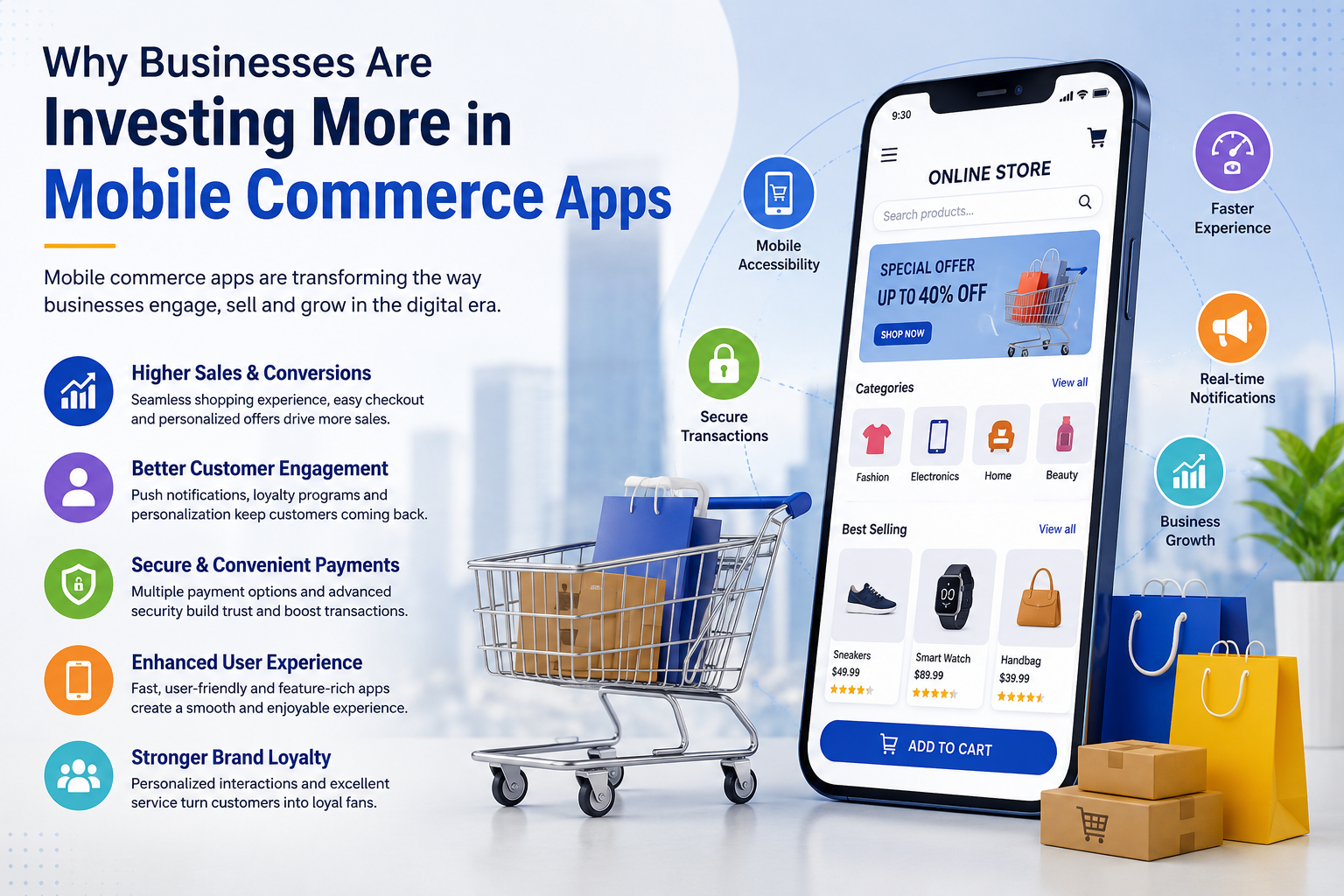
Businesses are investing more in mobile commerce apps because they improve customer experience, increase sales, strengthen brand loyalty, and support long-term growth. From personalized shopping experiences to secure payment systems and advanced digital features, mobile apps offer countless benefits for modern businesses.
As the digital economy continues to grow, companies that embrace mobile commerce will be better positioned to attract customers, stay competitive, and achieve sustainable success in the years ahead.