Introduction
The recruitment industry is changing rapidly in 2026. While technology, automation, and artificial intelligence are making hiring faster and more efficient, companies are beginning to realize that successful recruitment is not just about filling positions quickly. It is about creating meaningful experiences for candidates throughout the hiring journey.
This shift has given rise to a new recruitment philosophy known as Human-Centered Hiring. Instead of treating applicants like numbers in a system, organizations are focusing on empathy, communication, transparency, and personalized interactions. Businesses now understand that candidate experience directly impacts employer branding, employee retention, and long-term business success.
For recruitment agencies and staffing firms like Jobsglint, adopting a human-centered hiring approach is becoming essential to attract and retain top talent in a competitive job market.
What Is Human-Centered Hiring?
Human-centered hiring is a recruitment approach that prioritizes the needs, emotions, and experiences of job candidates during the hiring process. It combines modern hiring technology with human connection to ensure candidates feel respected, informed, and valued.
This hiring strategy focuses on:
1.Clear communication
2.Respectful interview processes
3.Timely feedback
4.Personalized candidate engagement
5.Fair and inclusive hiring practices
6.Emotional intelligence in recruitment
Rather than relying only on automated systems and AI-driven screening, companies are bringing the “human touch” back into recruitment.
Why Candidate Experience Matters More Than Ever
Today’s job seekers are more informed and selective than ever before. Candidates research employers online, read reviews, and share their recruitment experiences on social media and professional platforms.
A poor hiring experience can damage a company’s reputation, while a positive experience can strengthen employer branding significantly.
Key Reasons Candidate Experience Is Important
1. Stronger Employer Brand
Candidates who have positive hiring experiences are more likely to speak positively about the company, even if they are not selected for the role. This improves the organization’s reputation in the talent market.
2. Better Talent Attraction
Skilled professionals prefer companies that value transparency, respect, and communication. Human-centered hiring helps attract high-quality candidates.
3. Higher Offer Acceptance Rates
Candidates are more likely to accept job offers from companies where they felt appreciated during the recruitment process.
4. Improved Employee Retention
The hiring experience often shapes an employee’s first impression of the organization. Positive onboarding and respectful communication increase long-term engagement.
The Problems with Traditional Hiring Methods
Traditional hiring systems often focus heavily on speed, automation, and cost reduction. While these factors are important, excessive dependence on automated processes can create frustration among candidates.
Common problems include:
1.Long response times
2.Lack of feedback after interviews
3.Generic communication emails
4.Complicated application procedures
5.AI systems rejecting qualified candidates unfairly
6.Poor interview coordination
These issues can leave candidates feeling ignored and undervalued.
In today’s competitive hiring environment, companies can no longer afford to overlook the emotional side of recruitment.
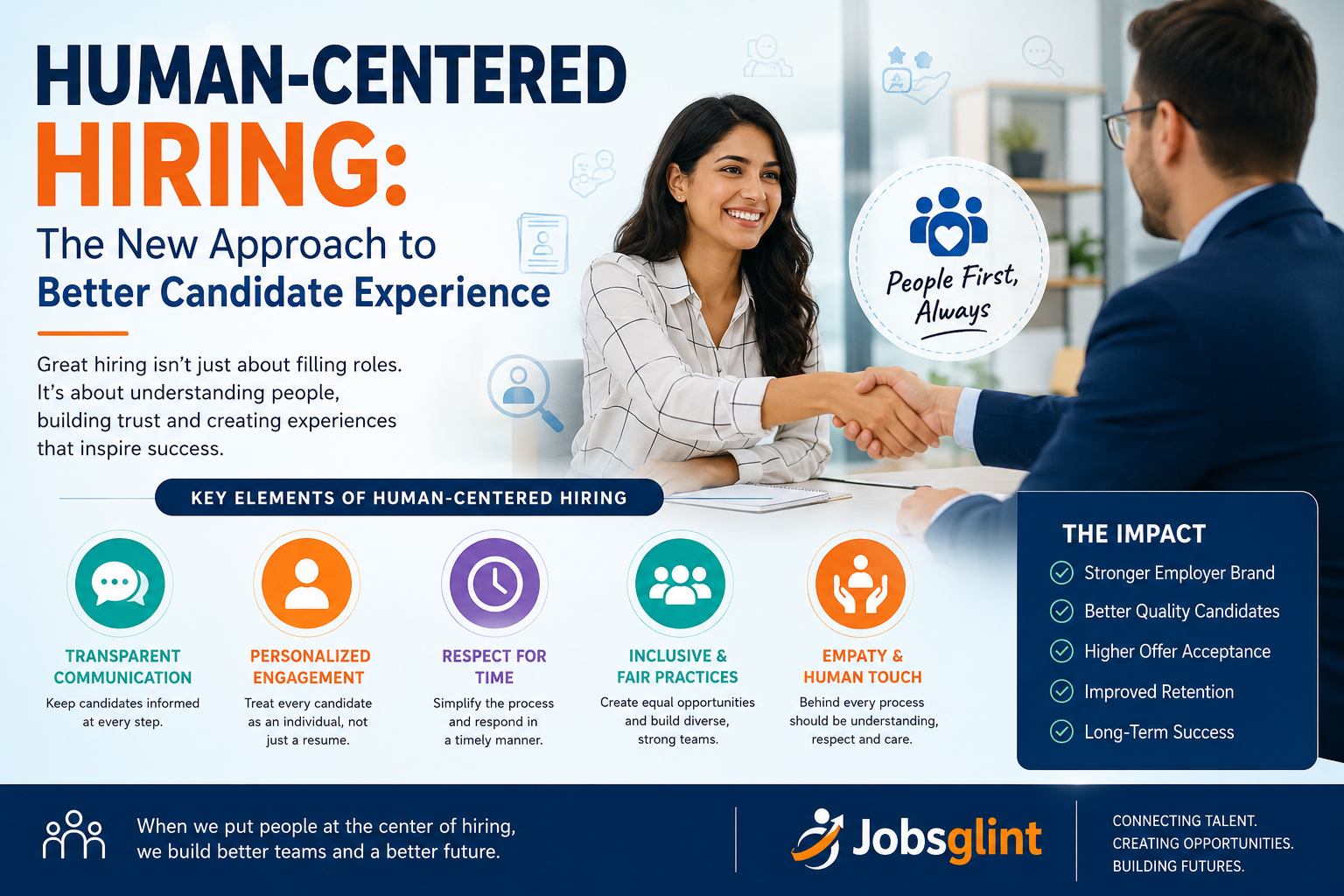
Key Elements of Human-Centered Hiring
Transparent Communication
Clear and honest communication is one of the most important aspects of a positive candidate experience.
Candidates appreciate recruiters who:
1.Explain the hiring process clearly
2.Share realistic job expectations
3.Provide timely updates
4.Inform applicants about delays
5.Offer constructive feedback
Transparency builds trust and reduces candidate anxiety.
Personalized Candidate Engagement
Candidates do not want to feel like they are interacting with robots throughout the recruitment process.
Personalized communication such as customized emails, interview preparation guidance, and direct recruiter interaction can significantly improve engagement.
Simple actions like addressing candidates by name and acknowledging their experience create a more professional and welcoming experience.
Respect for Candidate Time
Lengthy application forms, multiple unnecessary interview rounds, and delayed responses can frustrate applicants.
Human-centered hiring respects candidates’ time by:
1.Simplifying application procedures
2.Scheduling interviews efficiently
3.Reducing unnecessary hiring steps
4.Providing faster decision-making
Companies that streamline recruitment processes often gain a competitive advantage in hiring top talent.
Inclusive and Fair Hiring Practices
Modern recruitment strategies must focus on diversity, equity, and inclusion.
Human-centered hiring encourages companies to eliminate unconscious bias and create fair opportunities for all candidates regardless of gender, age, background, or education.
Inclusive hiring practices improve workplace culture and encourage innovation.
The Role of Technology in Human-Centered Hiring
Technology is still an important part of modern recruitment. However, the goal is to use technology to support human interaction rather than replace it entirely.
Smart Use of AI in Recruitment
AI tools can help recruiters by:
1.Screening resumes efficiently
2.Scheduling interviews
3.Identifying suitable candidates
4.Automating repetitive tasks
This allows recruiters to spend more time building relationships with candidates instead of managing administrative work.
The key is balance. Automation should improve efficiency without removing empathy from the hiring process.
How Recruitment Agencies Can Lead This Change
Staffing and recruitment agencies are uniquely positioned to create better candidate experiences because they directly interact with both employers and job seekers.
Recruitment firms can improve hiring experiences by: 1.Offering career guidance
2.Maintaining regular communication
3.Providing interview preparation support
4.Sharing transparent job details
5.Giving constructive feedback after interviews
Agencies that focus on candidate satisfaction often build stronger long-term relationships and improve placement success rates.
For companies like Jobsglint, human-centered hiring can become a major differentiator in the competitive recruitment industry.
Building Long-Term Relationships with Candidates
One important aspect of human-centered hiring is relationship building.
Not every candidate will get selected immediately, but maintaining positive connections can create future hiring opportunities.
Recruiters should nurture talent pools by:
1.Staying connected with past applicants
2.Sharing future job opportunities
3.Providing industry insights and career advice
4.Building professional trust over time
This relationship-driven approach creates loyalty and improves future recruitment outcomes.
The Future of Recruitment Is Human
As automation and AI continue to transform recruitment, human skills such as empathy, communication, and emotional intelligence are becoming even more valuable.
The future of hiring will not be fully automated. Instead, successful organizations will combine technology with genuine human interaction to create meaningful recruitment experiences.
Human-centered hiring is not just a trend — it is becoming the foundation of modern talent acquisition strategies.
Conclusion
In 2026, companies are realizing that recruitment is more than simply filling vacancies. It is about building trust, relationships, and positive experiences for candidates at every stage of the hiring journey.
Human-centered hiring helps organizations attract better talent, improve employer branding, increase retention, and strengthen long-term business growth.
For recruitment and staffing companies like Jobsglint, focusing on candidate experience can create a significant competitive advantage in today’s evolving job market.
Businesses that treat candidates with empathy, transparency, and respect will ultimately build stronger workforces and more successful organizations in the future.