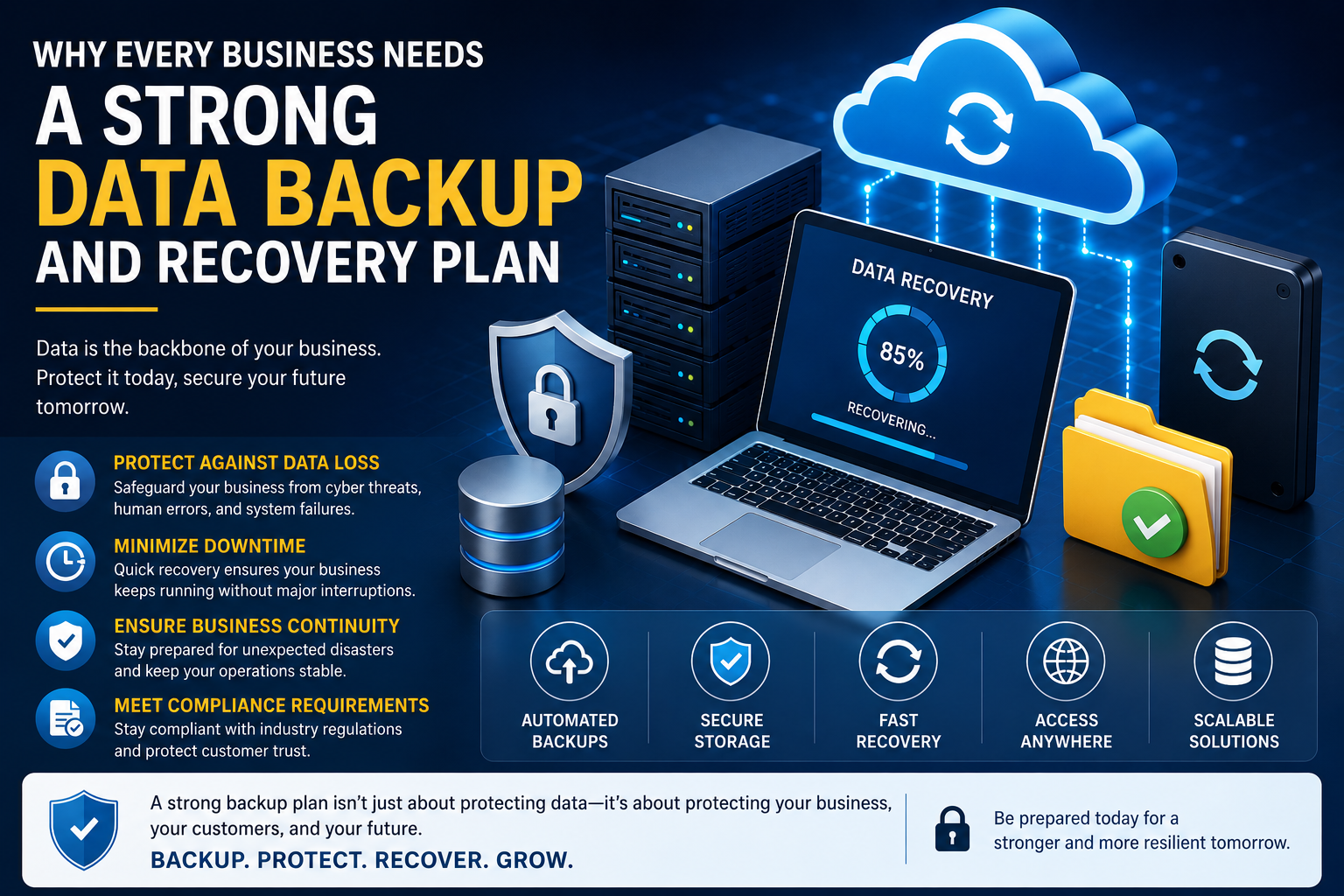
Introduction
In today’s digital-first world, businesses rely heavily on data for daily operations, customer management, financial transactions, communication, and strategic decision-making. From startups to multinational corporations, data has become one of the most valuable assets for every organization. However, with the increasing use of digital systems comes the growing risk of cyberattacks, accidental data loss, hardware failures, and natural disasters.
A single data breach or system crash can disrupt operations, damage reputation, and lead to significant financial losses. This is why having a strong data backup and recovery plan is no longer optional — it is a critical necessity for every modern business.
Understanding Data Backup and Recovery
Data backup refers to the process of creating copies of important business data and storing them securely so they can be restored if the original data is lost or damaged. Recovery is the process of retrieving and restoring that data after a disruption.
A proper backup and recovery strategy ensures that businesses can continue operations with minimal downtime during emergencies such as:
1.Cyberattacks and ransomware
2.Server crashes
3.Human errors
4.Power failures
5.Software corruption
6.Natural disasters
7.Theft or hardware damage
Without a reliable recovery plan, businesses risk losing years of valuable information within minutes.
The Rising Threat of Cyberattacks
Cybersecurity threats are increasing rapidly across the globe. Hackers are constantly targeting businesses of all sizes with ransomware, phishing attacks, and malware infections. Small and medium-sized businesses are especially vulnerable because many lack proper security infrastructure.
Ransomware attacks can lock businesses out of their systems until a payment is made. Even after paying the ransom, there is no guarantee that the data will be restored. A strong backup system acts as a safety net, allowing businesses to recover their files without relying on cybercriminals.
Having secure and regularly updated backups helps organizations minimize damage and quickly resume operations after an attack.
Preventing Financial Losses
Data loss can be extremely expensive for businesses. Downtime caused by system failures can lead to:
1.Loss of productivity
2.Missed business opportunities
3.Customer dissatisfaction
4.Legal penalties
5.Recovery expenses
For industries like healthcare, banking, e-commerce, and IT services, even a few hours of downtime can result in major financial losses.
A strong recovery plan reduces downtime by ensuring quick access to backed-up data and systems. This helps businesses continue serving customers without major disruptions.
Protecting Customer Trust and Business Reputation
Customers trust businesses with sensitive information such as personal details, payment records, and confidential data. Losing this information can severely damage a company’s reputation and customer confidence.
In the digital age, trust plays a major role in business success. Companies that fail to protect customer data may face negative publicity and lose loyal clients.
A reliable backup and disaster recovery strategy demonstrates professionalism, responsibility, and preparedness. It assures customers that their information is secure even during unexpected incidents.
Supporting Business Continuity
Business continuity means maintaining operations during disruptions or emergencies. Whether it is a cyberattack, technical issue, or natural disaster, organizations must be prepared to continue functioning.
A data recovery plan is a key component of business continuity planning. It allows employees to restore files, applications, and systems quickly, minimizing interruptions.
Cloud-based backup solutions have become especially important because they enable remote access to critical data from anywhere. This flexibility is essential for businesses operating in hybrid or remote work environments.
Compliance and Legal Requirements
Many industries have strict regulations regarding data protection and storage. Businesses are often legally required to maintain backup systems to ensure compliance with privacy laws and industry standards.
Failure to comply with these regulations can lead to heavy fines and legal consequences.
A structured backup and recovery plan helps businesses meet compliance requirements while protecting sensitive information from unauthorized access or loss.
Importance of Automated Backups
Manual backups are time-consuming and prone to human error. Businesses today are increasingly adopting automated backup systems that regularly save data without requiring manual intervention.
Automated backups provide several benefits:
Reduced Human Error
Automation ensures backups happen consistently without employees forgetting or skipping important processes.
Faster Recovery
Modern backup solutions allow businesses to restore data quickly after system failures.
Improved Security
Encrypted and cloud-based backup systems provide better protection against cyber threats.
Scalability
Automated systems can easily grow with the business as data volumes increase.
Investing in automated backup technology helps organizations improve efficiency while reducing operational risks.
Cloud Backup Solutions: The Modern Approach
Cloud computing has transformed the way businesses manage and protect their data. Cloud backup solutions offer flexibility, affordability, and enhanced security compared to traditional storage methods.
Some key advantages of cloud backups include:
1.Remote accessibility
2.Real-time data synchronization
3.Lower infrastructure costs
4.Automatic updates
5.Disaster recovery support
6.Enhanced scalability
Cloud-based recovery systems also allow businesses to restore operations quickly after disruptions, making them a preferred solution for modern enterprises.
Key Elements of an Effective Backup and Recovery Plan
Creating a strong backup strategy involves more than simply storing copies of files. Businesses should focus on the following key elements:
1.Regular Backups
Critical business data should be backed up frequently to avoid losing recent information. 2.Multiple Backup Locations
Data should be stored in multiple locations, including offsite or cloud storage, to reduce risks.
3.Data Encryption
Backups must be encrypted to protect sensitive information from unauthorized access.
4.Disaster Recovery Testing
Businesses should regularly test recovery systems to ensure backups work properly during emergencies.
5.Employee Awareness
Employees should be trained on cybersecurity practices and backup procedures.
6.Clear Recovery Objectives
Organizations should define how quickly systems must be restored after a disruption.
A well-planned strategy helps businesses respond effectively to unexpected situations.
The Role of IT Service Providers
Managing backup infrastructure can be complex, especially for small and medium businesses. Professional IT service providers help organizations implement secure and efficient backup solutions tailored to their needs. Companies like Softechedge offer advanced IT services including cloud solutions, cybersecurity, disaster recovery planning, and data management support.
Partnering with experienced IT professionals allows businesses to focus on growth while ensuring their digital assets remain secure and protected.
Conclusion
Data is the foundation of modern business operations, and protecting it should be a top priority for every organization. In an era where cyber threats, system failures, and unexpected disruptions are becoming more common, having a strong data backup and recovery plan is essential for survival and growth.
Businesses that invest in reliable backup systems can reduce downtime, protect customer trust, maintain compliance, and recover quickly from emergencies. Whether through automated systems, cloud-based solutions, or professional IT support, a proactive approach to data protection can save businesses from major financial and operational losses.
As technology continues to evolve, organizations that prioritize data security and recovery preparedness will be better positioned to succeed in the digital future.