Introduction
In today’s highly competitive job market, sending the same resume to every employer is one of the biggest mistakes job seekers make. Many candidates believe that creating one professional-looking resume is enough to apply for dozens of jobs. However, recruitment trends in 2026 have changed significantly. Companies now use advanced Applicant Tracking Systems (ATS), AI-powered screening tools, and role-specific hiring strategies to shortlist candidates.
This means a generic resume often fails to make an impact. To stand out in the modern hiring process, job seekers must customize their resumes according to each job role and employer requirement. A tailored resume not only increases interview chances but also shows recruiters that the candidate genuinely understands the role and company expectations.
The Modern Hiring Process Has Changed
Recruitment today is no longer based only on manual resume screening. Most organizations use ATS software to filter resumes before they even reach recruiters. These systems scan resumes for relevant keywords, skills, job titles, certifications, and experience related to the position.
If a resume does not match the job description, it may get rejected automatically, even if the candidate is qualified. This is why a single resume cannot effectively work for different job applications.
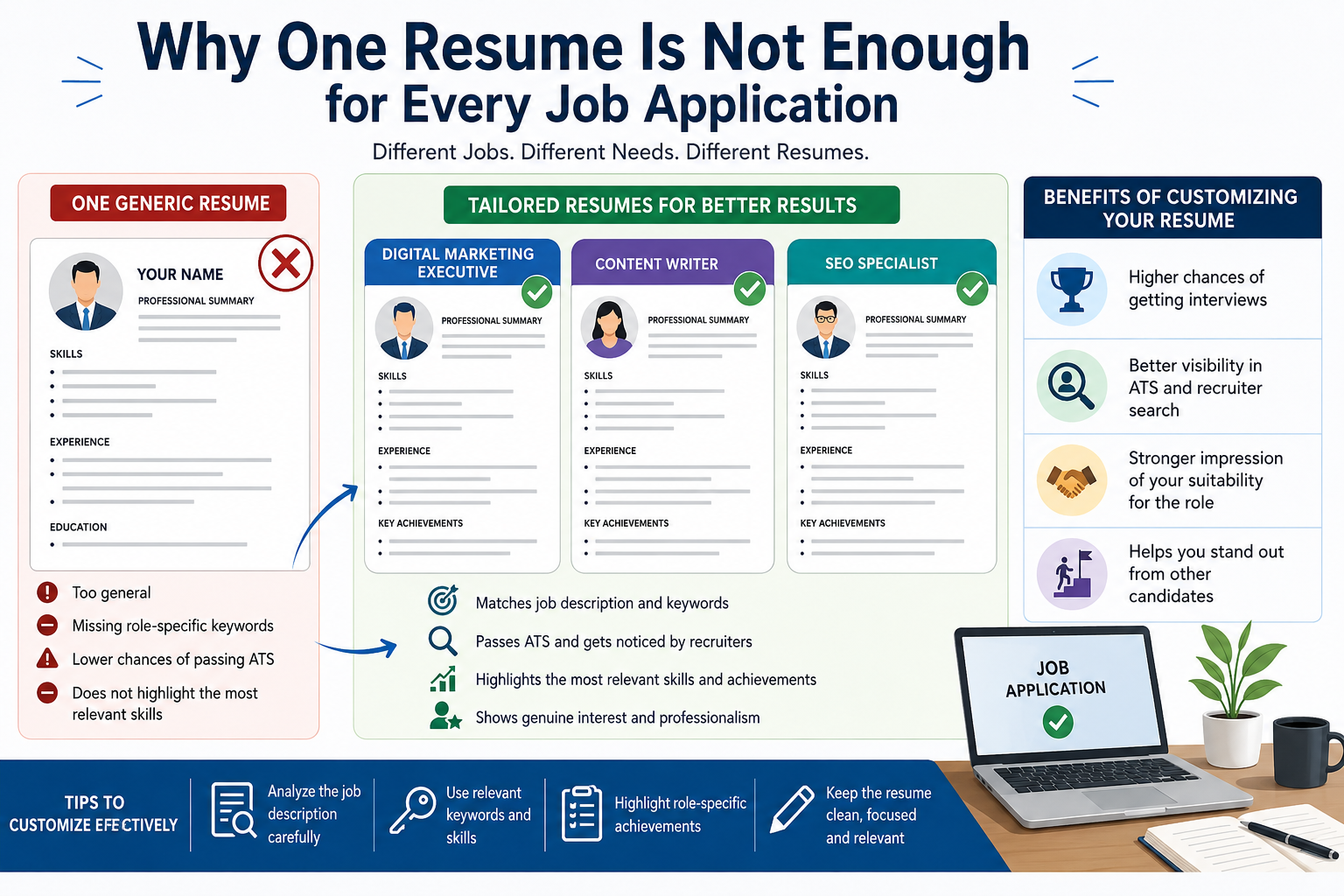
For example, a candidate applying for both a Digital Marketing Executive role and a Content Writer role may have overlapping skills, but recruiters for each role will focus on different aspects. A marketing role may require SEO, analytics, and campaign management, while a content writing role may prioritize creativity, grammar, and storytelling.
A customized resume helps highlight the most relevant qualifications for each specific opportunity.
Different Companies Look for Different Skills
Even when two companies hire for the same position, their expectations can vary greatly. One organization may prioritize technical expertise, while another may focus more on communication skills, leadership abilities, or industry-specific knowledge.
For instance:
Startup Companies
Startups often prefer candidates who are flexible, multi-skilled, and capable of handling multiple responsibilities.
Corporate Organizations
Large corporations may look for structured experience, certifications, and specialization in a particular field.
Remote Job Opportunities
Remote employers may prioritize self-management, digital collaboration, and communication skills.
Using one resume for all these applications may fail to address the unique priorities of each employer.
Tailored Resumes Improve ATS Performance
Applicant Tracking Systems work by matching resume content with job descriptions. A resume tailored to the role naturally includes the right keywords and skills, improving ATS compatibility.
Important ATS Optimization Strategies
1.Use keywords from the job description
2.Mention relevant technical and soft skills
3.Highlight role-specific achievements
4.Customize the professional summary section
5.Include certifications related to the job
When candidates use the same resume repeatedly, they often miss important keywords required for different positions. As a result, their applications may never reach the recruiter.
A Customized Resume Shows Genuine Interest
Recruiters can easily identify whether a resume has been tailored for the role or sent in bulk to multiple companies. A customized resume demonstrates professionalism, effort, and genuine interest in the opportunity.
Employers prefer candidates who:
1.Understand the company’s requirements
2.Have researched the role properly
3.Can clearly explain their relevance to the position
4.Show enthusiasm for the specific opportunity
This small effort can significantly improve a candidate’s chances of getting shortlisted.
Career Goals May Differ Across Applications
Many professionals today apply for jobs across multiple industries or job functions. For example, someone with experience in customer service may apply for:
1.Sales roles
2.Client relationship positions
3.Administrative jobs
4.HR support roles
Each position requires different strengths to be highlighted. A resume focused on sales achievements may not work effectively for an HR-related role.
Customizing the career objective, skills section, and achievements according to the target role helps create a stronger connection with recruiters.
One Resume Cannot Highlight Every Strength Equally
Every professional has multiple skills, experiences, and accomplishments. However, including everything in one resume can make it lengthy, unfocused, and difficult to read.
A targeted resume allows candidates to:
Focus on Relevant Experience
Only include work experience related to the position.
Highlight Important Skills
Emphasize the abilities most valuable for the specific job.
Improve Readability
Recruiters usually spend only a few seconds reviewing each resume. A focused resume makes information easier to scan quickly.
Create Better Professional Branding
A customized resume presents a clear professional identity aligned with the role.
Industry-Specific Resume Expectations
Different industries follow different resume standards and expectations.
IT and Technology
Technical skills, certifications, software expertise, and project experience are highly important.
Marketing and Creative Roles
Portfolios, creativity, campaigns, and communication skills matter more.
Finance and Accounting
Accuracy, certifications, compliance knowledge, and analytical abilities are key priorities.
Human Resources
Interpersonal skills, recruitment knowledge, and employee management experience are valued. Using a single resume format for all industries can reduce effectiveness because each sector evaluates candidates differently.
The Importance of Updating Resumes Regularly
A resume should not remain static for years. Job market demands, technologies, and hiring trends constantly evolve. Candidates should regularly update resumes to include:
1.New skills and certifications
2.Latest projects and achievements
3.Updated software knowledge
4.Industry-specific keywords
5.Modern formatting styles
An outdated resume can create the impression that the candidate is inactive or not aligned with current industry standards.
Tips for Creating Multiple Effective Resumes
Job seekers do not need to create entirely new resumes from scratch for every application. Instead, they can maintain a master resume and customize sections based on the role.
1.Keep a Master Resume
Store all skills, experiences, achievements, and certifications in one detailed document. 2.Modify the Professional Summary
Tailor the introduction according to the job role.
3.Rearrange Skills and Experience
Place the most relevant information at the top.
4.Use Role-Specific Keywords
Study job descriptions carefully and include matching terms naturally.
5.Adjust Achievements
Highlight accomplishments that best align with the target position.
Conclusion
In the modern recruitment landscape, one resume is simply not enough for every job application. Employers are looking for candidates who match their exact requirements, and ATS systems are designed to filter resumes based on relevance.
A customized resume improves visibility, strengthens professional branding, increases ATS compatibility, and demonstrates genuine interest in the role. Candidates who take the time to tailor their resumes are more likely to receive interview calls and better career opportunities.
As hiring processes continue to evolve in 2026, personalization in resume writing is no longer optional — it has become a necessity for successful job searching.