Introduction
In 2026, the hiring landscape is evolving faster than ever. Businesses are no longer following traditional recruitment methods alone. Economic uncertainty, rapid technological advancements, changing employee expectations, and project-based work models are pushing companies to rethink how they build their workforce.
One of the biggest debates in today’s recruitment industry is Temporary Staffing vs Permanent Staffing. While some companies prioritize long-term employee retention, others prefer workforce flexibility through temporary staffing solutions.
So, what are businesses actually preferring in 2026? The answer depends on industry demands, operational goals, and hiring strategies. Let’s explore both staffing models and understand which approach is becoming the preferred choice for modern businesses.
Understanding Temporary Staffing
Temporary staffing refers to hiring employees for a short duration or specific project requirement. These workers may be employed for weeks, months, or on contractual terms depending on business needs.
Temporary employees are commonly hired for:
1.Seasonal workload management
2.Short-term projects
3.Emergency staffing needs
4.Specialized skill requirements
5.Business expansion phases
In 2026, temporary staffing has become increasingly popular because companies want flexibility without long-term employment commitments.
Advantages of Temporary Staffing
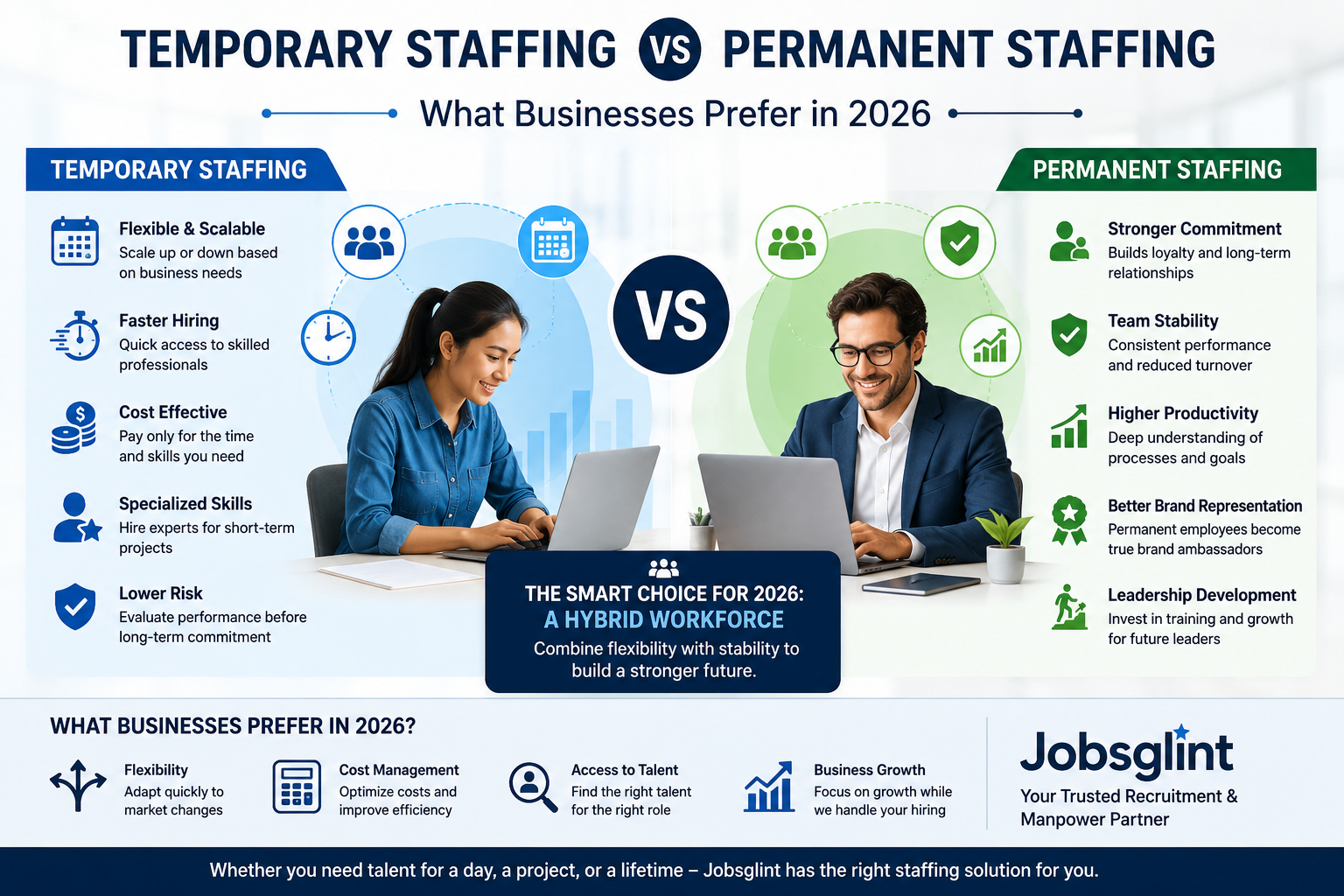
1. Workforce Flexibility
Businesses today operate in unpredictable markets. Temporary staffing allows companies to quickly scale their workforce up or down depending on demand.
For example, e-commerce companies often hire temporary workers during festive seasons or sales events to manage increased operations.
2. Faster Hiring Process
Temporary staffing agencies can provide ready-to-join candidates quickly, reducing recruitment time significantly. This is especially useful for urgent hiring requirements.
3. Reduced Recruitment Costs
Hiring permanent employees involves onboarding costs, employee benefits, insurance, and long-term salary commitments. Temporary staffing helps companies control operational expenses.
4. Access to Specialized Skills
Many businesses hire temporary professionals for niche projects such as IT implementation, digital marketing campaigns, or technical support.
5. Lower Risk for Employers
Temporary hiring reduces the risk of long-term hiring mistakes. Companies can evaluate employee performance before offering permanent roles.
Understanding Permanent Staffing
Permanent staffing involves hiring full-time employees who become long-term members of the organization. These employees typically receive salaries, benefits, training, and career growth opportunities.
Permanent staffing remains essential for businesses focused on stability, leadership development, and long-term growth.
Advantages of Permanent Staffing
1. Strong Employee Commitment
Permanent employees often show greater loyalty and emotional connection with the organization. They contribute to company culture and long-term business objectives.
2. Better Team Stability
Businesses benefit from consistent workforce performance and reduced disruption when employees stay for longer durations.
3. Higher Productivity in Long-Term Roles
Employees working permanently develop deeper knowledge of company processes, products, and workflows, improving efficiency over time.
4. Improved Brand Representation
Permanent employees usually become strong brand ambassadors who represent company values professionally.
5. Easier Leadership Development
Organizations can invest in employee training and leadership development programs more effectively with permanent staff.
What Businesses Prefer in 2026
In 2026, businesses are not choosing one model exclusively. Instead, many companies are adopting a hybrid workforce strategy that combines both temporary and permanent staffing.
However, temporary staffing is witnessing rapid growth across industries because of flexibility and cost efficiency.
Why Temporary Staffing Is Growing Rapidly
Several factors are driving businesses toward temporary staffing solutions:
Economic Uncertainty
Many businesses want to avoid large fixed employment costs during uncertain market conditions. Temporary staffing offers operational flexibility.
Project-Based Work Culture
Modern industries increasingly rely on short-term projects and contract-based assignments. Temporary staffing perfectly supports this model.
Remote and Gig Workforce Expansion
The rise of freelance and gig work has changed how businesses approach hiring. Companies are now comfortable hiring professionals for specific durations.
Faster Market Expansion
Startups and growing companies prefer temporary staffing to scale operations quickly without long-term commitments.
Industries That Prefer Temporary Staffing
Temporary staffing is becoming highly popular in sectors such as:
1.IT and Technology
2.E-commerce
3.Logistics and Supply Chain
4.Manufacturing
5.Retail
6.Customer Support
7.Healthcare
8.Event Management
These industries often experience fluctuating workforce demands and benefit from staffing flexibility.
Industries That Still Prefer Permanent Staffing
Despite the rise of temporary staffing, permanent hiring remains dominant in areas requiring long-term strategic involvement.
Industries preferring permanent staffing include:
1.Banking and Finance
2.Senior Management Roles
3.Human Resources
4.Education
5.Core Engineering Roles
6.Legal Services
These sectors prioritize employee stability, confidentiality, and long-term expertise.
The Rise of Hybrid Workforce Models
One of the biggest workforce trends in 2026 is the hybrid staffing model.
Businesses now maintain a core permanent workforce while hiring temporary employees for specialized or seasonal tasks. This approach helps companies balance stability with flexibility.
For example:
Permanent staff manage leadership and strategic operations
Temporary workers handle project execution and peak workload periods
This model improves cost management while ensuring business continuity.
How Staffing Agencies Are Helping Businesses
Modern recruitment and manpower service providers are playing a major role in workforce transformation.
Professional staffing agencies help businesses by:
1.Providing pre-screened candidates
2.Reducing hiring time
3.Managing payroll and compliance
4.Offering workforce scalability
5.Supporting bulk hiring requirements
Companies increasingly rely on recruitment partners to manage both temporary and permanent staffing needs efficiently.
Choosing the Right Staffing Model
There is no one-size-fits-all solution in recruitment. Businesses must evaluate:
1.Hiring budget
Business goals
2.Project duration
3.Workforce stability needs
4.Skill requirements
5.Industry trends
Temporary staffing works best for flexibility and short-term efficiency, while permanent staffing supports long-term growth and organizational stability.
Conclusion
In 2026, businesses are prioritizing agility, efficiency, and workforce adaptability more than ever before. While permanent staffing continues to remain important for strategic roles, temporary staffing is emerging as the preferred solution for companies seeking flexibility and faster hiring.
The future of recruitment is not about choosing temporary or permanent staffing alone — it is about creating the right workforce balance.
Organizations that successfully combine both staffing models will gain a competitive advantage in today’s fast-changing business environment.
At Jobsglint, we help businesses find the right talent through customized recruitment and manpower solutions designed for modern workforce needs.