Introduction
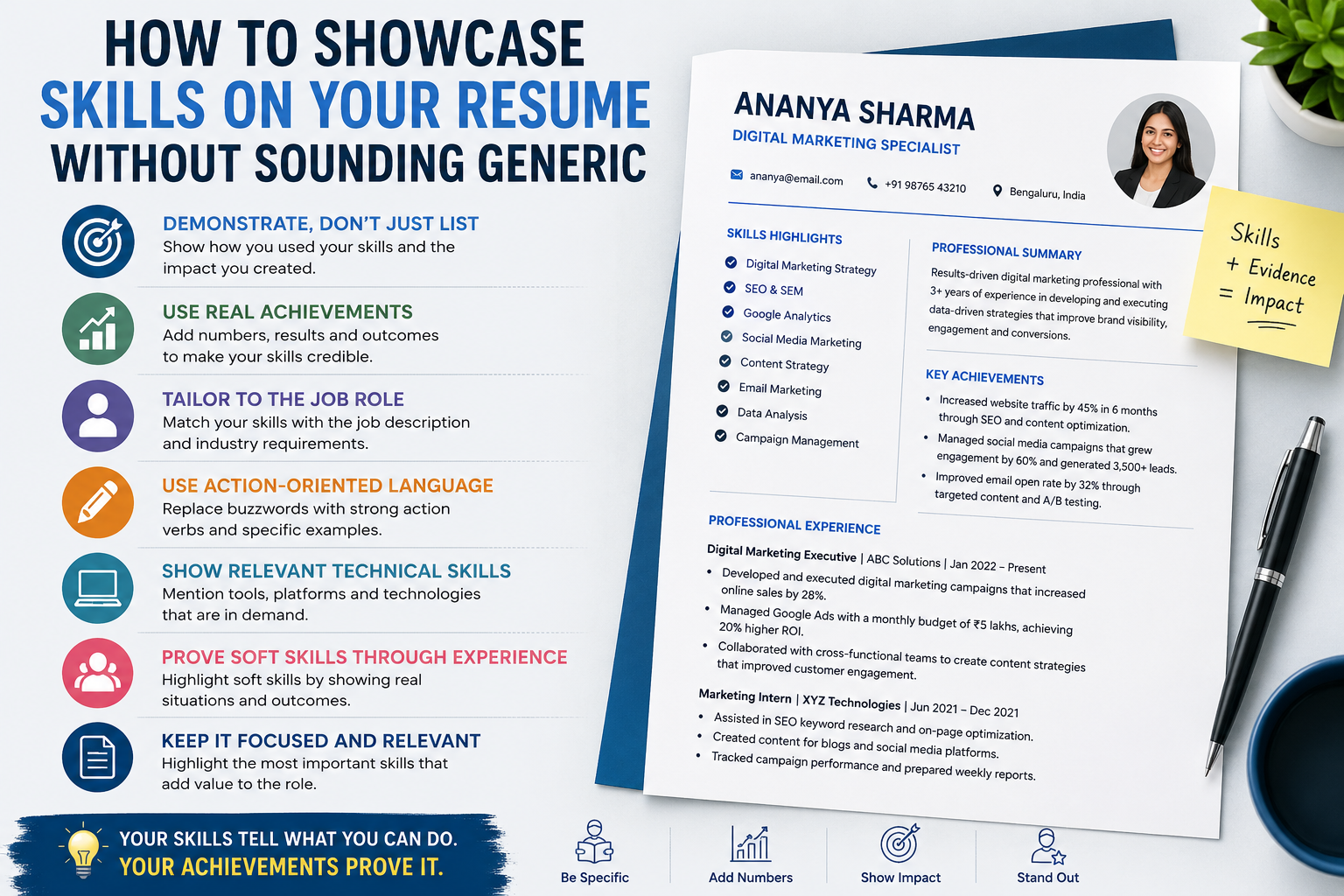
In today’s competitive hiring market, simply listing skills like “hardworking,” “team player,” or “good communication” is no longer enough to impress recruiters. Employers in 2026 are looking for candidates who can demonstrate real value, measurable impact, and role-specific expertise through their resumes. A resume filled with generic buzzwords often gets ignored because it fails to show how those skills were actually applied in real situations.
For job seekers, the challenge is not just adding skills to a resume, but presenting them in a way that feels authentic, professional, and results-driven. A well-crafted resume should tell recruiters how your abilities helped solve problems, improve performance, or contribute to business success.
Here’s how you can showcase your skills effectively without sounding generic.
Understand the Difference Between Listing and Demonstrating Skills
One of the most common resume mistakes is creating a long “Skills” section without any proof to support those claims. Recruiters see thousands of resumes with phrases like:
1.Excellent communication skills
2.Leadership abilities
3.Problem-solving mindset
4.Time management
5.Fast learner
The issue is that these statements are vague and overused. Instead of simply mentioning skills, candidates should demonstrate them through achievements and experiences.
For example:
Generic Statement:
“Strong leadership skills.”
Better Version:
“Led a team of 8 sales executives and increased quarterly sales revenue by 25% within six months.”
The second example shows leadership in action while also providing measurable results.
Use Real Achievements to Highlight Your Skills
The best way to make your skills stand out is by connecting them with accomplishments. Employers trust evidence more than adjectives.
Instead of saying:
“Good at digital marketing”
Write:
“Managed social media campaigns that increased Instagram engagement by 40% and generated 2,000+ leads in three months.”
Instead of:
“Strong organizational skills”
Write
:
“Coordinated recruitment drives across five cities while maintaining 100% interview scheduling accuracy.” Numbers, percentages, timelines, and outcomes make your resume more credible and impactful.
Customize Skills According to the Job Role
A generic resume usually happens when candidates send the same resume to every company. In 2026, recruiters and ATS (Applicant Tracking Systems) expect resumes to be tailored to specific job descriptions.
Before applying:
1.Read the job description carefully
2.Identify important keywords and skills
3.Match your experience with the employer’s requirements
For example
, if you are applying for a content marketing role, focus on:
1.SEO writing
2.Content strategy
3.Analytics tools
4.Campaign management
5.Audience engagement
If you are applying for HR roles, highlight:
1.Talent acquisition
2.Employee engagement
3.HRMS software
4.Recruitment coordination
5.Performance management
Role-specific resumes always perform better than generic ones.
Replace Buzzwords With Action-Oriented Language
Recruiters prefer resumes that sound professional and confident rather than filled with trendy corporate phrases.
Avoid words like:
1.Go-getter
2.Dynamic professional
3.Synergistic thinker
4.Hardworking individual
5.Results-oriented person
Instead, use action-driven language such as:
1.Developed
2.Improved
3.Managed
4.Executed
5.Designed
6.Increased
7.Implemented
8.Coordinated
For example:
Weak Statement:
“Motivated team player with excellent communication skills.”
Improved Statement:
“Collaborated with cross-functional teams to deliver client projects before deadlines.”
The second version sounds more natural and professional.
Add Technical Skills That Match Industry Trends
Modern hiring focuses heavily on practical and technical capabilities. Candidates who showcase updated skills have a stronger chance of getting shortlisted.
Some in-demand skills in 2026 include:
1.AI tools and automation
2.Data analysis
3.Cloud platforms
4.Digital marketing tools
5.UI/UX design
6.Project management software
7.CRM platforms
8.Cybersecurity basics
9.Remote collaboration tools
Mention tools and platforms you have actually worked with instead of adding random trending skills.
For example:
1.Google Analytics
2.Canva
3.Figma
4.Salesforce
5.HubSpot
6.Power BI
7.Notion
8.Trello
9.ChatGPT and AI productivity tools
Specific tools make your resume more believable and ATS-friendly.
Show Soft Skills Through Experience
Soft skills are important, but they should never appear as empty claims. Instead of writing “excellent communication skills,” prove it through your work experience.
Example:
“Handled client presentations and weekly stakeholder meetings for projects worth ₹20 lakh.”
Instead of
:
“Strong problem-solving ability”
Write:
“Resolved customer complaints with a 95% satisfaction rate through process improvements.”
This method naturally communicates your strengths without sounding repetitive.
Include Projects, Freelance Work, and Internships
Many candidates underestimate the value of side projects and freelance work. In reality, these experiences can effectively showcase practical skills.
If you are a fresher or career switcher, include:
1.Personal projects
2.Certifications
3.Freelance assignments
4.Online portfolio work
5.Internships
6.Volunteer experience
For example:
“Designed a portfolio website using WordPress and improved loading speed by 35%.”
“Created social media content strategy for a local startup during internship.”
Practical exposure often matters more than theoretical claims.
Keep the Resume Clean and Focused
A resume overloaded with skills can appear unrealistic. Recruiters prefer quality over quantity.
Instead of listing 25 random skills, focus on:
1.Core strengths relevant to the role
2.Technical expertise
3.Industry-specific tools
Achievements linked to skills
A clean and focused resume improves readability and helps recruiters quickly identify your value.
Conclusion
In 2026, employers are no longer impressed by generic resumes filled with overused buzzwords and vague skill lists. They want proof of capability, measurable impact, and role-specific expertise. The most effective resumes are those that combine skills with achievements, practical examples, and real-world results.
To stand out in a competitive job market, job seekers should focus on demonstrating their abilities rather than simply claiming them. By using action-oriented language, quantifiable achievements, and customized content, candidates can create resumes that feel authentic, professional, and highly relevant.
A strong resume is not about sounding impressive — it is about showing employers exactly how your skills can create value for their organization.