Introduction
In today’s fast-changing digital world, businesses are constantly looking for smarter ways to connect with customers, increase brand visibility, and drive sales. As technology evolves, digital marketing strategies are becoming more advanced, data-driven, and customer-focused. In 2026, brands that fail to adapt to the latest trends risk falling behind their competitors.
From AI-powered campaigns to hyper-personalized customer experiences, digital marketing is entering a new era of innovation. Businesses of every size must understand these trends to stay competitive and relevant in the market.
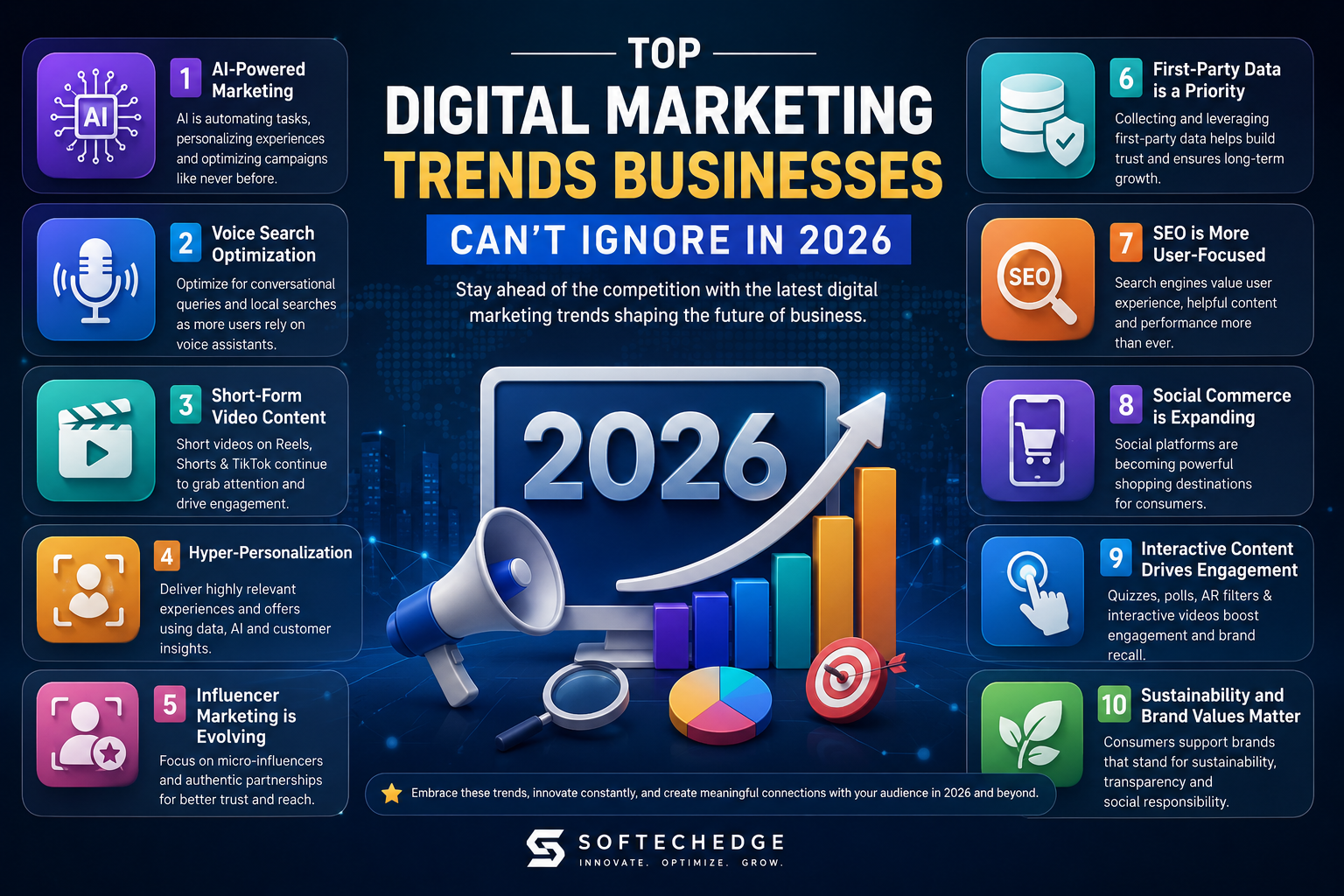
Here are the top digital marketing trends businesses simply can’t ignore in 2026.
AI-Powered Marketing is Becoming Mainstream
Artificial Intelligence (AI) is no longer just a futuristic concept. It has become one of the most powerful tools in digital marketing. Businesses are using AI to automate tasks, analyze customer behavior, generate content, and improve campaign performance.
AI-driven tools can now create personalized email campaigns, suggest products based on customer preferences, and optimize advertisements in real-time. Chatbots powered by AI are also helping businesses provide instant customer support 24/7.
In 2026, companies that effectively use AI in their marketing strategies will gain a major advantage by saving time, reducing costs, and delivering better customer experiences.
Voice Search Optimization is More Important Than Ever
With the growing use of smart devices and voice assistants, voice search is changing how people search online. Consumers are increasingly using voice commands to find products, services, and local businesses.
This trend means businesses need to optimize their websites for conversational and question-based searches. Instead of typing “best digital marketing agency,” users may ask, “Which is the best digital marketing agency near me?”
To stay visible in search results, businesses must focus on natural language keywords, mobile optimization, and fast-loading websites.
Short-Form Video Content Continues to Dominate
Video marketing remains one of the most effective ways to engage audiences, and short-form videos are leading the trend in 2026. Platforms like Instagram Reels, YouTube Shorts, and TikTok continue to attract massive user engagement.
Short videos are easy to consume, highly shareable, and perfect for capturing attention quickly. Businesses are using them to showcase products, share customer testimonials, explain services, and build brand awareness.
Brands that invest in creative and authentic video content are likely to see higher engagement rates and stronger customer connections.
Hyper-Personalization is the Future of Customer Engagement
Customers today expect personalized experiences from brands. Generic advertisements and mass marketing strategies are becoming less effective.
Hyper-personalization uses customer data, browsing behavior, purchase history, and AI technology to deliver highly targeted content and recommendations. Businesses can now create personalized emails, offers, and advertisements tailored to individual users.
This trend helps improve customer satisfaction, increase conversions, and build long-term loyalty. In 2026, personalization is no longer optional—it’s essential.
Influencer Marketing is Evolving
Influencer marketing continues to grow, but the focus is shifting from celebrity influencers to niche creators and micro-influencers. Consumers trust authentic recommendations from relatable personalities more than traditional advertisements.
Businesses are partnering with smaller influencers who have highly engaged audiences in specific industries or communities. These collaborations often deliver better engagement and stronger customer trust.
In 2026, successful influencer marketing campaigns will prioritize authenticity, transparency, and long-term partnerships.
First-Party Data is Becoming a Priority
With increasing privacy regulations and the gradual decline of third-party cookies, businesses are focusing more on collecting first-party data directly from customers.
This includes information gathered through website interactions, email subscriptions, surveys, and customer accounts. First-party data allows businesses to better understand their audience while maintaining compliance with privacy laws.
Brands that build trust and encourage customers to willingly share their information will have a significant advantage in creating targeted marketing campaigns.
SEO is Becoming More User-Focused
Search Engine Optimization (SEO) is no longer just about keywords and backlinks. Search engines are now prioritizing user experience, high-quality content, and website performance.
In 2026, businesses must focus on creating informative, engaging, and valuable content that genuinely helps users. Factors like page speed, mobile responsiveness, voice search optimization, and user engagement play a major role in search rankings.
Businesses that invest in user-focused SEO strategies will improve visibility and attract more organic traffic.
Social Commerce is Rapidly Expanding
Social media platforms are evolving into powerful shopping destinations. Consumers can now discover, browse, and purchase products directly within apps like Instagram, Facebook, and TikTok.
Social commerce simplifies the buying journey and increases impulse purchases. Businesses are integrating online stores with social platforms to create seamless shopping experiences.
As online shopping habits continue to grow, social commerce will become a key revenue driver for many brands in 2026.
Interactive Content is Driving Higher Engagement
Interactive content is gaining popularity because it encourages active participation from users. Polls, quizzes, surveys, augmented reality filters, calculators, and interactive videos help businesses create more engaging experiences.
This type of content increases user interaction, keeps visitors on websites longer, and improves brand recall. Interactive experiences also provide valuable customer insights that businesses can use for future marketing strategies.
Sustainability and Brand Values Matter More
Modern consumers prefer brands that align with their values. Businesses that demonstrate social responsibility, sustainability, and ethical practices are building stronger relationships with customers.
In 2026, digital marketing is not just about selling products—it’s about building trust and authenticity. Customers want transparency and meaningful connections with brands they support.
Businesses that communicate their values clearly through digital campaigns can create deeper emotional connections with their audience.
Conclusion
The digital marketing landscape in 2026 is being shaped by technology, personalization, and changing customer expectations. Businesses that embrace these trends can improve customer engagement, strengthen brand visibility, and stay ahead of the competition.
From AI-driven strategies and voice search optimization to social commerce and interactive content, the future of digital marketing is more dynamic than ever. Companies that adapt quickly and invest in innovative marketing approaches will be better positioned for long-term success.
For businesses looking to grow in this competitive digital era, partnering with experienced digital marketing experts like Softechedge can help create impactful strategies that deliver measurable results.