Introduction
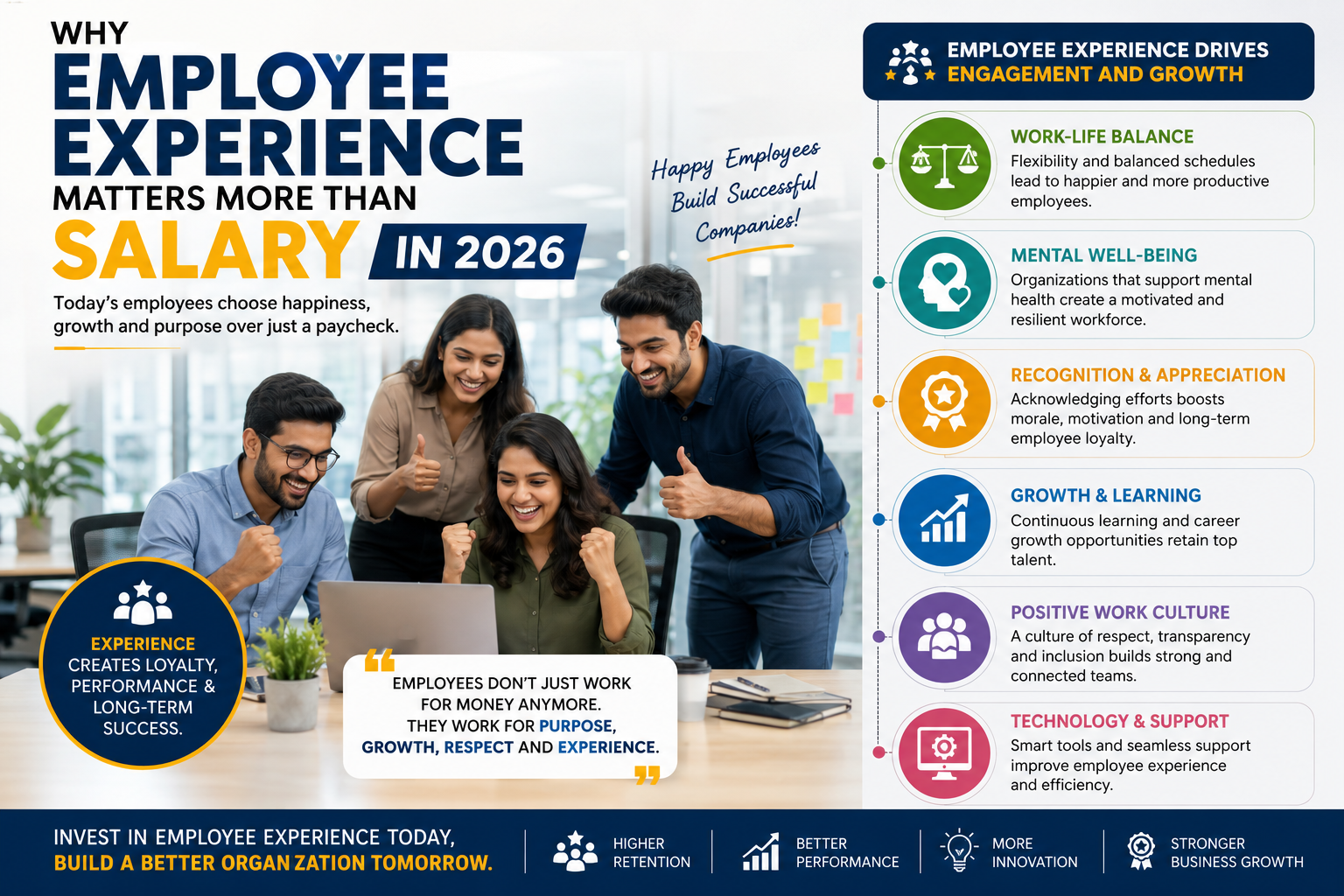
For years, salary was considered the biggest factor influencing job decisions. Employees often switched companies for higher pay packages, better incentives, and financial growth. However, the workplace landscape in 2026 has changed dramatically. Today’s workforce, especially Gen Z and millennials, is prioritizing something much bigger than salary — Employee Experience.
In the modern corporate world, employees are no longer looking only for a paycheck. They want flexibility, growth opportunities, mental well-being, appreciation, work-life balance, and a positive workplace culture. Companies that fail to provide a strong employee experience are struggling with high attrition rates, low productivity, and talent shortages.
In 2026, organizations have realized a powerful truth:
Happy employees create successful businesses.
What is Employee Experience?
Employee Experience (EX) refers to the overall journey an employee has within an organization — from hiring and onboarding to daily work culture and career growth. It includes every interaction employees have with their workplace.
Employee experience covers:
1.Workplace environment
2.Company culture
3.Leadership support
4.Learning opportunities
5.Mental health initiatives
6.Work flexibility
7.Employee recognition
8.Technology and communication systems
Simply put, employee experience is how employees feel about working in a company.
Why Salary Alone is No Longer Enough
In 2026, employees understand that a high-paying job does not always guarantee happiness or satisfaction. Many professionals are leaving high-salary roles because of:
1.Toxic work environments
2.Poor management
3.Lack of growth
4.Burnout and stress
5.No work-life balance
6.Lack of appreciation
A good salary may attract talent initially, but it cannot retain employees if the work culture is unhealthy.
Today’s workforce values emotional well-being and career satisfaction as much as financial growth.
The Rise of Work-Life Balance
One of the biggest workplace trends in 2026 is the demand for work-life balance. Employees no longer want to sacrifice their personal lives for professional success.
Flexible working hours, hybrid work models, remote opportunities, and mental wellness programs have become major deciding factors while choosing a job.
Companies that encourage balanced lifestyles are witnessing:
1.Higher employee retention
2.Increased productivity
3.Better team collaboration
4.Reduced stress levels
5.Improved job satisfaction
Employees now prefer organizations that respect their time, mental health, and personal commitments.
Mental Health Has Become a Workplace Priority
In recent years, workplace stress and burnout have become serious challenges globally. Long working hours, unrealistic targets, and constant pressure negatively impact employee performance.
As a result, companies in 2026 are investing heavily in employee well-being programs such as:
1.Mental health counseling
2.Wellness sessions
3.Paid wellness leaves
4.Stress management workshops
Employee support communities
Employees want to feel valued as human beings, not just as workers. Organizations that genuinely care for employee well-being are building stronger and more loyal teams.
Recognition and Appreciation Matter More Than Ever
Employees today seek appreciation for their efforts. Even a highly paid employee can feel disconnected if their work goes unnoticed.
Simple practices like:
1.Reward programs
2.Public appreciation
3.Performance recognition
4.Career advancement opportunities
can significantly improve employee motivation and engagement.
In 2026, recognition has become a major part of employee experience because people want purpose and value in their work.
Learning and Career Growth Drive Employee Loyalty
Modern employees are highly career-focused. They want organizations that help them grow professionally and personally.
Companies offering:
1.Skill development programs
2.AI learning platforms
3.Leadership training
4.Upskilling opportunities
5.Internal promotions
are attracting and retaining top talent successfully.
Employees are no longer asking, “How much will I earn?”
They are asking, “How much will I grow?”
Organizations that invest in employee learning are creating future-ready workforces.
Technology is Transforming Employee Experience
Technology plays a crucial role in improving workplace experiences in 2026. AI-powered HR systems, smart collaboration tools, and automated workflows are reducing employee stress and improving efficiency.
Modern workplaces are using technology for:
1.Faster communication
2.Easy onboarding
3.Performance tracking
4.Employee feedback systems
5.Remote team collaboration
When employees have access to smooth and supportive digital tools, their overall experience improves significantly.
Positive Workplace Culture Builds Stronger Teams
A healthy workplace culture has become one of the strongest competitive advantages for companies.
Employees today want workplaces that promote:
1.Inclusivity
2.Transparency
3.Respect
4.Diversity
5.Collaboration
Toxic work cultures are quickly exposed through social media, employee review platforms, and online communities.
This directly impacts employer branding and recruitment.
In contrast, organizations with strong workplace cultures are becoming magnets for top talent.
Employee Experience Impacts Business Growth
Companies focusing on employee experience are not just improving employee happiness — they are also improving business performance.
Research shows that organizations with engaged employees experience:
1.Higher productivity
2.Better customer satisfaction
3.Increased innovation
4.Lower attrition rates
5.Stronger brand reputation
Satisfied employees naturally contribute more energy, creativity, and commitment toward organizational goals.
In 2026, employee experience is directly connected to business success.
Conclusion
The workplace revolution of 2026 has made one thing clear — salary alone is no longer enough to keep employees engaged and loyal. While compensation remains important, modern professionals are prioritizing workplace happiness, flexibility, growth, recognition, and mental well-being.
Organizations that invest in employee experience are building stronger teams, better cultures, and long-term business success.
Companies that ignore employee expectations risk losing top talent in an increasingly competitive job market.
The future belongs to organizations that understand a simple reality:
“Employees don’t just work for money anymore — they work for purpose, growth, respect, and experience.”