Introduction
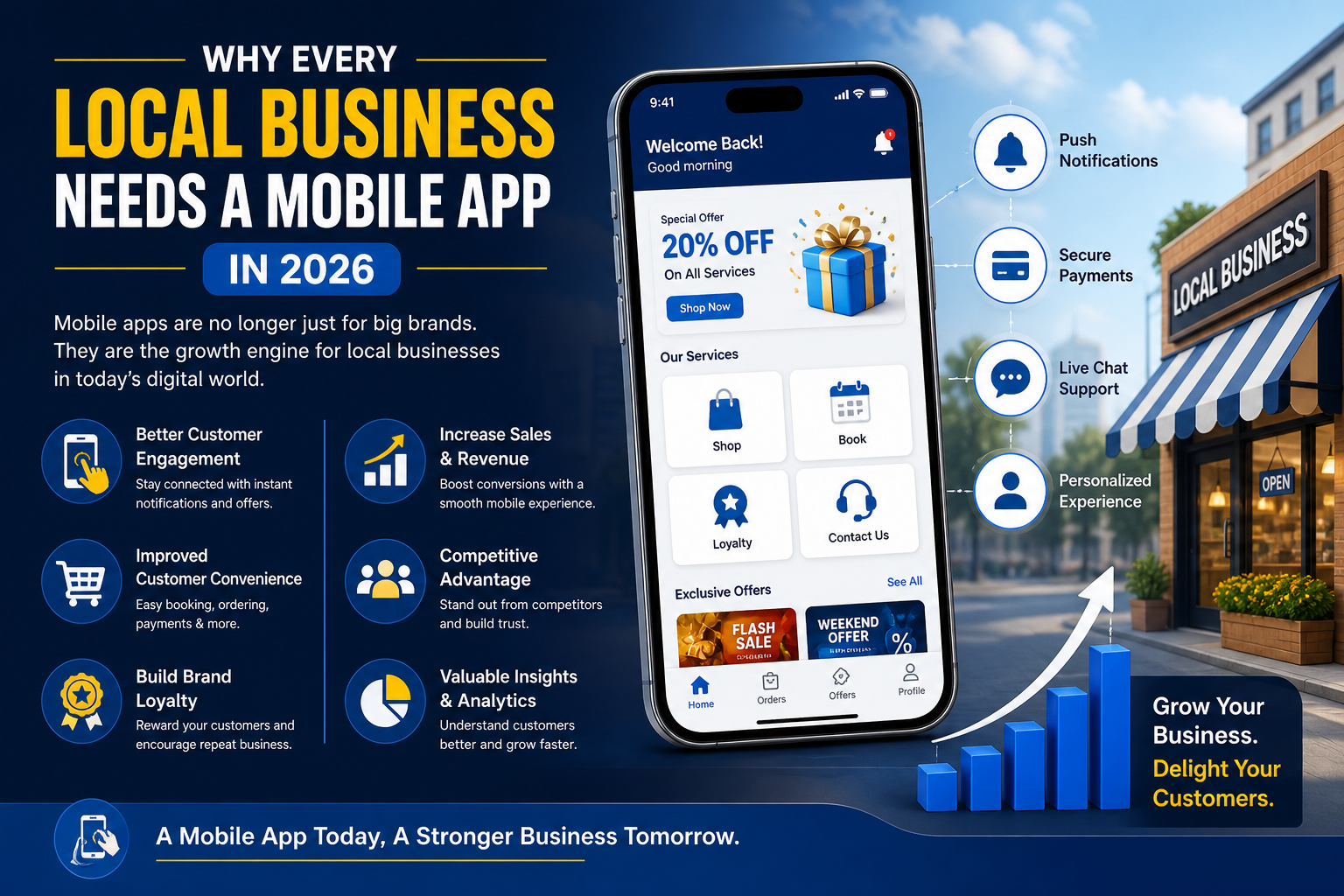
In 2026, mobile phones have become more than just communication devices — they are now shopping centers, booking platforms, customer service hubs, and marketing tools all in one. Customers today expect businesses to be available instantly, conveniently, and digitally. This is why mobile apps are no longer limited to large brands or multinational companies. Even local businesses are rapidly adopting mobile applications to stay competitive and grow faster.
From restaurants and salons to retail shops, clinics, gyms, and educational institutes, mobile apps are helping local businesses improve customer engagement, increase sales, and build long-term loyalty. Businesses that fail to adapt to this digital shift risk losing customers to competitors who provide a smoother and more personalized mobile experience.
The Growing Dependence on Smartphones
The average customer spends several hours daily on smartphones. Whether ordering food, booking appointments, shopping online, or making payments, mobile devices dominate customer behavior.
In 2026, customers prefer businesses that offer:
1.Quick online access
2.Easy booking or ordering
3.Personalized notifications
4.Digital payment options
5.Fast customer support
A mobile app allows local businesses to provide all these services in one place. Instead of depending only on social media or websites, apps create a direct connection between businesses and customers.
Better Customer Engagement and Communication
One of the biggest advantages of having a mobile app is direct communication with customers. Mobile apps allow businesses to send instant notifications about:
1.Discounts and offers
2.New product launches
3.Appointment reminders
4.Festival sales
5.Loyalty rewards
Unlike social media posts that may not reach every customer, push notifications are delivered directly to the user’s phone. This increases visibility and customer engagement significantly.
For example, a local restaurant can notify users about lunch discounts, while a salon can send reminders for upcoming appointments. This personalized communication helps businesses stay connected with customers regularly.
Improved Customer Convenience
Convenience is one of the biggest factors influencing purchasing decisions today. Customers want services that save time and effort.
A mobile app can help businesses offer:
1.Online ordering
2.Appointment booking
3.Live chat support
4.Digital payments
5.Order tracking
6.Customer profiles
Instead of calling or visiting physically, customers can complete everything from their smartphones within seconds.
For local businesses, this convenience improves customer satisfaction and encourages repeat business.
Building Brand Loyalty
In a competitive market, customer loyalty is extremely important. Mobile apps help businesses create stronger relationships with their customers through loyalty programs and personalized experiences.
Features like:
1.Reward points
2.Referral bonuses
3.Exclusive app-only discounts
4.Membership benefits
encourage customers to keep returning.
A mobile app also keeps the brand visible every day because the business logo remains on the customer’s phone screen. This constant visibility increases brand recall and trust over time.
Increased Sales and Revenue
Mobile apps can directly contribute to higher sales. Studies show that customers are more likely to purchase from businesses that offer a smooth mobile experience.
Apps simplify the buying process by reducing unnecessary steps. Customers can browse products, make payments, and place orders quickly.
Additionally, businesses can use customer data and purchasing behavior to offer personalized recommendations and promotions, increasing conversion rates.
For example:
1.A clothing store app can suggest products based on previous purchases.
2.A grocery app can remind users to reorder essential items.
3.A fitness center app can promote special membership packages.
These strategies help increase both sales and customer retention.
Competitive Advantage for Local Businesses
Many local businesses still rely only on traditional marketing methods or social media pages. Having a professional mobile app gives businesses a major competitive advantage.
Customers often perceive app-based businesses as:
1.More professional
2.More trustworthy
3.More modern
4.More customer-focused
In 2026, digital convenience strongly influences customer decisions. Businesses with apps stand out in crowded markets and attract tech-savvy customers more effectively.
Valuable Customer Insights and Analytics
Mobile apps provide useful customer data that helps businesses make smarter decisions. Businesses can track: 1.Customer preferences
2.Buying behavior
3.Most popular products
4.Peak usage times
5.Customer feedback
This information allows businesses to improve services, optimize marketing campaigns, and create better customer experiences.
Instead of guessing what customers want, businesses can make data-driven decisions that lead to better results.
Enhanced Marketing Opportunities
A mobile app becomes a powerful marketing platform for local businesses. Businesses can integrate:
1.Social media marketing
2.Email campaigns
3.Push notifications
4.Referral systems
5.In-app promotions
This creates multiple channels to reach customers effectively.
Apps also reduce dependence on third-party platforms because businesses can market directly to their audience without algorithm limitations.
Conclusion
In 2026, mobile apps are no longer a luxury for local businesses — they are a necessity. Customer expectations have changed, and businesses must adapt to remain relevant and competitive.
A well-designed mobile app helps local businesses improve customer convenience, increase engagement, build loyalty, and drive higher sales. It creates a direct communication channel that strengthens relationships and enhances overall business growth.
As digital transformation continues to reshape industries, local businesses that invest in mobile app development today will be better positioned for long-term success tomorrow.
For businesses looking to grow in the modern digital world, having a mobile app is not just an option anymore — it is a smart business strategy.