Introduction
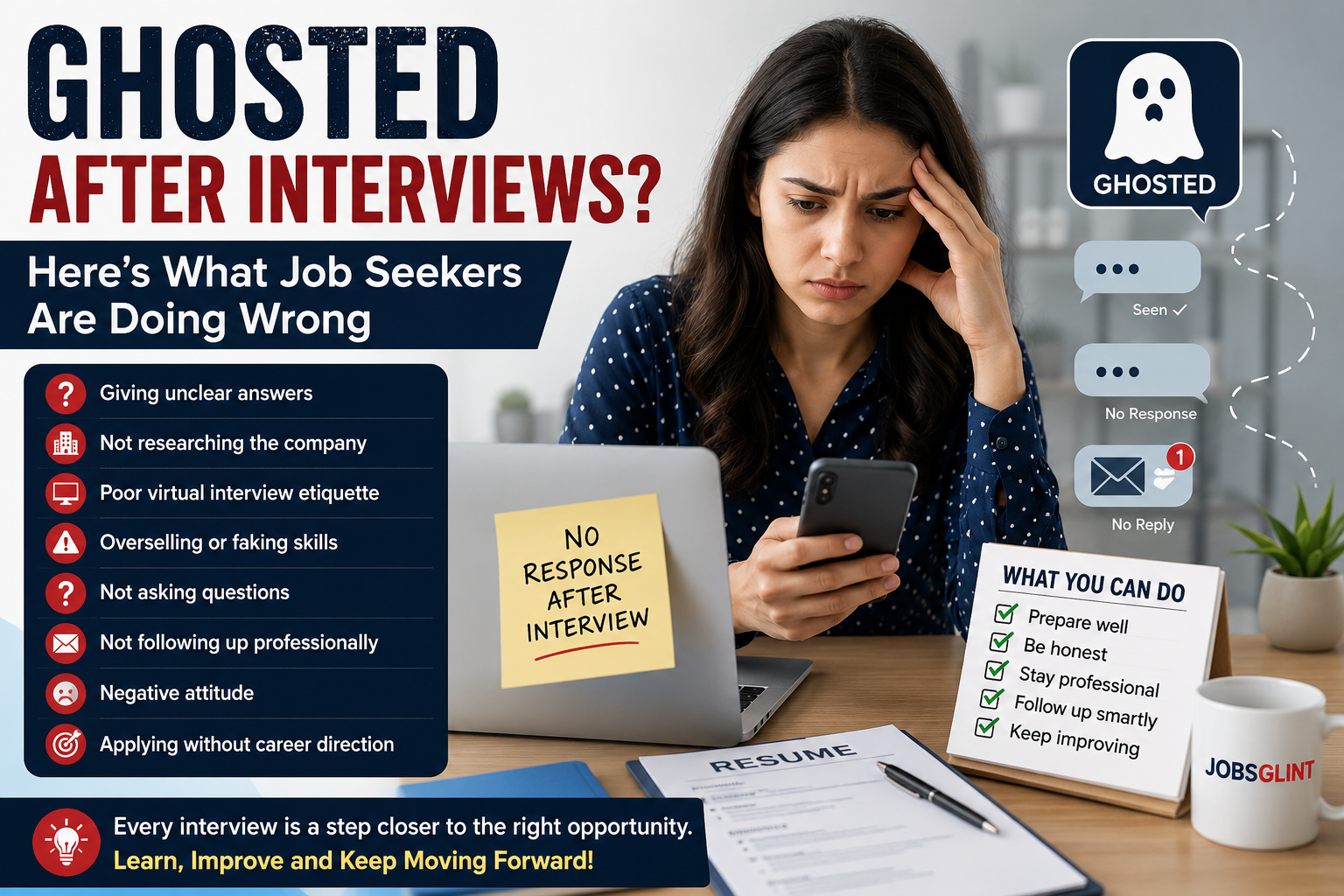
In today’s competitive hiring market, one of the biggest frustrations job seekers face is getting “ghosted” after interviews. You apply for a role, clear multiple interview rounds, feel confident about your performance — and then suddenly, silence. No calls, no emails, no updates.
This situation can feel discouraging, especially for freshers and professionals actively searching for opportunities in 2026. While some companies genuinely fail to communicate with candidates, there are also common mistakes job seekers make during and after interviews that unknowingly reduce their chances of hearing back.
If you’ve been wondering why recruiters disappear after interviews, this guide by JobsGlint will help you understand the possible reasons and how to avoid them.
Understanding Interview Ghosting
Interview ghosting happens when a recruiter or company stops responding after one or more interview rounds without officially updating the candidate about the hiring decision.
In 2026, hiring processes have become faster, AI-driven, and highly competitive. Recruiters often manage hundreds of applications for a single role. This means candidates are not only judged on technical skills but also on communication, professionalism, attitude, and follow-up behavior.
The good news? Many interview ghosting situations can be reduced by improving your overall interview approach.
Mistake #1: Giving Generic or Unclear Answers
One of the most common reasons candidates don’t hear back is weak interview communication.
Many job seekers answer questions with generic statements like:
1.“I’m hardworking.”
2.“I’m passionate.”
3.“I can do multitasking.”
Recruiters hear these answers every day. What they really want are examples, achievements, and clarity.
What You Should Do Instead
Use real experiences while answering questions.
For example:
1.Explain a project you handled.
2.Share how you solved a problem.
3.Mention measurable outcomes whenever possible.
Specific answers make you memorable and show confidence.
Mistake #2: Not Researching the Company
Candidates often attend interviews without properly understanding the company, role, or industry.
In 2026, recruiters expect applicants to do basic research before appearing for interviews. If you cannot explain why you want to join the company, it creates the impression that you are applying randomly everywhere.
How to Avoid This
Before every interview:
1.Visit the company website.
2.Read about their services and culture.
3.Understand the job description clearly.
4.Check their latest updates on LinkedIn or social media.
Even 20 minutes of preparation can significantly improve your impression.
Mistake #3: Poor Virtual Interview Etiquette
Remote and hybrid hiring continue to dominate in 2026. Many candidates lose opportunities because they ignore professional virtual interview behavior.
Common mistakes include:
1.Poor internet connection
2.Background noise
3.Untidy appearance
4.Lack of eye contact
5.Joining late
These small issues can make recruiters question your seriousness and professionalism.
Pro Tip
Always test your device, camera, microphone, and internet before the interview starts. Choose a clean and quiet location with proper lighting.
Mistake #4: Overselling or Faking Skills
Many candidates exaggerate their skills to impress recruiters. However, experienced interviewers can quickly identify when someone lacks genuine knowledge.
If your resume mentions advanced skills, certifications, or tools, be prepared to answer practical questions related to them.
The Better Approach
Be honest about your skill level.
Instead of pretending to know everything, show willingness to learn. Companies appreciate candidates who are transparent and adaptable.
Mistake #5: Failing to Ask Questions
At the end of interviews, recruiters often ask:
“Do you have any questions for us?”
Many candidates simply say “No.”
This is a missed opportunity.
When you don’t ask questions, it may appear that you are not genuinely interested in the role.
Smart Questions You Can Ask
1.What does success look like in this role?
2.What are the biggest challenges for this position?
3.How does the company support employee growth?
4.What are the next steps in the hiring process?
Thoughtful questions show curiosity and professionalism.
Mistake #6: Not Following Up Professionally
Some candidates never follow up after interviews, while others send repeated messages daily. Both extremes can hurt your chances.
The Right Way to Follow Up
Send a polite thank-you email or message within 24 hours after the interview. Keep it short and professional.
For example:
“Thank you for the opportunity to interview for the role. It was great learning more about the company and team. I look forward to hearing from you.”
If there’s no response, follow up once again after 5–7 working days.
Mistake #7: Negative Attitude During Interviews
Recruiters pay close attention to attitude and behavior.
Complaining about previous employers, blaming teammates, or sounding arrogant can become major red flags.
Even highly skilled candidates may get rejected because companies prefer team players with positive communication styles.
1.Confidence without arrogance
2.Positive attitude
3.Problem-solving mindset
4.Good listening skills
5.Professional communication
Soft skills matter more than ever in today’s job market.
Mistake #8: Applying Without Career Direction
Candidates who apply for completely unrelated roles often struggle during interviews.
For example, applying for marketing, HR, design, and software jobs simultaneously can confuse recruiters about your actual career goals.
Build a Focused Profile
Identify:
1.Your strongest skills
2.Preferred industry
3.Career goals
4.Relevant certifications and projects
A focused candidate appears more serious and employable.
Final Thoughts
Being ghosted after interviews can feel disappointing, but it doesn’t always mean you are not talented or capable. Sometimes, small mistakes in communication, preparation, or professionalism can affect your chances more than technical skills.
The modern hiring process in 2026 is highly competitive, and recruiters are evaluating candidates beyond resumes alone. Every interaction — from interview behavior to follow-up messages — shapes their final decision.
Instead of getting discouraged, use every interview as a learning experience. Improve your communication, strengthen your profile, and present yourself confidently.
Remember, one missed opportunity does not define your career.
The right opportunity is looking for the right candidate — and with the right preparation, that candidate can be you.
For more career tips, interview guidance, and resume strategies, stay connected with JobsGlint.