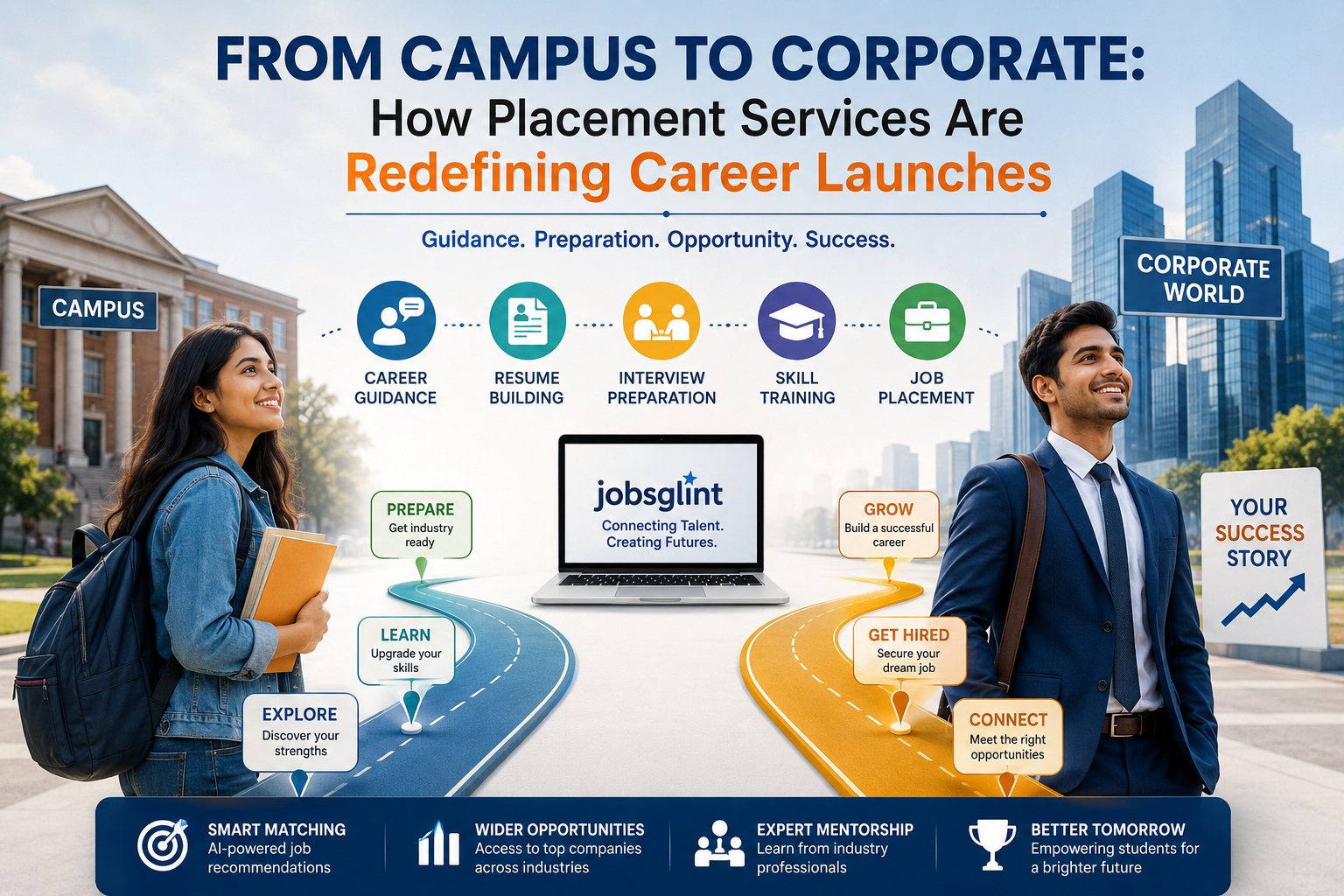
Introduction : The Changing Landscape of Career Beginnings
The transition from campus life to the corporate world has always been a defining phase in a student’s journey. However, in 2026, this transition is no longer a simple leap—it’s a structured, technology-driven process powered by advanced placement services. Traditional job hunting methods, where students relied solely on degrees and generic resumes, are rapidly becoming outdated. Today, placement assistance platforms like Jobsglint are reshaping how fresh graduates step into the professional world.
The Shift from Traditional Placements to Smart Career Launches
Earlier, campus placements were limited to a few companies visiting colleges, offering roles based largely on academic scores. While this system worked for some, many talented students were left behind due to lack of exposure or opportunity.
Modern placement services have transformed this model by:
1.Expanding job opportunities beyond campus boundaries
2.Connecting students with companies across industries
3.Offering personalized job recommendations
This shift ensures that talent is not confined by geography or institutional limitations, making career launches more inclusive and efficient.
The Role of Technology in Placement Services
Technology has become the backbone of placement assistance in 2026. Artificial intelligence (AI), machine learning, and data analytics are now deeply integrated into recruitment platforms.
Key Technological Advancements:
1.AI-Powered Job Matching: Platforms analyze student profiles, skills, and preferences to recommend the most suitable roles.
2.Automated Resume Screening: Recruiters use smart systems to identify the best candidates quickly.
3.Virtual Interviews & Assessments: Students can attend interviews from anywhere, breaking location barriers.
These innovations not only speed up the hiring process but also improve the quality of matches between candidates and employers.
Skill-Based Hiring: A New Standard
One of the most significant changes in placement services is the shift from degree-based hiring to skill-based recruitment. Employers are increasingly focusing on what candidates can do rather than what they have studied.
Why Skill-Based Hiring Matters:
1.It highlights practical knowledge over theoretical learning
2.Encourages students to upskill continuously
3.Opens doors for candidates from diverse educational backgrounds
Placement platforms now offer skill assessments, certifications, and training modules to help students align with industry expectations.
Personalized Career Guidance: Beyond Job Placement
Placement services are no longer limited to job listings. They now act as career partners, guiding students at every step of their professional journey.
What Modern Placement Assistance Includes:
1.Career Counseling: Helping students choose the right career path
2.Resume Building: Crafting industry-ready resumes
3.Interview Preparation: Conducting mock interviews and providing feedback
4.Soft Skills Training: Enhancing communication, teamwork, and confidence
This holistic approach ensures that students are not just placed in jobs but are truly prepared for long-term success.
Bridging the Gap Between Industry and Academia
A major challenge in the education system has been the gap between academic learning and industry requirements. Placement services are playing a crucial role in bridging this divide.
They collaborate with companies to understand current market demands and then help students acquire relevant skills. This alignment benefits both parties:
1.Students become job-ready
2.Employers get access to well-trained candidates
As a result, the hiring process becomes smoother, faster, and more effective.
The Rise of Data-Driven Recruitment
Data is transforming how hiring decisions are made. Placement platforms now rely on analytics to track student performance, predict job success, and improve placement outcomes.
Benefits of Data-Driven Placement:
1.Better candidate-job fit
2.Reduced hiring risks for companies
3.Increased placement success rates
For students, this means higher chances of landing roles that match their strengths and career goals.
Empowering Freshers with Equal Opportunities
One of the biggest advantages of modern placement services is their ability to democratize job opportunities. Students from smaller towns or lesser-known colleges now have access to the same opportunities as those from top institutions.
Digital platforms eliminate barriers such as:
1.Location constraints
2.Limited campus exposure
3.Lack of industry connections
This creates a level playing field where talent truly speaks louder than background.
The Role of Platforms Like Jobsglint
In this evolving ecosystem, platforms like Jobsglint are leading the way by offering comprehensive placement solutions. They go beyond traditional recruitment by integrating technology, training, and mentorship into one seamless experience.
From helping students identify career paths to connecting them with the right employers, such platforms are redefining what it means to launch a career successfully.
Future Trends in Placement Services
As we move further into the digital age, placement services will continue to evolve. Some emerging trends include: 1.AI Career Coaches: Personalized guidance powered by intelligent systems
2.Real-Time Skill Tracking: Continuous monitoring of candidate growth
3.Global Job Access: Opportunities across international markets
4.Hybrid Work Placements: Matching candidates with flexible work models
These trends indicate that placement services will become even more dynamic and student-centric in the coming years.
Conclusion:
A Smarter Path from Campus to Corporate
The journey from campus to corporate is no longer uncertain or overwhelming. With the rise of advanced placement services, students now have access to the tools, guidance, and opportunities they need to succeed.
In 2026, career launches are defined not by luck, but by preparation, technology, and smart connections. Placement platforms like Jobsglint are at the forefront of this transformation, ensuring that every student has the chance to turn their potential into a successful professional journey.
The future of career building is here—and it’s smarter, faster, and more inclusive than ever before.