Introduction
The world of work is
evolving faster than ever. With rapid advancements in technology, shifting
workplace expectations, and the rise of automation, the definition of “career
growth” has changed dramatically. In 2026, staying relevant is no longer about
years of experience alone—it’s about adaptability, continuous learning, and
strategic career planning.
For employees, the challenge
is clear: evolve or risk being left behind. This article explores what
professionals must do to stay competitive and grow in today’s dynamic job
market.
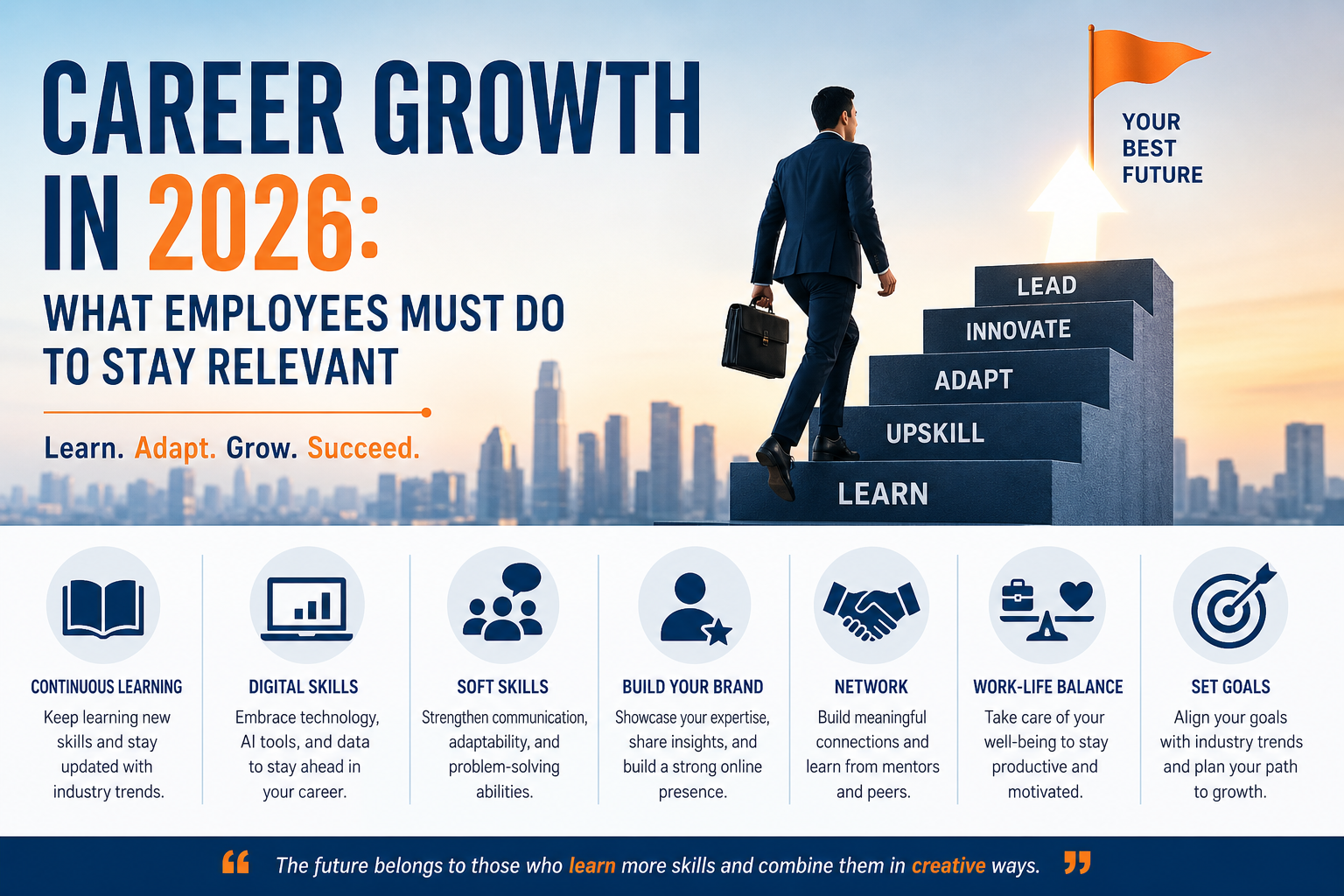
Understanding the New Definition of Career Growth
Traditionally, career growth
meant climbing the corporate ladder—promotions, higher salaries, and bigger
titles. But in 2026, growth is more multidimensional.
Today, it includes:
1.Expanding skill sets
2.Gaining
cross-functional experience
3.Building a personal
brand
4.Staying adaptable in a
changing environment
Employees are no longer
expected to follow a linear path. Instead, employers value versatility,
innovation, and the ability to learn quickly.
Continuous Learning is No Longer Optional
One of the most critical
factors for staying relevant is continuous learning. Industries are evolving
rapidly, and skills that were in demand just a few years ago may already be
outdated.
How to stay ahead:
1.Enroll in online
courses and certifications
2.Attend webinars,
workshops, and industry events
3.Stay updated with
industry trends and news
Learning should not be
limited to your current role. Exploring adjacent skills can open new career
opportunities and make you more valuable to employers.
Embrace Digital and Technological Skills
Technology is at the core of
almost every industry in 2026. Even non-technical roles now require a basic
understanding of digital tools and platforms.
Key skills to focus on:
1.Data literacy and basic
analytics
2.Familiarity with AI
tools and automation platforms
3.Digital communication
and collaboration tools
Employees who are
comfortable with technology are more efficient, productive, and future-ready.
Develop Strong Soft Skills
While technical skills are
essential, soft skills are what truly differentiate employees in a competitive
job market.
Important soft skills include:
1.Communication and
interpersonal skills
2.Problem-solving and
critical thinking
3.Adaptability and
resilience
4.Emotional intelligence
Employers are increasingly
looking for individuals who can work well in teams, handle challenges
effectively, and contribute positively to workplace culture.
Build a Personal Brand
In today’s digital world,
your professional identity goes beyond your resume. Building a strong personal
brand can significantly boost your career growth.
Ways to build your brand:
1.Maintain an updated and
professional LinkedIn profile
2.Share insights,
articles, and achievements online
3.Participate in
professional communities and discussions
A strong personal brand
increases visibility and can attract better job opportunities.
Focus on Networking and Relationships
Networking remains one of
the most powerful tools for career growth. Many opportunities arise through
connections rather than traditional job applications.
Effective networking strategies:
1.Connect with industry
professionals
2.Attend networking
events and conferences
3.Engage with peers and
mentors
Building meaningful
relationships can provide guidance, support, and access to hidden job
opportunities.
Be Open to Change and New Opportunities
The modern career path is
not fixed. Employees who are open to change are more likely to grow and
succeed.
What this means:
1.Be willing to switch
roles or industries
2.Take on new challenges
and responsibilities
3.Step out of your
comfort zone
Flexibility allows you to
adapt to market demands and seize emerging opportunities.
Prioritize Work-Life Balance and Well-Being
Career growth is not just
about professional success—it also involves personal well-being. Burnout can
negatively impact productivity and long-term career prospects.
Tips for maintaining balance:
1.Set clear boundaries
between work and personal life
2.Take regular breaks and
manage stress
3.Focus on mental and
physical health
Healthy employees are more
productive, creative, and engaged in their work.
Seek Feedback and Self-Improve
Regular feedback is
essential for growth. It helps identify strengths, areas for improvement, and
opportunities for development.
How to use feedback effectively:
1.Ask for constructive
feedback from managers and peers
2.Reflect on your
performance regularly
3.Set clear goals for
improvement
Self-awareness and a
willingness to improve are key traits of successful professionals.
Align Career Goals with Industry Trends
Understanding where your
industry is heading can help you make smarter career decisions.
Steps to stay aligned:
1.Research future job
roles and skills in demand
2.Identify gaps in your
current skill set
3.Plan your career path
accordingly
Employees who anticipate
changes and prepare for them are more likely to succeed.
Conclusion
Career growth in 2026 is no
longer about waiting for opportunities—it’s about creating them. Employees must
take ownership of their professional development by continuously learning,
adapting to change, and building strong networks.
The workplace will continue
to evolve, but those who stay proactive, flexible, and forward-thinking will
always find ways to thrive. Staying relevant is not a one-time effort—it’s a
continuous journey.
By embracing these
strategies, employees can not only secure their future but also unlock new and
exciting career possibilities in the years ahead.