Introduction
The workplace has undergone
a massive transformation over the past few years, and by 2026, hybrid work
culture is no longer an experiment—it’s the standard. Organizations across
industries are blending remote and in-office work to offer flexibility, improve
productivity, and attract top talent. However, while hybrid work brings many
benefits, it also introduces unique challenges that HR professionals must
address strategically.
What is Hybrid Work Culture?
Hybrid work culture is a
flexible working model where employees split their time between working
remotely and working from the office. This model empowers employees with
autonomy while allowing organizations to maintain collaboration and company
culture.
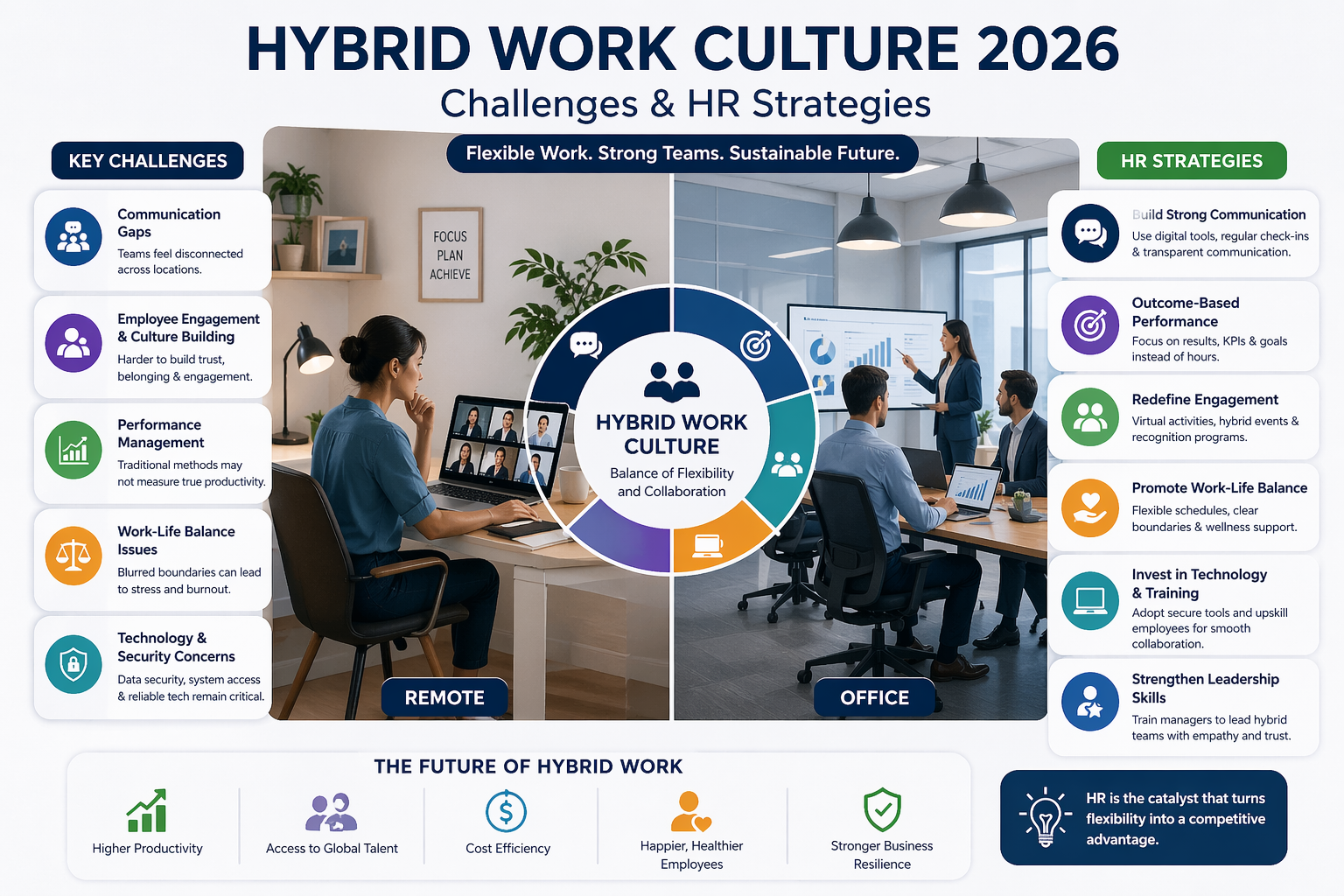
Key Challenges of Hybrid Work Culture in 2026
1. Communication Gaps
With teams working from
different locations, communication often becomes fragmented. Remote employees
may feel disconnected, while in-office staff may have more access to
information and leadership.
2. Employee Engagement & Culture Building
Maintaining a strong
organizational culture is harder when employees are not physically present
together. Building team bonding, trust, and engagement requires extra effort in
a hybrid setup.
3. Performance Management
Traditional performance
evaluation methods don’t work effectively in hybrid environments. Measuring
productivity based on hours instead of outcomes can lead to inefficiencies and
bias.
4. Work-Life Balance Issues
While hybrid work offers
flexibility, it can blur the boundaries between personal and professional life.
Employees may experience burnout due to overworking or lack of clear work
hours.
5. Technology & Security Concerns
Hybrid work depends heavily
on digital tools. Ensuring seamless collaboration, data security, and reliable
IT infrastructure remains a constant challenge for organizations.
HR Strategies to Overcome Hybrid Work Challenges
1. Build a Strong Digital Communication Framework
HR teams must implement
structured communication channels using collaboration tools. Regular check-ins,
virtual meetings, and transparent communication practices ensure that all
employees stay aligned, regardless of location.
2. Focus on Outcome-Based Performance Management
Shift from time-based
tracking to results-driven performance evaluation. Setting clear KPIs, goals,
and measurable outcomes helps employees stay accountable while promoting
productivity.
3. Redefine Employee Engagement
HR should design innovative
engagement strategies such as virtual team-building activities, hybrid events,
and recognition programs. Creating a sense of belonging is crucial in a
distributed workforce.
4. Promote Work-Life Balance
Encouraging flexible
schedules, setting clear work boundaries, and promoting mental well-being
initiatives can help employees maintain a healthy balance. HR policies should
prioritize employee wellness.
5. Invest in Technology & Training
Organizations must adopt
advanced HR tech tools, secure cloud systems, and collaboration platforms.
Additionally, training employees to effectively use these tools is equally
important.
6. Strengthen Leadership & Managerial Skills
Managers play a critical
role in hybrid teams. HR should train leaders to manage remote teams
effectively, build trust, and ensure fair treatment of both remote and
in-office employees.
The Role of HR in Shaping Hybrid Work Culture
HR is no longer just a
support function—it is a strategic driver of organizational success. In 2026,
HR professionals must act as change leaders by designing policies that align
business goals with employee expectations. From creating inclusive work environments
to leveraging data-driven insights, HR plays a vital role in making hybrid work
successful.
Future of Hybrid Work
Hybrid work culture will
continue to evolve with advancements in AI, automation, and workplace
technologies. Organizations that adapt quickly and invest in employee-centric
strategies will gain a competitive edge in talent acquisition and retention.
Conclusion
Hybrid work culture in 2026
offers a perfect blend of flexibility and productivity, but it comes with its
own set of challenges. By adopting innovative HR strategies, focusing on
employee well-being, and leveraging technology, organizations can build a resilient
and future-ready workforce. The key lies in balancing business needs with
employee expectations—because the future of work is not just hybrid, it’s
human-centric.