Introduction
Search Engine Optimization
(SEO) has changed dramatically over the past decade. Earlier, SEO strategies
mainly focused on keywords, backlinks, and technical optimization.
Marketers tried to rank their websites by repeating specific keywords and
optimizing pages for search engines.
However, in 2026, SEO
has evolved into something much smarter. Search engines now understand context,
intent, and natural conversations. With the rise of AI assistants, voice
search, and conversational interfaces, businesses must adapt their strategies.
For companies and
professionals learning digital marketing at Softechedge, understanding
this shift from keyword-based SEO to conversational search optimization
is essential to stay competitive in the digital landscape.
The Evolution of SEO
Traditional SEO: Keyword-Focused Strategy
In the early days of SEO,
ranking on search engines mostly depended on targeting exact keywords.
Marketers would identify popular search terms and place them in titles,
headings, and content multiple times.
Common strategies included:
1.Keyword stuffing
2.Exact-match domain names
3.Backlink quantity over
quality
4.Basic on-page optimization
While these tactics worked
in the past, modern search engines have become far more advanced. They now
prioritize relevance, user intent, and high-quality content instead of
just keyword repetition.
The Shift Toward User Intent
Search engines today aim to understand
what users actually mean, not just what they type. For example:
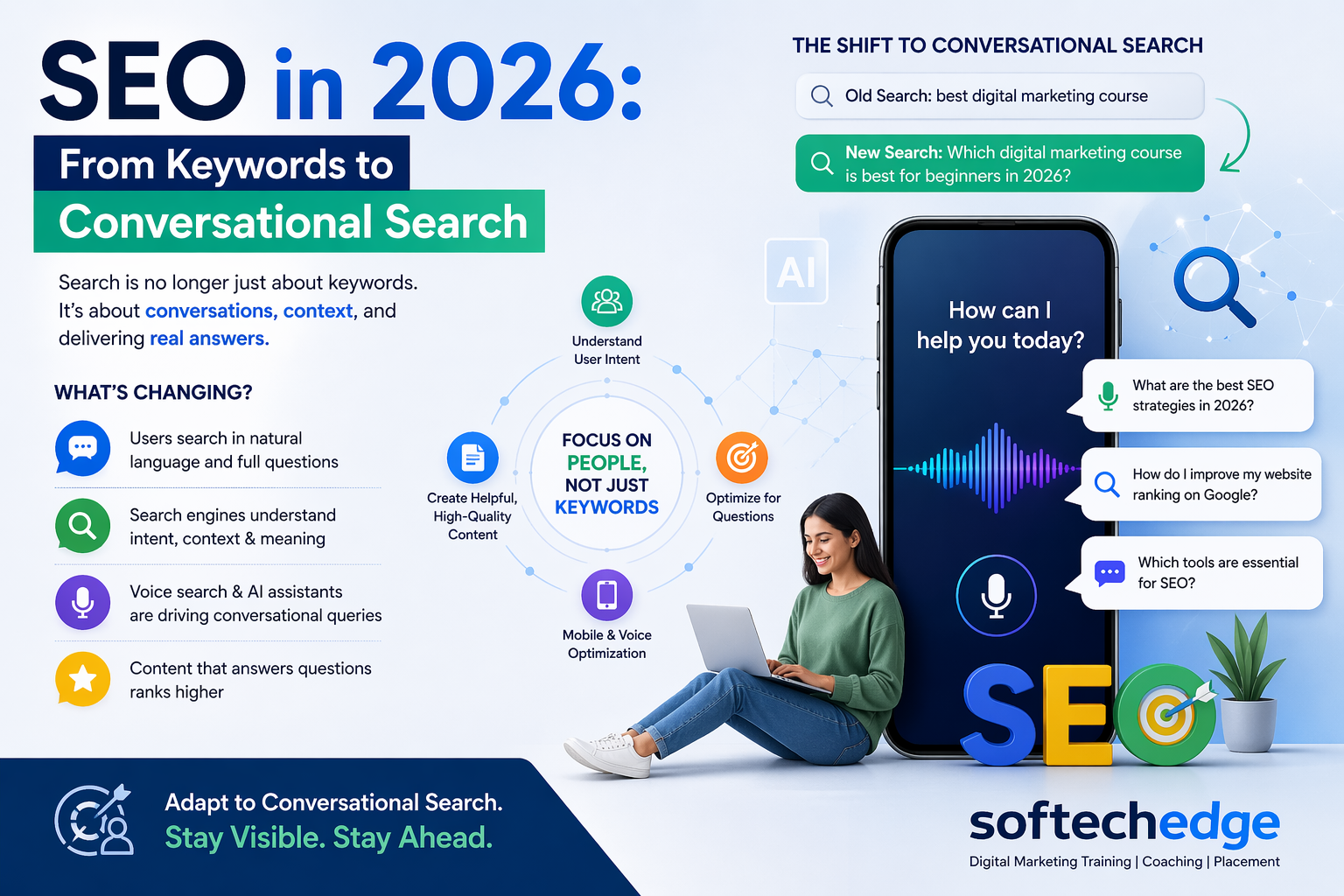
1.Old search: “best
digital marketing course”
2.New search: “Which
digital marketing course is best for beginners in 2026?”
This shift shows that users
are searching in complete questions and natural language. As a result,
SEO strategies must focus on answering real user queries instead of simply
targeting keywords.
What Is Conversational Search?
Conversational search refers
to the way people interact with search engines using natural language, voice
commands, and AI-powered assistants.
Instead of typing short
phrases, users now ask full questions, similar to how they would speak
to another person.
Examples include:
1.“What is the best way to
learn SEO in 2026?”
2.“How can I start a digital
marketing career after graduation?”
3.“Which institute offers
practical digital marketing training?”
Search engines analyze these
queries using AI, machine learning, and natural language processing to
provide more accurate and helpful results.
Why Conversational Search Matters in 2026
1. Growth of Voice Search
With smartphones, smart
speakers, and AI assistants becoming more common, voice search is rapidly
increasing. People prefer asking questions instead of typing long queries.
Businesses must therefore
optimize their content for spoken language and question-based searches.
2. AI-Powered Search Engines
Modern search engines use
advanced AI algorithms that understand context and relationships between
words. This means content must be written naturally and provide clear
answers to user questions.
Websites that focus only on
keywords without meaningful content are less likely to rank well.
3. User Experience Is a Ranking Factor
Search engines now
prioritize content that helps users quickly find solutions. Pages that
provide clear explanations, structured information, and valuable insights
perform better in search results.
How SEO Strategies Are Changing in 2026
Focus on Topic Authority
Instead of creating multiple
pages targeting slightly different keywords, businesses should create comprehensive
content around a topic.
For example, rather than
writing separate posts for:
A.SEO tips
B.SEO techniques
C.SEO strategies
A better approach is
creating complete guides that answer multiple related questions.
Optimize for Questions
Since conversational search
often involves questions, content should include:
A.FAQ sections
B.Question-based headings
C.Clear, informative answers
This helps search engines
identify your content as relevant for conversational queries.
Natural and Human-Like Content
Content should feel natural,
engaging, and helpful rather than robotic or overly optimized.
Instead of repeating
keywords unnaturally, focus on:
A. Clear explanations
B. Practical examples
C. Helpful insights
This improves both user
engagement and search visibility.
Mobile and Voice Optimization
Most conversational searches
happen on mobile devices and voice assistants. Therefore, websites must
be:
1.Mobile-friendly
2.Fast loading
3.Easy to navigate
4.Structured with clear
headings
A good user experience
increases both SEO performance and user satisfaction.
Why Learning Modern SEO Skills Is Important
As SEO continues to evolve,
businesses and marketers must update their skills regularly. Professionals who
understand AI-driven search, conversational content, and user intent
optimization will have a significant advantage in the digital marketing
industry.
At Softechedge,
digital marketing training focuses on modern SEO strategies, practical
learning, and real-world tools. Students learn how search engines work
today and how to create content that ranks in the evolving search landscape.
Conclusion
SEO in 2026 is no longer
just about inserting keywords into web pages. It is about understanding
users, answering their questions, and creating meaningful digital experiences.
The rise of conversational
search means businesses must focus on natural language, user intent, and
valuable content. Companies that adapt to this new approach will achieve
better visibility, stronger engagement, and long-term online success.
For aspiring marketers and
business owners, learning these modern SEO strategies through professional
training at Softechedge can be the first step toward building a
successful digital future.