Introduction
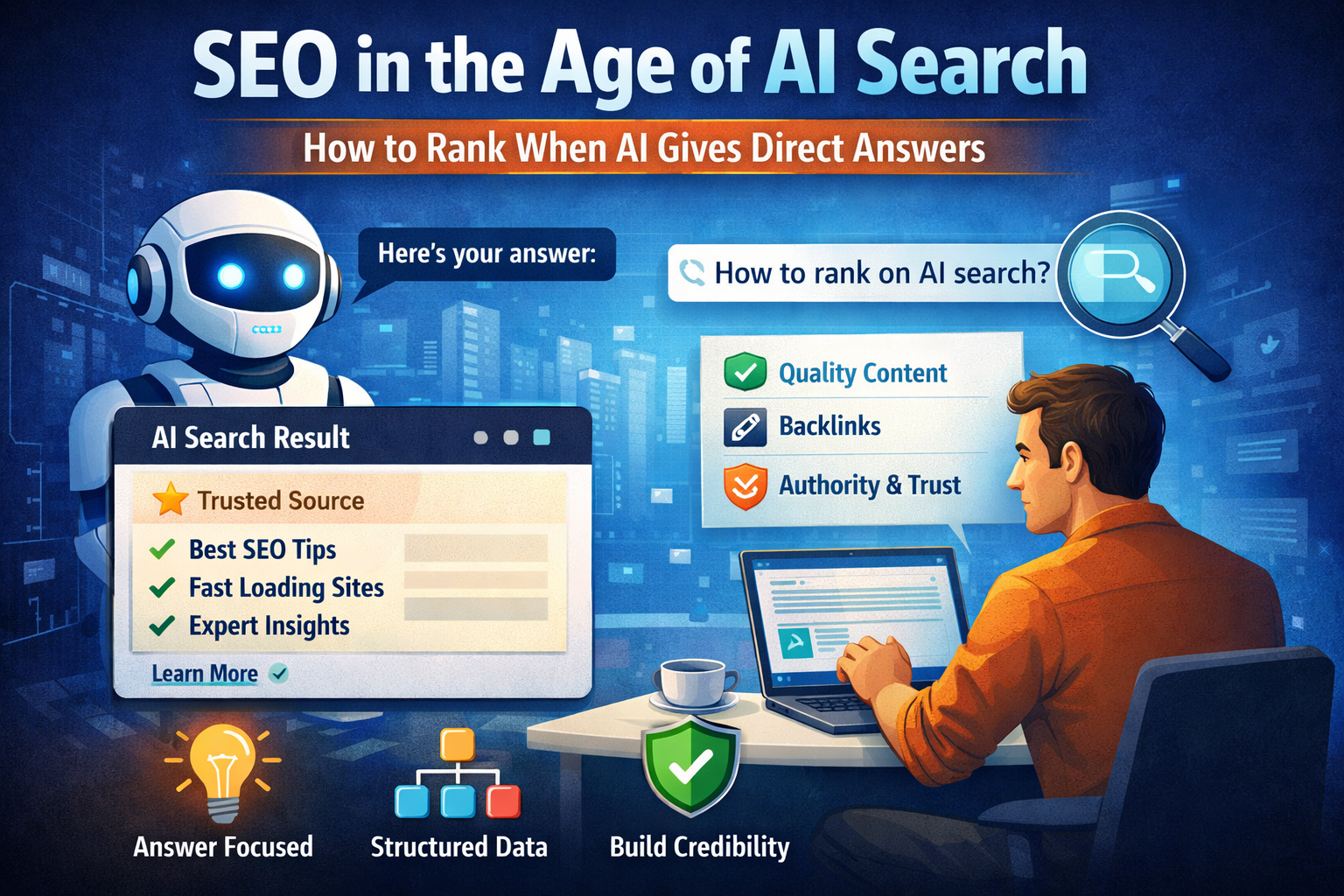
Search engines are evolving
rapidly. Instead of showing only a list of links, modern platforms like
AI-powered search assistants now provide direct answers to user queries.
This means users often get the information they need without even clicking a
website link.
For businesses and
marketers, this shift changes the rules of SEO. Ranking on the first page is no
longer enough — your content must now be trusted and structured well enough
for AI to cite it in its answers.
Let’s explore how SEO is
evolving in the age of AI search and how your business can stay visible.
The Rise of AI Search
AI-driven search tools
analyze large amounts of information and generate summarized answers for users.
Platforms such as AI-powered search assistants and generative search engines
combine data from multiple sources to deliver quick responses instead of traditional
search results.
Because of this, many
searches now become “zero-click searches,” where users get answers
instantly without visiting websites.
This shift has led to a new
concept called Generative Engine Optimization (GEO) — optimizing content
so AI systems choose your website as a reliable source.
How to Rank in AI-Powered Search
Focus on Answer-First Content
AI systems prefer content
that answers questions clearly and quickly.
Instead of long
introductions, place the main answer at the beginning of your content.
Structured formats such as:
1.Question and answer
sections
2.Short paragraphs
3.Bullet points
help AI extract information
easily.
Build Topical Authority
Traditional SEO often
focused on individual keywords. Today, AI search favors topic authority.
This means your website
should cover a subject in depth with multiple related articles connected
through internal links. When your website consistently publishes useful content
on a topic, AI systems begin to recognize your brand as an expert source.
Optimize for Questions and Search Intent
AI search engines are
designed to answer real user questions.
Your content should target
queries like:
1.“What is digital
marketing?”
2.“How does SEO work?”
3.“Best tools for web
development”
Creating blog posts that
directly answer these questions increases the chances of your content being
cited in AI responses.
Structure Content for AI and Humans
Even high-quality content
can be ignored by AI if it is poorly structured.
Use:
1.Clear headings (H1, H2,
H3)
2.Lists and numbered steps
3.Tables and summaries
Structured content is easier
for both readers and AI systems to interpret.
Build Trust and Credibility
AI models prioritize trusted
sources when generating answers.
You can strengthen trust
signals by:
1.Publishing expert-level
content
2.Getting quality backlinks
3.Maintaining consistent
brand information online
4.Adding author credibility
and references
The more reliable your
website appears, the more likely AI platforms will use it as a source.
Maintain Strong Technical SEO
Technical SEO still plays a
crucial role.
Make sure your website has:
1.Fast loading speed
2.Mobile-friendly design
3.Secure HTTPS connection
4.Proper indexing and crawl
accessibility
If AI crawlers cannot easily
access your website, your content may never be considered as a source.
The Future of SEO in an AI-Driven World
AI is not replacing SEO — it
is transforming it. Businesses that adapt to this new search environment will
gain a major competitive advantage.
The future of SEO will focus
on:
1.Helpful and authoritative
content
2.Clear and structured
information
3.Brand credibility
4.Content designed for both
humans and AI systems
Final Thoughts
As AI continues to reshape
search engines, businesses must rethink their SEO strategies. The goal is no
longer just ranking on search results — it is becoming the source AI trusts
when generating answers.
Companies that create
high-quality, structured, and trustworthy content will remain visible in this
new era of search.
At Softechedge, we
help businesses build SEO strategies that work for both traditional search
engines and modern AI-driven search platforms — ensuring long-term digital
growth.