Introduction
The modern workplace has
evolved rapidly over the past few years. Many organizations are no longer
limited to traditional office environments. Instead, companies are adopting hybrid
work culture, where employees work both remotely and from the office.
Hybrid work offers
flexibility, improves work-life balance, and helps companies access talent from
anywhere. However, managing remote and hybrid teams comes with its own
challenges. Human Resource professionals play a critical role in ensuring that
productivity, communication, and employee engagement remain strong in a hybrid
environment.
Here are some effective HR
strategies for managing remote and hybrid teams successfully.
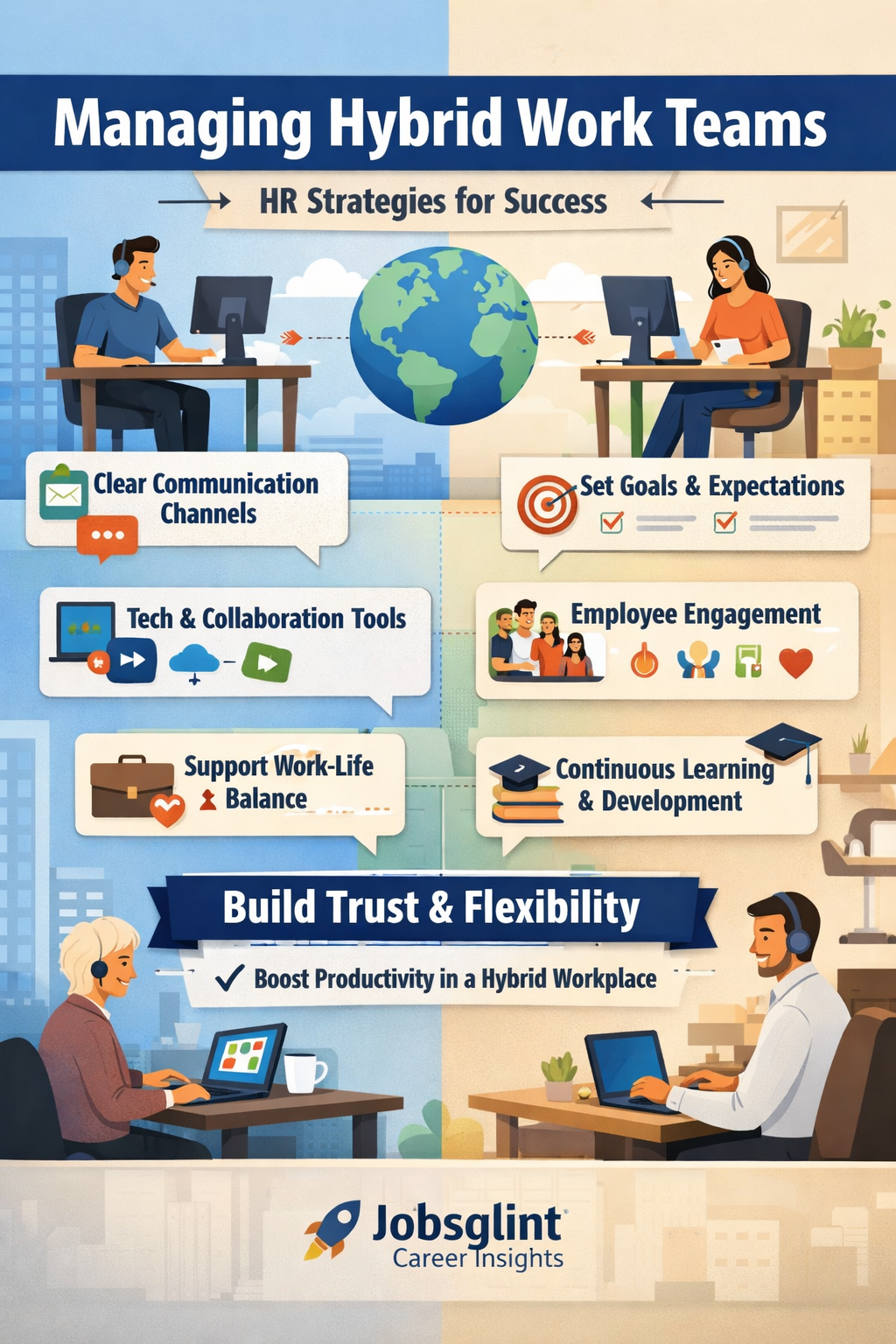
Establish Clear Communication Channels
Communication is one of the
biggest challenges in remote work environments. Without proper communication,
teams may experience misunderstandings, delays, and reduced collaboration.
HR teams should encourage
the use of structured communication tools such as video meetings, chat
platforms, and project management software. Regular check-ins, weekly team
meetings, and clear reporting structures help ensure that everyone stays
aligned with their responsibilities and goals.
Transparency and open
communication also build trust among team members.
Set Clear Goals and Expectations
In a hybrid work culture,
employees may not always be physically present in the office. Therefore, it
becomes essential to focus on results rather than working hours.
HR managers should work with
team leaders to define clear goals, performance metrics, and deadlines.
Employees should understand what is expected from them and how their
performance will be evaluated.
A goal-driven work culture
increases accountability and helps employees stay focused even while working
remotely.
Use Technology to Improve Collaboration
Technology plays a vital
role in managing remote teams. HR departments should ensure that employees have
access to the right digital tools for communication, collaboration, and task
management.
Project management tools,
shared documents, virtual meetings, and collaboration platforms help teams work
together efficiently regardless of their location.
Providing proper training on
these tools is also important to ensure employees can use them effectively.
Focus on Employee Engagement
One common challenge of
remote work is employee isolation. When employees work remotely for long
periods, they may feel disconnected from the organization and their colleagues.
HR teams should organize
virtual team-building activities, online recognition programs, and informal
interactions such as virtual coffee sessions. These activities help maintain
team spirit and strengthen workplace relationships. Employee engagement
initiatives can significantly improve motivation and job satisfaction.
Support Work-Life Balance
While remote work offers
flexibility, it can also blur the boundary between personal and professional
life. Employees may feel pressured to stay online longer or respond to work
messages outside working hours.
HR policies should encourage
healthy work habits. Setting clear working hours, promoting regular breaks, and
discouraging after-hours communication can help employees maintain a healthy
work-life balance.
A balanced workforce is more
productive and less likely to experience burnout.
Provide Continuous Learning and Development
Hybrid work environments
require employees to adapt to new tools, technologies, and ways of working. HR
departments should invest in training programs that help employees develop both
technical and soft skills.
Online learning platforms,
webinars, and virtual workshops can help employees grow professionally while
working remotely. Continuous learning also helps organizations stay competitive
in a rapidly changing business environment.
Build a Culture of Trust
Trust is the foundation of a
successful hybrid workplace. Managers should avoid micromanagement and instead
focus on empowering employees to take ownership of their work.
When employees feel trusted
and valued, they are more likely to remain motivated and committed to the
organization's goals.
HR leaders must encourage a
culture where performance is measured by outcomes rather than physical
presence.
Conclusion
Hybrid work culture is
becoming the future of the modern workplace. While it offers numerous benefits,
it also requires thoughtful management and strong HR strategies.
By focusing on clear
communication, goal-driven performance, technology adoption, employee
engagement, work-life balance, and continuous learning, HR teams can
successfully manage remote and hybrid teams.
Organizations that adapt to
hybrid work effectively will not only improve productivity but also create a
more flexible and employee-friendly workplace.
For more career insights, HR
strategies, and job search tips, follow Jobsglint.