Introduction
In today’s competitive
workplace, employee engagement has become one of the most important factors
influencing organizational success. Engaged employees are more productive, more
committed to their roles, and more likely to stay with their organization for a
longer period. However, many companies struggle to build real engagement
because they focus only on perks rather than meaningful strategies.
Organizations like Jobsglint,
which focus on career growth and workplace development, emphasize that employee
engagement is not just about motivation—it’s about creating an environment
where employees feel valued, heard, and inspired to contribute their best work.
Below are some employee
engagement strategies that actually work in modern workplaces.
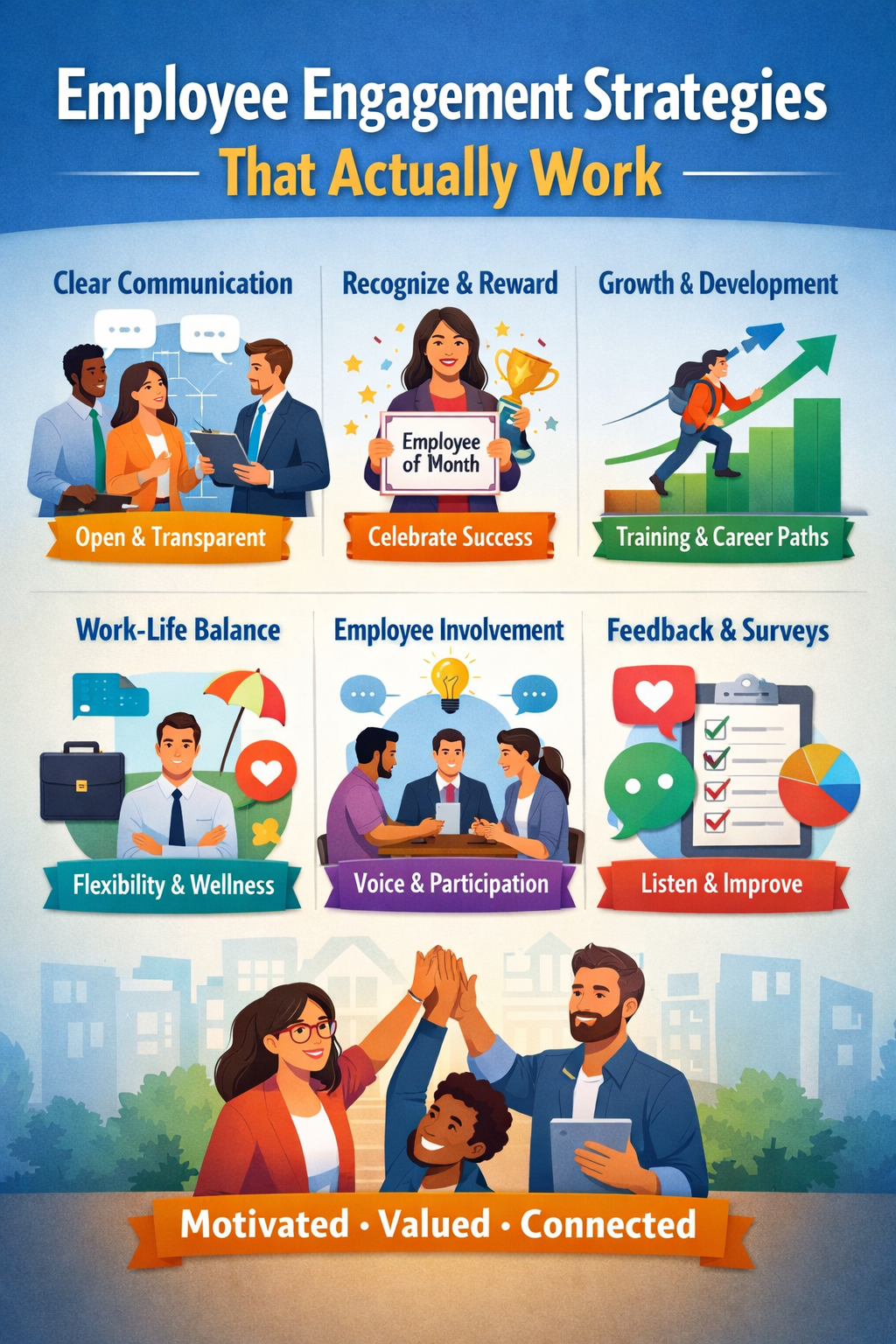
Create Clear Communication Channels
One of the biggest reasons
employees feel disconnected from their workplace is a lack of communication.
When employees are not aware of company goals, expectations, or updates, they
may feel excluded from the bigger picture.
Organizations should
encourage open communication between management and employees. Regular team
meetings, feedback sessions, and transparent leadership communication help
employees feel informed and involved in company decisions. When employees
understand how their work contributes to the organization’s success, their
engagement naturally increases.
Recognize and Appreciate Employee Contributions
Recognition plays a crucial
role in employee engagement. Employees who feel appreciated for their work are
more motivated to perform better and stay committed to their roles.
Simple gestures such as
appreciation emails, employee-of-the-month programs, or public recognition
during team meetings can make a big difference. Recognition does not always
need to be monetary; sometimes a genuine “thank you” from a manager can significantly
boost morale.
Provide Opportunities for Growth and Development
Career growth is one of the
most important factors for employee satisfaction. Employees want to know that
their organization supports their professional development.
Companies can improve
engagement by offering training programs, skill development workshops,
mentorship opportunities, and clear career advancement paths. When employees
see opportunities for learning and growth within the company, they become more
invested in their roles.
Encourage Work-Life Balance
Work-life balance has become
a major priority for modern employees. Overworked employees often experience
burnout, which leads to lower engagement and productivity.
Organizations should promote
flexible working hours, remote work options where possible, and reasonable
workloads. Encouraging employees to take breaks and maintain a healthy balance
between work and personal life helps create a more positive workplace environment.
Involve Employees in Decision-Making
Employees feel more engaged
when their opinions matter. When organizations involve employees in
decision-making processes, it builds trust and a sense of ownership.
Managers can invite team
members to share ideas during meetings, participate in brainstorming sessions,
or provide feedback on workplace policies. When employees know their voices are
heard, they feel more connected to the organization.
Build a Positive Workplace Culture
A positive workplace culture
plays a major role in employee engagement. Employees thrive in environments
where teamwork, respect, and collaboration are encouraged.
Companies can foster a
positive culture by promoting teamwork activities, celebrating achievements,
and creating a supportive environment where employees feel comfortable sharing
ideas and challenges. A healthy culture helps employees feel emotionally connected
to their workplace.
Conduct Regular Feedback and Engagement Surveys
Organizations should
regularly assess how employees feel about their work environment. Employee
feedback surveys help management understand concerns, identify engagement gaps,
and implement improvements. Listening to employee
feedback and taking action based on it demonstrates that the organization
genuinely cares about its workforce. This builds trust and strengthens
engagement.
Conclusion
Employee engagement is not
achieved through occasional initiatives but through consistent effort and
thoughtful leadership. When organizations prioritize communication,
recognition, professional growth, and work-life balance, they create a
workplace where employees feel motivated and valued.
Companies that successfully
implement effective engagement strategies not only improve employee
satisfaction but also enhance productivity, innovation, and long-term
organizational success. In today’s evolving work environment, investing in
employee engagement is no longer optional—it is essential for sustainable
growth.