Introduction
In today’s competitive job
market, your resume is often the first impression you make on a
recruiter. Employers receive hundreds of applications for a single position,
and most of them spend only a few seconds scanning each resume. This
means that a well-structured and impactful resume can significantly increase
your chances of getting interview calls.
Building a strong resume is
not just about listing your qualifications; it’s about presenting your
skills, achievements, and potential in a clear and professional way. Here
are some essential tips to help you create a resume that stands out.
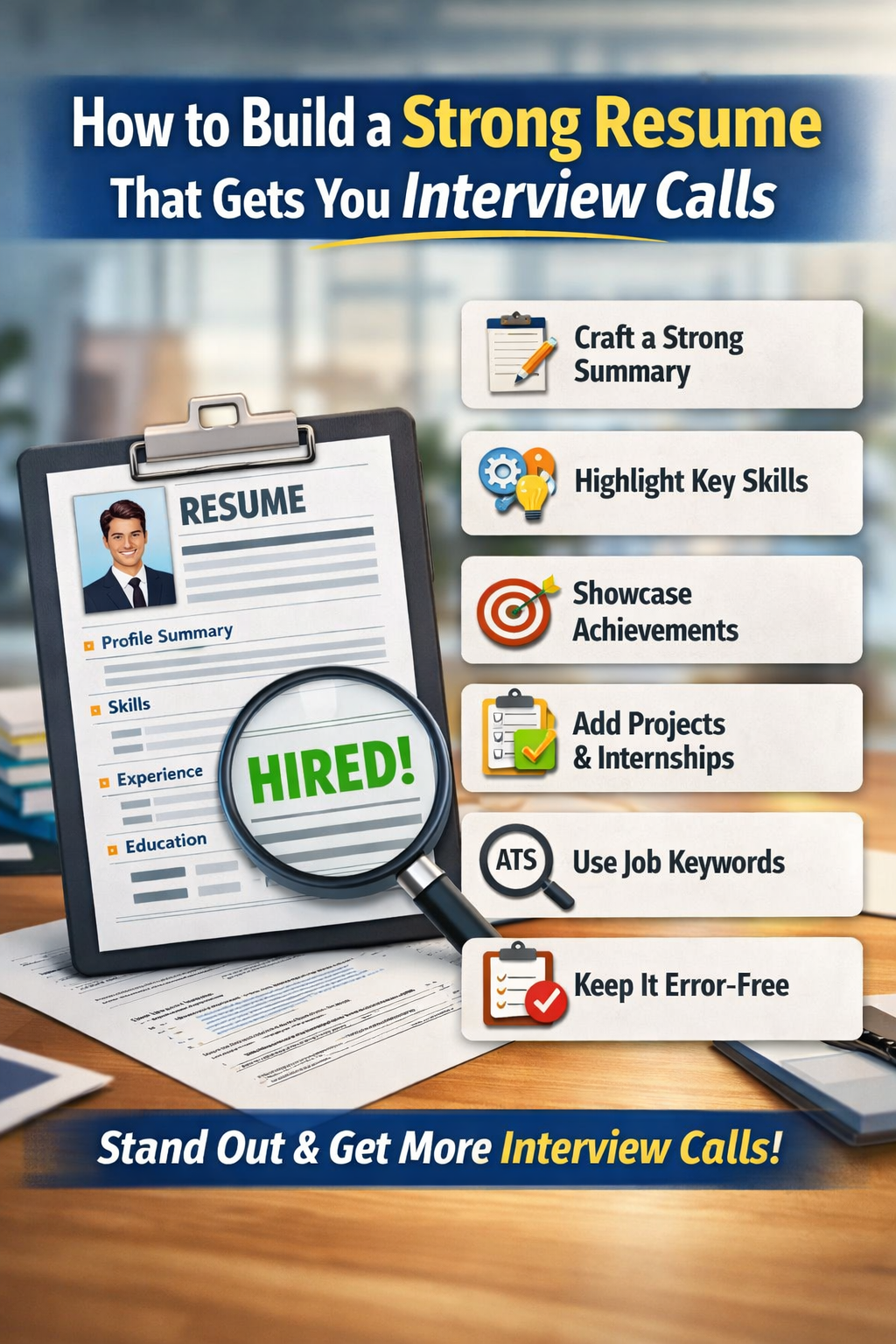
Start with a Clear and Professional Format
A good resume should be clean,
organized, and easy to read. Recruiters prefer resumes that quickly
highlight the most important information. Use clear headings such as Profile
Summary, Education, Skills, Experience, and Projects.
Avoid cluttered designs, too
many colors, or long paragraphs. Instead, use bullet points and simple
formatting so recruiters can quickly scan your resume and identify your
strengths.
Keeping your resume one
to two pages long is usually ideal. A concise resume shows that you can
communicate your value effectively.
Write a Strong Professional Summary
The professional summary is
the first section recruiters notice, so it should clearly explain who
you are and what you bring to the table.
In two or three sentences,
mention:
1.Your qualification or
field
2.Key skills
3.Career goals or areas of
interest
For example, a strong
summary might say that you are a motivated graduate with strong
communication and problem-solving skills seeking opportunities in marketing or
business development. This instantly tells recruiters what role you are
targeting.
Highlight Your Key Skills
Employers look for
candidates who possess both technical and soft skills. Create a
dedicated skills section that includes abilities relevant to the job you are
applying for.
Some commonly valued skills
include:
1.Communication skills
2.Teamwork and collaboration
3.Problem-solving ability
4.Time management
5.Technical tools related to
your industry
Make sure your skills match
the requirements mentioned in the job description, as this increases the
chances of your resume passing applicant tracking systems.
Showcase Achievements Instead of Just
Responsibilities
One of the biggest mistakes
candidates make is simply listing job duties. Instead, focus on what you
achieved.
For example, instead of
writing:
1.Responsible for managing
social media accounts
You can write:
2.Managed social media
accounts and increased engagement by 30%
Achievements demonstrate
your impact and value, which is what employers want to see.
Include Relevant Projects or Internships
For freshers or early-career
professionals, projects and internships are extremely valuable. They show that
you have practical knowledge and hands-on experience, even if you
haven’t worked full-time yet.
Mention:
1.The project title
2.Your role
3.Tools or technologies used
4.Key outcomes or learnings
This section helps
recruiters understand your real-world capabilities.
Use Keywords from the Job Description
Many companies use Applicant
Tracking Systems (ATS) to filter resumes before they reach recruiters.
These systems scan resumes for specific keywords related to the job role.
To improve your chances:
1.Carefully read the job
description
2.Include relevant keywords
related to skills, tools, and responsibilities
However, ensure that the
keywords are used naturally and honestly within your resume.
Keep It Honest and Error-Free
Accuracy and professionalism
are extremely important. Avoid exaggerating your experience or skills, as this
can create problems during interviews.
Before submitting your
resume:
1.Check for spelling and
grammar mistakes
2.Ensure formatting is
consistent
3.Ask someone else to review
it if possible
A polished and error-free
resume reflects your attention to detail.
Conclusion
A strong resume is more than
just a document—it is a powerful marketing tool for your career. By
presenting your skills clearly, highlighting achievements, and tailoring your
resume for each job application, you can significantly improve your chances of
getting interview calls.
Remember, recruiters are
looking for candidates who can solve problems and add value to their
organization. If your resume communicates that effectively, you will
already be one step closer to landing your next opportunity.