Introduction
A single payroll error may
seem small, but it can lead to serious consequences for a business. From
financial losses and tax penalties to frustrated employees, payroll mistakes
can damage both finances and workplace relationships. Payroll is not just about
paying salaries—it involves calculating wages, taxes, benefits, deductions, and
ensuring compliance with labor laws.
When payroll processes are
not handled accurately, businesses risk legal issues, government fines, and
employee dissatisfaction. Even minor mistakes such as incorrect tax deductions
or missed deadlines can create long-term problems.
In this article, we will
explore some of the most common payroll mistakes businesses make, the real cost
of those errors, and practical ways to prevent them.
Why Payroll Accuracy Is Critical
Payroll accuracy is
essential for the smooth functioning of any organization. Employees depend on
timely and correct salary payments to manage their personal finances. When
payroll is processed accurately and on time, it builds trust and confidence
among employees.
Accurate payroll also plays
a key role in maintaining a company’s reputation. Businesses known for delayed
or incorrect payments may struggle to retain talent and maintain employee
morale.
From a legal perspective,
payroll must comply with tax laws and labor regulations. Incorrect tax filings,
misreported income, or missed payments can lead to penalties, audits, and legal
complications.
Research shows that payroll
errors cost businesses billions globally every year due to penalties,
corrections, and administrative costs. This highlights how critical it is for
organizations to implement reliable payroll systems and processes.
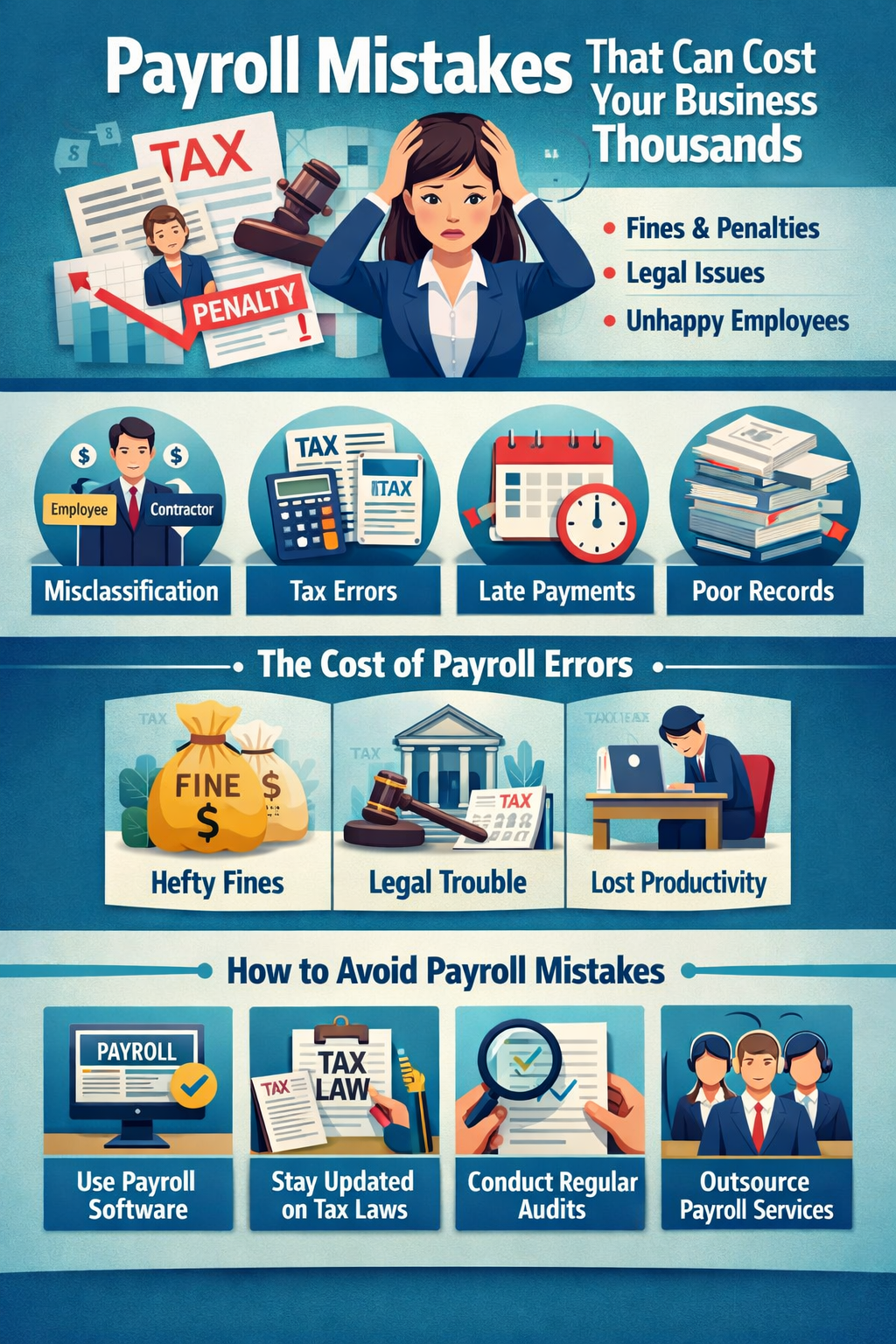
Common Payroll Mistakes That Can Cost You Thousands
1 Misclassifying Employees
One of the most common
payroll mistakes is misclassifying employees. Businesses sometimes classify
workers as independent contractors instead of full-time employees to reduce tax
obligations or administrative work.
However, this can lead to
serious legal and tax consequences. If authorities determine that a contractor
should actually be classified as an employee, the company may be required to
pay back taxes, penalties, and benefits. Proper classification is
essential to ensure compliance with labor laws and tax regulations.
2 Incorrect Tax Calculations
Tax calculation errors are
another major payroll issue. Payroll involves calculating multiple deductions
such as income tax, insurance contributions, and other statutory payments.
Even a small mistake in
these calculations can lead to incorrect filings. Businesses may face
penalties, interest charges, or compliance issues if taxes are underpaid or
reported incorrectly.
Keeping payroll systems
updated with current tax regulations is crucial to avoid such problems.
3 Missing Payroll Deadlines
Late payroll processing can
significantly affect employee satisfaction. Employees expect to receive their
salaries on time, and delays can reduce trust and morale.
In addition to employee
dissatisfaction, missing tax filing deadlines may result in fines or penalties
from government authorities.
Establishing a structured
payroll schedule helps businesses ensure timely payments and compliance with
regulations.
4 Poor Record-Keeping
Maintaining accurate payroll
records is essential for compliance and transparency. Payroll records include
salary details, tax deductions, benefits, overtime payments, and employment
information.
Poor documentation can
create major issues during audits or employee disputes. Without proper records,
businesses may struggle to verify payroll transactions or resolve
discrepancies.
Organized and
well-maintained payroll documentation helps prevent confusion and supports
smooth financial operations.
5 Overtime and Benefits Miscalculations
Incorrect overtime
calculations or benefit payments can create both financial and legal risks.
Employees are legally entitled to overtime pay and certain benefits depending
on company policies and labor laws.
If these payments are
calculated incorrectly, employees may file complaints or disputes. Over time,
these issues can escalate into legal cases or financial settlements.
Businesses must ensure
accurate calculations for overtime, bonuses, and employee benefits.
The Real Cost of Payroll Errors
Payroll mistakes can have
far-reaching consequences. Financial penalties and fines are among the most
immediate impacts. Tax authorities may impose penalties for incorrect filings,
late payments, or non-compliance.
Legal consequences are
another major concern. Businesses may face audits, legal investigations, or
lawsuits related to payroll violations.
Beyond financial costs,
payroll errors also damage employee trust. When employees receive incorrect or
delayed salaries, it affects their confidence in the organization and reduces
productivity.
Additionally, correcting
payroll errors consumes significant time and resources. HR and finance teams
may need to review records, make adjustments, and communicate with employees to
resolve issues.
How to Avoid Payroll Mistakes
1 Use Payroll Software
Payroll software can
significantly reduce manual errors. Modern payroll systems automate salary
calculations, tax deductions, and reporting.
These tools often include
features such as compliance alerts, automatic tax updates, and payroll reports,
making the process more accurate and efficient.
2 Stay Updated with Tax Laws
Tax regulations change
frequently, and businesses must stay informed about these updates. Regular
training for HR and finance teams helps ensure compliance with current laws.
Consulting tax professionals
or payroll experts can also help businesses avoid costly mistakes.
3 Standardize Payroll Processes
Creating standardized
payroll procedures helps minimize errors. Clear workflows, checklists, and
approval systems ensure that each step of the payroll process is verified
before final processing.
This reduces reliance on
manual and inconsistent methods.
4 Conduct Regular Audits
Regular payroll audits help
identify discrepancies early. Monthly or quarterly reviews allow businesses to
detect and correct issues before they become serious problems.
Audits also help maintain
transparency and compliance.
5 Outsource Payroll Management
Many businesses choose to
outsource payroll management to professional service providers. Payroll
specialists have the expertise and tools required to handle complex
calculations, tax compliance, and reporting.
Outsourcing can reduce risk
while allowing businesses to focus on core operations.
Best Practices for Error-Free Payroll
To maintain accurate payroll
operations, businesses should adopt several best practices. Always double-check
payroll entries before processing payments. Maintain organized and secure
payroll records for easy access during audits.
Using reliable payroll
systems improves accuracy and security. Additionally, providing regular
training for HR and finance teams ensures they stay updated with payroll
regulations and best practices.
Tools and Resources for Payroll Management
Various payroll management
tools are available to help businesses simplify payroll processing. These
platforms offer automation, compliance monitoring, and detailed reporting
features.
Businesses can also use
payroll templates and government compliance resources to stay aligned with tax
laws and regulations.
Conclusion
Payroll is a critical
function that directly affects both business operations and employee
satisfaction. Even a single payroll mistake can result in financial penalties,
legal complications, and loss of employee trust.
Instead of fixing errors
after they occur, businesses should focus on preventing them through better
systems, processes, and training.
By investing in reliable
payroll tools, staying compliant with regulations, and implementing strong
payroll practices, companies can protect themselves from costly mistakes and
ensure smooth payroll management.