Introduction
In today’s digital world,
businesses must have a strong online presence to attract customers, build
credibility, and increase sales. When companies decide to go digital, one
common question arises: Should we build a website first or a mobile app?
Both websites and mobile apps offer unique benefits, but choosing the right one
depends on your business goals, budget, and audience needs.
Understanding the
differences between the two can help businesses make a smart decision and
invest their resources effectively.
Understanding Websites and Mobile Apps
A website is a
collection of web pages that users can access through internet browsers like
Google Chrome or Safari. Websites are responsive and can be viewed on desktops,
tablets, and mobile devices without needing to install anything.
A mobile app, on the
other hand, is a software application designed specifically for smartphones and
tablets. Users must download and install it from platforms such as the Google
Play Store or the Apple App Store before they can start using it.
Both tools help businesses
interact with customers online, but they serve different purposes.
Why a Website Is Usually the First Step
For most businesses,
building a website should be the first step in their digital journey. A website
acts as the foundation of your online presence and helps people find
your business through search engines.
1. Easy Accessibility
Anyone with an internet
connection can access a website instantly. Customers don’t need to download
anything, making it easier for them to explore your products or services.
2. Better Visibility on Search Engines
Websites can appear in
search results on platforms like Google Search. This allows potential customers
to discover your business when they search for relevant products or services.
For example, if someone
searches for “digital marketing services near me,” businesses with optimized
websites have a higher chance of appearing in search results.
3. Lower Development Cost
Developing a website is
generally more affordable compared to building a mobile app. Websites also
require less maintenance and can be updated easily without asking users to
download updates.
4. Suitable for All Devices
Modern websites are
responsive, meaning they automatically adjust to different screen sizes.
Whether a user visits from a laptop, tablet, or smartphone, the experience
remains smooth.
Because of these benefits,
websites are often the starting point for startups and small businesses
entering the digital space.
When a Mobile App Makes More Sense
Although websites are
essential, mobile apps can provide a more personalized and interactive
experience for users. Apps are particularly useful when businesses want to
increase customer engagement and loyalty.
1. Better User Experience
Mobile apps are designed
specifically for smartphones, which allows them to provide faster performance
and smoother navigation compared to websites.
2. Push Notifications
One major advantage of apps
is the ability to send push notifications. Businesses can instantly
notify users about offers, updates, and new products. This helps increase
customer engagement and repeat purchases.
3. Offline Functionality
Many apps can work even when
there is limited or no internet connection. This makes them convenient for
users who want quick access to certain features.
4. Strong Customer Loyalty
If customers regularly use
your services, they are more likely to download and keep your app. This creates
a direct connection between the brand and the user.
Industries like e-commerce,
food delivery, banking, and ride-sharing often benefit greatly from mobile
apps.
Key Factors to Consider Before Choosing
Before deciding whether to
build a website or an app first, businesses should consider several important
factors.
Business Goals
If your goal is to reach
new customers and build online visibility, a website is the best choice. If
your focus is on customer retention and frequent interactions, a mobile
app may be more effective.
Budget
Websites are generally
cheaper to build and maintain, while mobile apps require higher development
costs and regular updates.
Target Audience
Understanding your audience
is crucial. If your customers prefer browsing information quickly through
search engines, a website is essential. If they frequently use mobile services
and apps, investing in an app could provide better engagement.
Business Type
Some businesses benefit more
from apps than others. For example, service-based businesses and small
companies often start with a website, while tech-driven platforms may
prioritize app development.
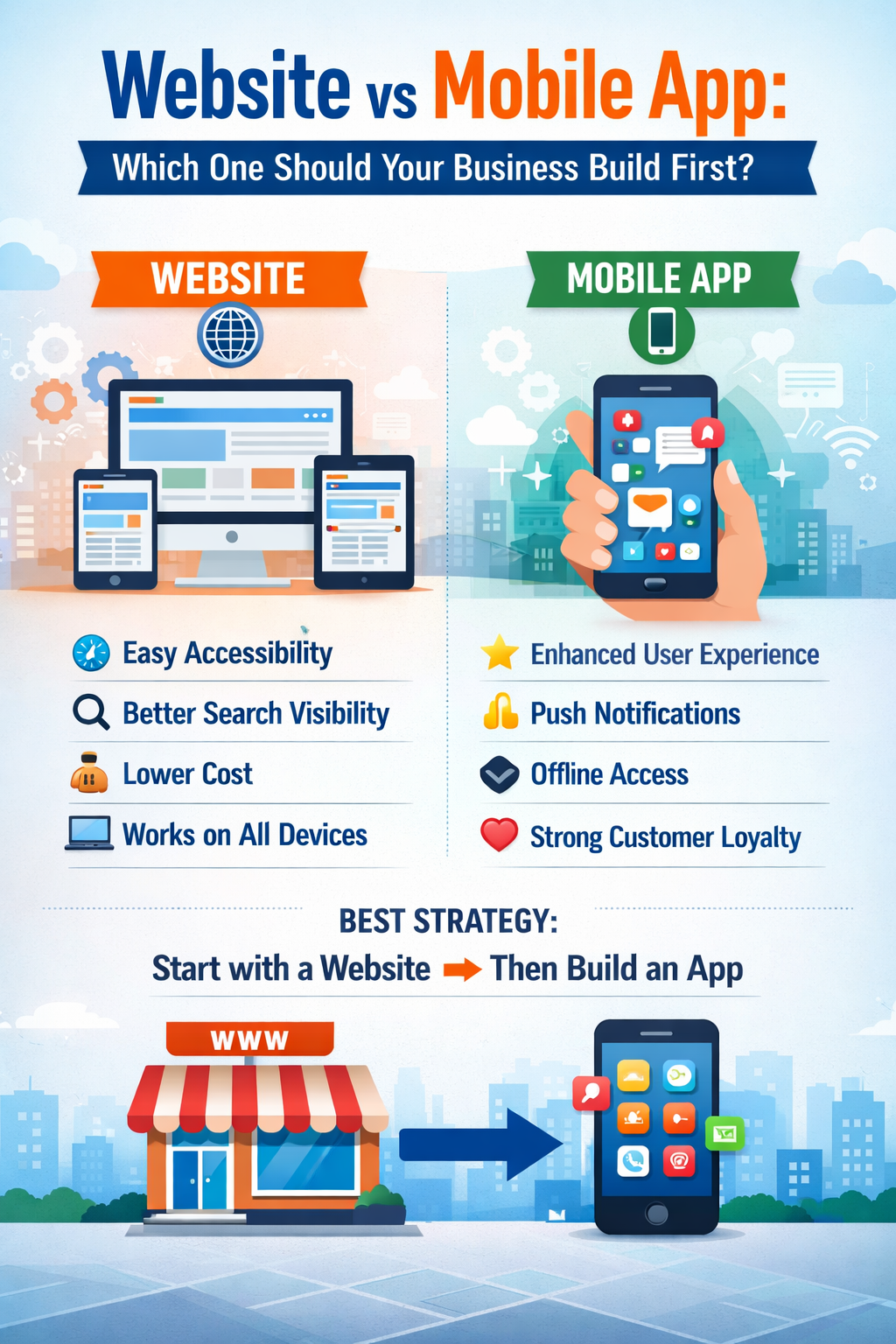
The Best Strategy: Start with a Website, Then Build
an App
For most businesses, the
ideal strategy is to start with a professional website and later expand to a
mobile app.
A website helps establish
credibility, attract new customers, and provide important information about
your brand. Once your business grows and you have a loyal customer base,
developing a mobile app can enhance user engagement and improve customer experience.
This approach allows
businesses to scale their digital presence step by step without overspending in
the early stages.
Conclusion
Choosing between a website
and a mobile app depends on your business objectives, resources, and customer
behavior. However, in most cases, a website should come first because it
provides accessibility, visibility, and affordability.
Once your online presence is
established and your customer base grows, investing in a mobile app can further
strengthen your brand and improve customer engagement.
In the end, the most
successful businesses combine both websites and mobile apps to create a
complete digital ecosystem that supports long-term growth.