Introduction
Display advertising has
become an essential part of modern digital marketing strategies. Businesses
today need more than just a website or social media presence—they need visually
appealing ads that attract attention and encourage users to take action. This
is where display ads play a crucial role.
Display ads are visual
advertisements that appear on websites, mobile apps, and social media
platforms. These ads often include images, graphics, videos, and text designed
to capture the audience’s attention while they browse online.
For businesses, display
advertising is highly valuable because it helps increase brand visibility,
reach targeted audiences, and drive potential customers toward a desired action
such as visiting a website, signing up for a service, or making a purchase.
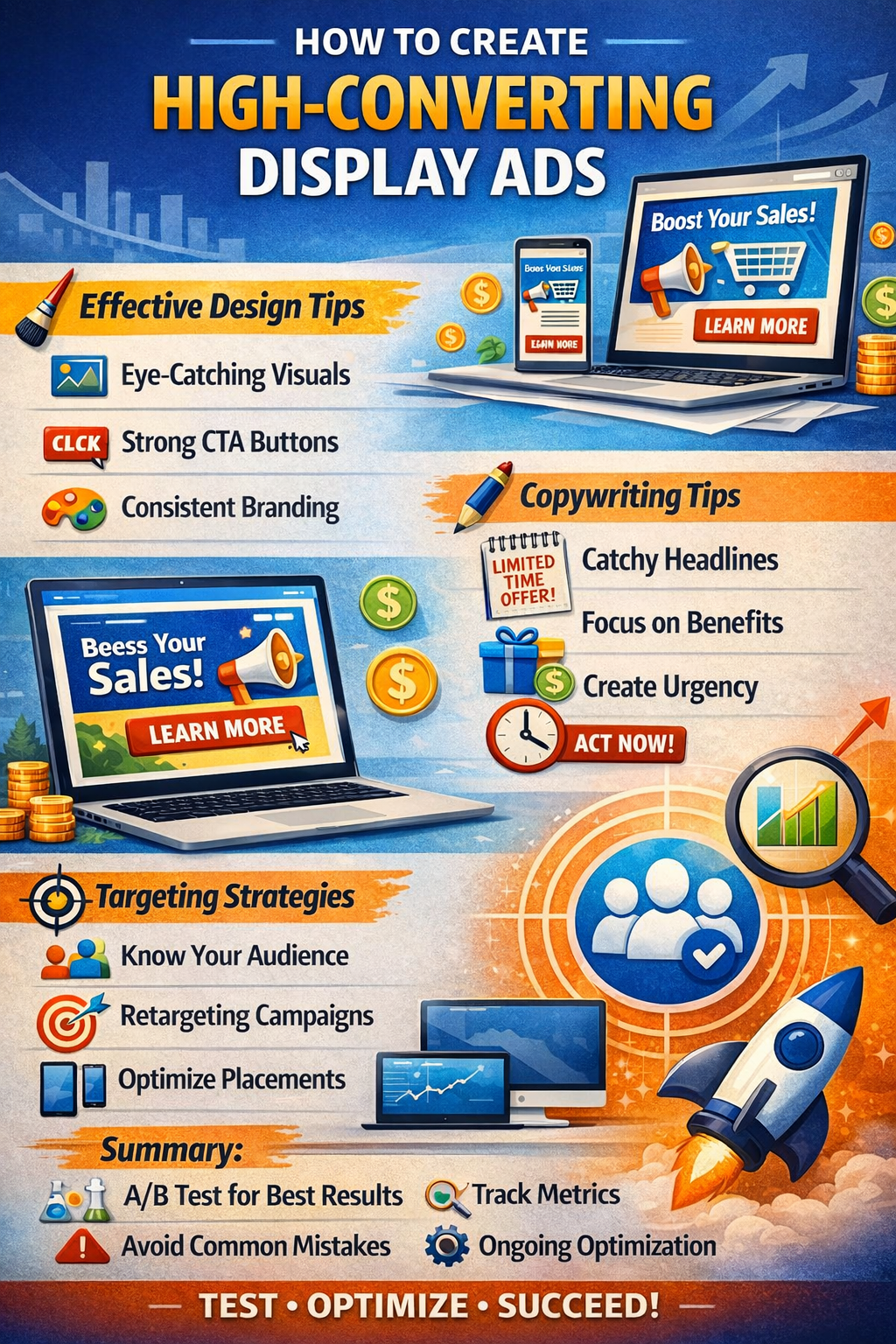
In this article, you will
learn how to create high-converting display ads by focusing on three key areas:
design, copywriting, and targeting strategies.
What Are Display Ads?
Display advertising refers
to visual-based online ads that appear across various digital platforms such as
websites, mobile apps, and social media networks. Unlike search ads, which
appear when users search for specific keywords, display ads are shown to users
while they browse online content.
These ads help businesses
reach audiences even when they are not actively searching for a product or
service.
Common Formats of Display Ads
1. Banner
Ads
Banner ads are the most traditional form of display advertising. They usually
appear at the top, bottom, or sides of web pages.
2.
Responsive Display Ads
Responsive ads automatically adjust their size, appearance, and format to fit
available ad spaces across different websites and devices.
3. Rich
Media Ads
These ads include interactive elements such as animations, expandable sections,
or clickable features to increase engagement.
4. Video
Display Ads
Video ads are highly engaging and often appear within websites, apps, or
streaming platforms.
Why High-Converting Display Ads Matter
Creating display ads is not
just about visibility—it is about achieving results. High-converting
display ads can significantly impact a business’s marketing performance.
Improved
Brand Visibility
Display ads help businesses stay visible to potential customers across various
websites and platforms.
Driving
Targeted Traffic
Well-targeted display ads attract users who are more likely to be interested in
your products or services.
Supporting
Retargeting Campaigns
Display advertising is commonly used for retargeting users who have already
visited your website but did not complete a purchase.
Increasing
Leads and Sales
Effective display ads encourage users to click and take action, ultimately
increasing conversions.
Design Tips for High-Converting Display Ads
Use Clear and Eye-Catching Visuals
Visual appeal is one of the
most important factors in display advertising. A well-designed ad can instantly
grab attention.
Use high-quality images,
professional graphics, and visually appealing colors. Avoid low-resolution
images or overly complex designs that make the ad difficult to understand.
Keep the visuals clean and
focused so the message is clear.
Maintain Brand Consistency
Brand consistency helps
users recognize and trust your business. When designing display ads, always
include your brand’s colors, logo, and typography.
Consistent branding
strengthens recognition and builds credibility with your audience.
Keep the Design Simple and Focused
One of the most common
mistakes in display advertising is overcrowding ads with too much information.
Use white space effectively
and focus on a single key message. A simple design makes the ad easier to
understand and increases the likelihood of user engagement.
Use Strong Call-to-Action (CTA) Buttons
A clear call-to-action tells
users what they should do next.
Examples of effective CTAs
include:
A.Shop Now
B.Get
Started
C.Learn
More
D.Sign Up
Today
E.Download
Now
CTA buttons should be
clearly visible and placed in a prominent position within the ad.
Copywriting Tips for Better Display Ads
Write Short and Powerful Headlines
Display ads usually have
limited space, so the headline must capture attention quickly.
Use simple, clear, and
engaging language that communicates value in just a few words.
Examples of strong headlines
include:
1.“Boost Your Business
Growth Today”
2.“Save 40% on Digital
Marketing Tools”
3.“Get More Leads in 30
Days”
Focus on Benefits, Not Just Features
Instead of simply listing
product features, highlight how the product or service benefits the customer.
For example:
Feature: Advanced analytics dashboard
Benefit: Track your marketing performance and grow faster.
When customers see how your
solution solves their problems, they are more likely to engage.
Create Urgency and Curiosity
Urgency encourages users to
act quickly.
Use phrases like:
1.Limited Time Offer
2.Only a Few Spots Left
3.Exclusive Deal Today
These phrases motivate users
to click before the opportunity disappears.
Match the Ad Copy with the Landing Page
Consistency between the
display ad and the landing page is critical for conversions.
If the ad promises a special
offer, the landing page should immediately show the same offer. This improves
user experience and increases trust.
Targeting Strategies for Display Ads
Understand Your Target Audience
Before launching display
campaigns, businesses must clearly understand their audience.
Creating buyer personas
helps identify the needs, interests, and behaviors of potential customers.
This ensures ads are shown
to the right people.
Use Smart Audience Targeting
Modern advertising platforms
allow businesses to target audiences based on several factors:
1.Demographic
targeting – age, gender, location
2.Interest-based
targeting – hobbies, lifestyle,
preferences
3.In-market
audiences – users actively searching
for related products or services
These targeting options help
improve ad relevance and effectiveness.
Retargeting for Higher Conversions
Retargeting is one of the
most powerful display advertising strategies.
It allows businesses to show
ads to users who have already visited their website or interacted with their
brand.
Since these users already
know the brand, they are more likely to convert.
Optimize Placements and Devices
Display ads should appear on
relevant websites and platforms where the target audience spends time.
It is also important to
optimize ads for both mobile and desktop devices, as a large percentage
of users browse the internet on smartphones.
Optimization & Performance Tips
A/B Test Your Display Ads
A/B testing helps identify
what works best.
Businesses can test
different:
1.Headlines
2.Images
3.CTA buttons
4.Ad formats
Continuous testing leads to
improved performance over time.
Monitor Key Metrics
Tracking the right metrics
helps measure the success of display advertising campaigns.
Important metrics include:
A.Click-Through
Rate (CTR) – how many
users clicked the ad
B.Conversion
Rate – how many users completed
the desired action
C.Cost Per
Conversion – cost
required to generate a conversion
Common Mistakes to Avoid in Display Advertising
Many businesses struggle
with display ads because of common mistakes, such as:
1.Overloading ads with too
much text
2.Poor audience targeting
3.Weak or unclear CTA
4.Not optimizing ads for
mobile devices
Avoiding these mistakes can
significantly improve campaign performance.
Conclusion
Display advertising is a
powerful tool for building brand awareness, attracting targeted audiences, and
increasing conversions. However, success depends on how well the ads are
designed, written, and targeted.
By using eye-catching
visuals, simple designs, compelling copy, and smart targeting strategies,
businesses can create display ads that deliver strong results.
Regular testing, performance
monitoring, and continuous optimization are essential for improving ad
performance over time.
When done correctly,
high-converting display ads can become a major driver of traffic, leads, and
sales for any business.