In today’s fast-paced
digital world, consumers are exposed to thousands of marketing messages every
day. Traditional advertising methods like static banners or simple promotional
posts are no longer enough to capture attention. Modern audiences want experiences
that are engaging, personalized, and interactive. This is where interactive
marketing comes in.
Interactive marketing
focuses on creating two-way communication between brands and customers. Instead
of simply delivering information, it encourages users to actively participate
in the marketing experience. When people engage with content rather than passively
consume it, they are more likely to remember the brand, trust the message, and
ultimately convert into customers.
What Is Interactive Marketing?
Interactive marketing is a
strategy that involves content or campaigns designed to actively involve the
audience. Rather than reading or watching passively, users participate
through actions such as clicking, answering questions, playing games, or
exploring visual experiences.
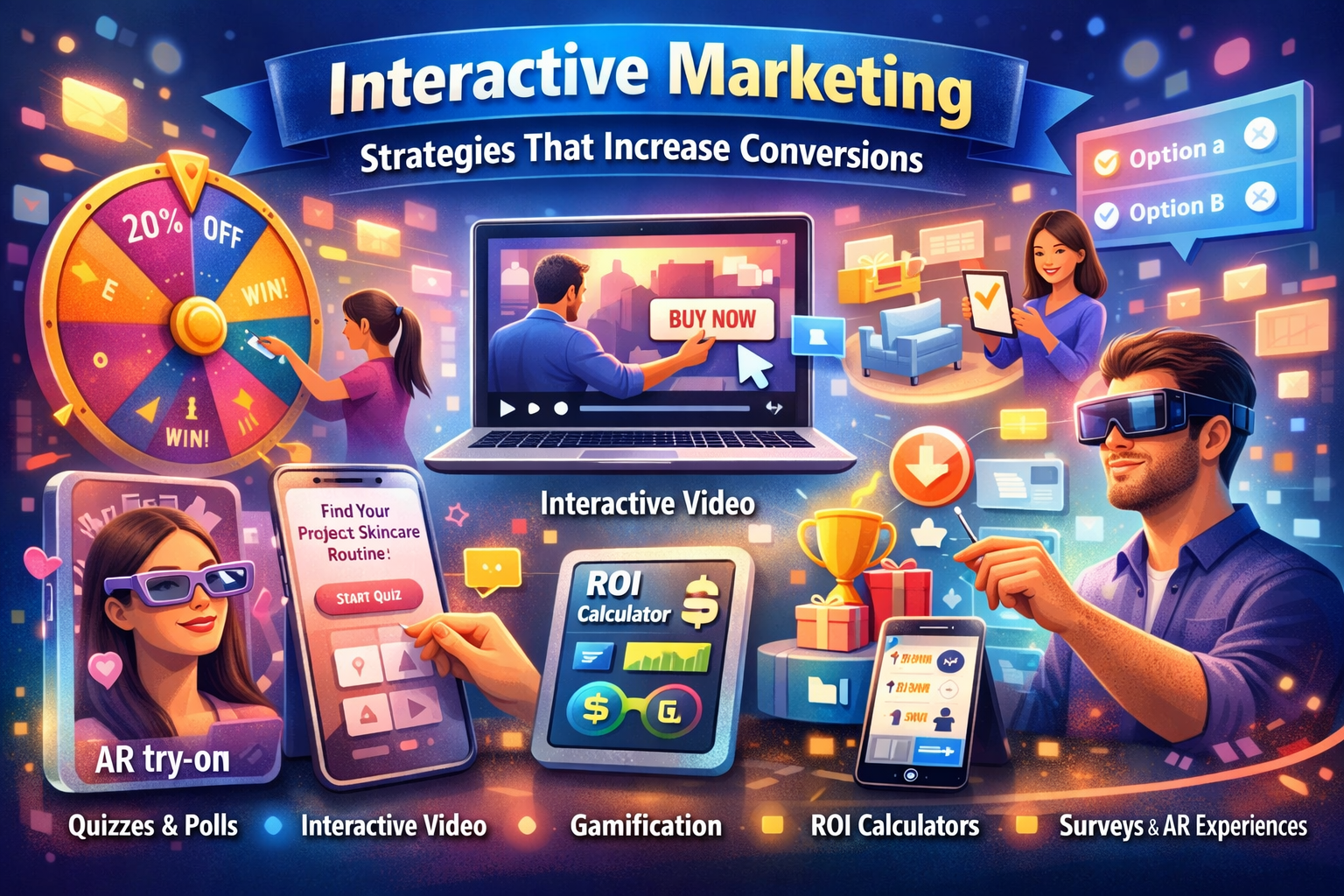
Examples of interactive
marketing include quizzes, polls, calculators, interactive videos, augmented
reality experiences, and product configurators. These tools create engaging
experiences that make users feel connected to the brand.
The key advantage of
interactive marketing is that it captures attention and encourages deeper
engagement, which significantly improves conversion rates.
Why Interactive Marketing Increases Conversions
Interactive marketing works
effectively because it appeals to human psychology. People naturally enjoy
participating in activities that provide instant feedback or personalized
results. When users interact with a brand, they spend more time on the website
or campaign, increasing the chances of conversion.
Additionally, interactive
content helps brands collect valuable data about customer preferences,
interests, and behaviors. This information allows marketers to create more
personalized campaigns and targeted offers, further increasing conversion
rates.
Studies have shown that
interactive content can generate higher engagement and lead generation
compared to static content, making it a powerful tool in modern digital
marketing strategies.
Key Interactive Marketing Strategies
1. Quizzes and Assessments
Quizzes are one of the most
popular forms of interactive marketing. They encourage users to answer
questions and receive personalized results. This type of content works well
because people enjoy learning about themselves and discovering recommendations tailored
to their needs.
For example, a skincare
brand might create a quiz titled “Find the Perfect Skincare Routine for Your
Skin Type.” After answering a few questions, users receive product
suggestions based on their responses. This approach not only engages users but
also guides them toward making a purchase.
2. Polls and Surveys
Polls and surveys allow
brands to gather opinions and feedback from their audience while simultaneously
increasing engagement. These tools are widely used on social media platforms
and websites.
For instance, a clothing
brand might ask followers to vote for their favorite design in an Instagram
poll. This simple interaction makes users feel involved in the decision-making
process and strengthens their connection with the brand.
Surveys can also help
businesses understand customer preferences, enabling them to improve products
and marketing strategies.
3. Interactive Calculators and Tools
Interactive calculators are
highly effective for businesses that offer services or complex products. These
tools allow users to input information and receive customized results.
Examples include:
A. Loan calculators for
financial services
B. ROI calculators for
marketing agencies
C. Budget planners for
personal finance websites
By providing immediate value
to users, these tools build trust and encourage visitors to take the next step,
such as requesting a consultation or signing up for a service.
4. Interactive Videos
Interactive videos allow
viewers to choose different paths or click on elements within the video to
explore additional information. This format transforms traditional video
content into an engaging experience.
For example, an e-commerce
brand might create a video where viewers can click on items featured in the
video to see product details or add them to their cart. This seamless
integration of content and shopping significantly improves conversion
opportunities.
Interactive videos are
particularly effective because they combine visual storytelling with user
participation, making the experience more memorable.
5. Gamification
Gamification involves
incorporating game-like elements into marketing campaigns. These elements may
include points, rewards, challenges, or competitions.
Examples of gamification in
marketing include spin-the-wheel promotions, reward systems, or digital scratch
cards. These features encourage users to participate while offering incentives
such as discounts or free products.
Gamification not only
increases engagement but also creates excitement around the brand, motivating
users to complete desired actions.
6. Augmented Reality Experiences
Augmented reality (AR)
allows users to interact with digital elements in the real world through their
smartphones or devices. Many brands now use AR to enhance the online shopping
experience.
For example, furniture
companies allow customers to visualize how a sofa would look in their living
room, while cosmetic brands enable users to virtually try on makeup products.
These immersive experiences
reduce uncertainty and help customers make confident purchasing decisions,
which ultimately increases conversions.
Best Practices for Interactive Marketing
To achieve the best results
from interactive marketing, businesses should focus on creating experiences
that are simple, relevant, and valuable to users. Overly complex interactions
can discourage participation, so clarity and ease of use are essential.
Additionally, interactive
campaigns should align with the brand’s goals and provide meaningful insights
into customer behavior. When used strategically, interactive marketing can
significantly improve engagement, lead generation, and customer satisfaction.
Conclusion
Interactive marketing has
become an essential component of modern digital marketing strategies. By
encouraging users to participate actively, brands can create memorable
experiences that build trust and drive conversions.
Whether through quizzes,
polls, calculators, interactive videos, gamification, or augmented reality,
these strategies help businesses stand out in a crowded digital landscape. As
consumer expectations continue to evolve, brands that embrace interactive marketing
will be better positioned to capture attention, engage audiences, and turn
visitors into loyal customers.