In today’s digital world,
having an online presence is essential for businesses, startups, and even
personal brands. Whether you are launching a new product, running marketing
campaigns, or building your company’s online identity, choosing the right type
of web presence is crucial. Two common options are landing pages and full
websites. While both serve important purposes, they are designed for
different goals. Understanding the difference between them can help you decide
which option best suits your needs.
What is a Landing Page?
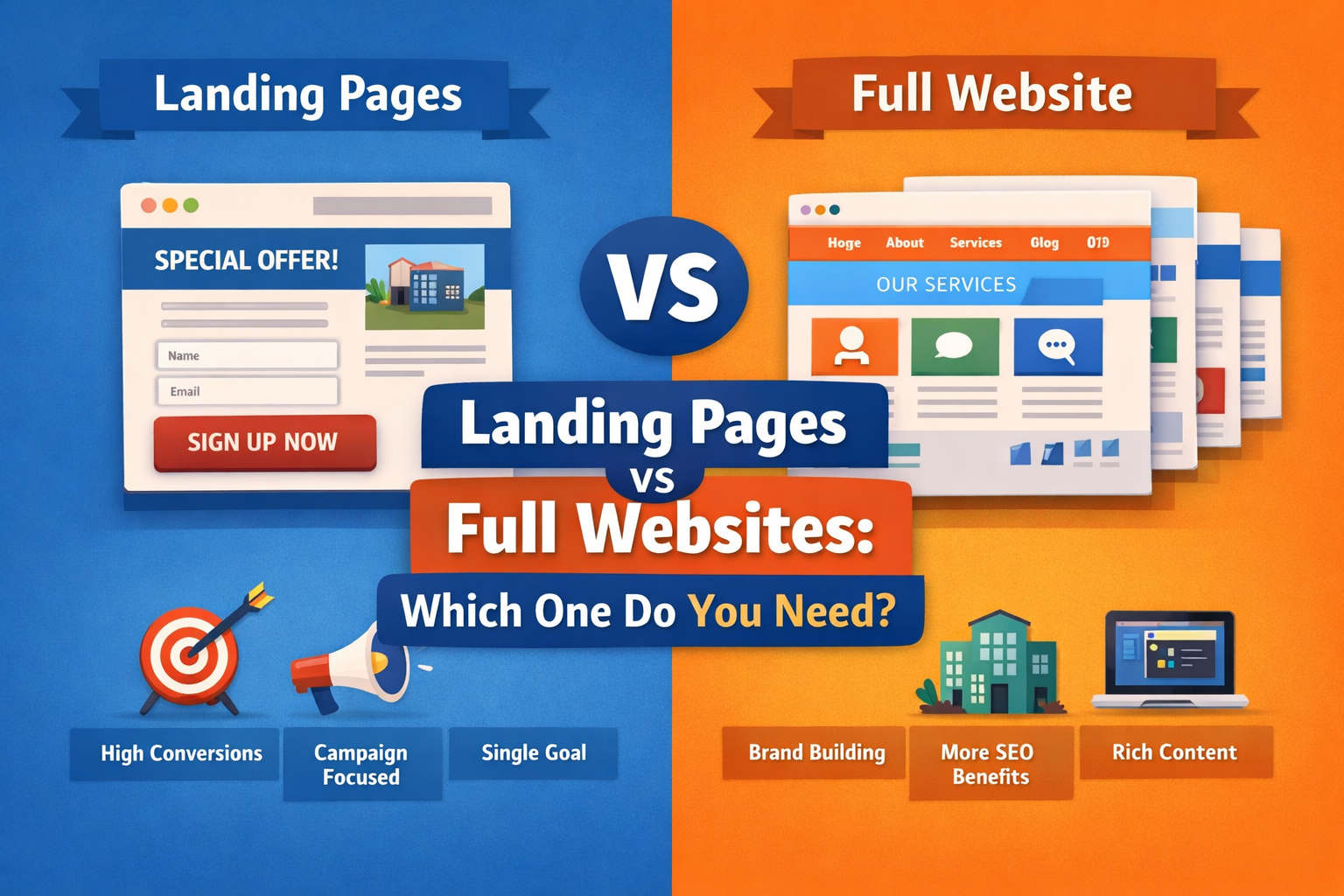
A landing page is a single
web page designed with one specific goal in mind. It is usually created as
part of a marketing campaign and focuses on encouraging visitors to take a
particular action. This action could be signing up for a newsletter,
downloading an ebook, registering for a webinar, or purchasing a product.
Unlike traditional websites,
landing pages are simple and focused. They usually contain minimal navigation
options so that visitors are not distracted from the main objective. A typical
landing page includes a strong headline, a short description of the offer,
visual elements like images or videos, and a clear call-to-action (CTA) such as
“Sign Up Now” or “Get Started”.
Landing pages are widely
used in digital marketing because they are highly effective for converting
visitors into leads or customers. Businesses often use them in advertising
campaigns, social media promotions, and email marketing.
What is a Full Website?
A full website is a complete
online platform made up of multiple pages that provide detailed information
about a business, product, or service. Unlike landing pages, full websites
include various sections such as Home, About Us, Services, Blog, Contact, and
more.
The purpose of a full
website is not just to drive conversions but also to build credibility, provide
information, and establish a long-term digital presence. It helps visitors
learn more about your brand, explore different services, and engage with your
content.
For example, a company
website may include a portfolio of past projects, blog articles, testimonials,
FAQs, and detailed product or service descriptions. Full websites are ideal for
businesses that want to build trust, improve search engine visibility, and
provide a complete online experience for their audience.
Key Differences Between Landing Pages and Full
Websites
One of the main differences
between landing pages and full websites is their structure and purpose.
Landing pages are designed with a single objective, while full websites offer
multiple pages and a broader range of information.
Landing pages usually have
limited navigation options because they aim to keep visitors focused on one
action. In contrast, full websites allow users to move freely between different
sections, helping them explore the brand in detail.
Another difference lies in marketing
strategy. Landing pages are commonly used for short-term campaigns and
advertisements. For example, if a business is promoting a new product or
special offer, a landing page can help capture leads quickly. Full websites, on
the other hand, are meant for long-term branding and online presence.
Search engine optimization
(SEO) is also handled differently. Full websites generally perform better in
SEO because they contain multiple pages, blog content, and structured
information that search engines can index. Landing pages can rank in search
engines too, but they are usually optimized for specific campaigns or keywords.
When Should You Use a Landing Page?
A landing page is the best
option when your main goal is conversion. If you are running paid
advertising campaigns, launching a new product, or collecting email leads, a
landing page can deliver better results because it eliminates distractions and
guides users toward one clear action.
For example, startups often
create landing pages to validate new ideas before building a full product.
Similarly, marketers use landing pages to track campaign performance and
improve conversion rates.
When Should You Choose a Full Website?
A full website is ideal when
you want to establish a strong online presence and provide detailed
information about your business. Companies that offer multiple services,
products, or resources benefit greatly from having a complete website.
If your goal is long-term
growth, brand credibility, and search engine visibility, a full website is the
better choice. It allows businesses to showcase their expertise, share valuable
content through blogs, and build trust with their audience over time.
Can You Use Both Together?
In many cases, the best
strategy is to use both landing pages and a full website. A business
website can serve as the main online hub, while landing pages can be used for
targeted marketing campaigns.
For example, a company might
run Facebook or Google ads that direct users to a dedicated landing page. After
converting or learning more, visitors can explore the main website for
additional information about the brand.
Conclusion
Both landing pages and full
websites play important roles in digital marketing and web development. Landing
pages are powerful tools for driving conversions and supporting specific
marketing campaigns, while full websites provide a comprehensive platform for
building a brand’s online presence.
The right choice depends on
your goals. If you want quick conversions and campaign-focused results, a
landing page may be the ideal solution. However, if you want to establish
credibility, share detailed information, and grow your brand online, a full website
is essential. In many cases, combining both approaches can deliver the best
results for your business.