Introduction
In today’s hyper-competitive
market, brand identity matters more than ever for startups. Customers are
flooded with options. What makes them choose one startup over another? It’s not
just the product — it’s the brand.
Many founders confuse brand
with brand identity, but they are different.
1.Brand is the overall perception people have about
your company.
2.Brand
identity is how you visually and
verbally present your brand — logo, colors, messaging, voice, and personality.
A strong brand identity
builds trust, recognition, and loyalty. It makes your startup look
credible, professional, and memorable — even if you're new in the market.
In this guide, we’ll walk
through the complete process of building a powerful brand identity — from
defining your foundation to maintaining consistency across channels.
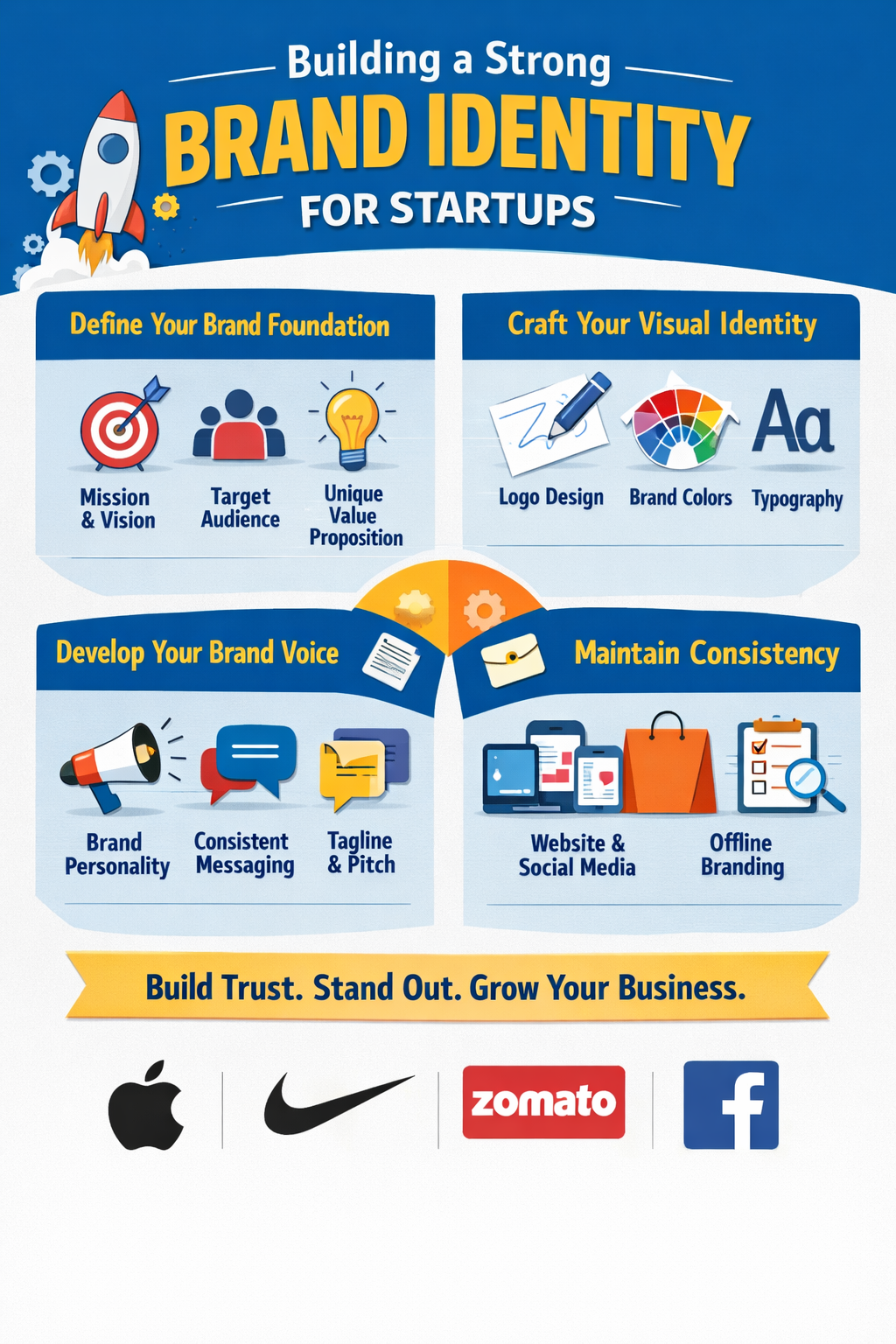
Understand Your Brand Foundation
1. Define Your Mission & Vision
Before designing a logo or
choosing colors, you must clarify your purpose.
A.What
problem are you solving?
B.Why does
your startup exist?
C.What is
your long-term vision?
Your mission defines what
you do today. Your vision defines where you want to go tomorrow.
A great example is Apple
Inc.. Apple’s brand identity consistently aligns with innovation, simplicity,
and premium design. Every product, advertisement, and store experience reflects
that mission.
When your mission is clear,
your brand identity becomes focused and powerful.
2. Identify Your Target Audience
You cannot build a strong
brand if you don’t know who you're speaking to.
Start by creating customer
personas:
1.Age, gender, location
2.Income level
3.Interests and lifestyle
4.Buying behavior
5.Pain points
Understand their emotional
triggers. Are they looking for trust? Luxury? Affordability? Status?
Convenience?
When you deeply understand
your audience, your branding becomes emotionally relevant — and emotional
brands win.
3. Clarify Your Unique Value Proposition (UVP)
Your UVP answers one simple
question:
Why should
customers choose you over competitors?
It could be:
1.Better quality
2.Lower price
3.Faster service
4.Unique experience
Position your startup
clearly in the market. If you try to appeal to everyone, you’ll attract no one.
Strong positioning makes your brand identity sharper and more memorable.
Crafting a Powerful Visual Identity
1. Designing a Memorable Logo
Your logo is the face of your brand. There are
three main types:
A.Wordmark (e.g., brand name only)
B.Symbol/Icon
C.Combination
mark
A good logo should be:
A.Simple
B.Scalable
C.Timeless
D.Memorable
Look at Nike, Inc.. The
swoosh logo is incredibly simple yet globally recognizable. Simplicity creates
long-term impact.
Avoid overly complex
designs. Trends change, but simplicity lasts.
2. Choosing the Right Brand Colors
Colors influence emotions
and buying behavior.
For example:
A.Blue = Trust &
professionalism
B.Red = Energy & urgency
C.Black = Luxury & power
D.Green = Growth &
sustainability
Facebook, Inc. uses blue to
convey trust and reliability. That psychological alignment strengthens its
identity.
Choose:
A.1 primary color
B.1–2 secondary colors
C.Neutral shades for balance
Maintain consistency across
all platforms.
3. Typography & Fonts
Fonts also communicate
personality.
A.Serif
fonts feel traditional and
premium.
B.Sans-serif
fonts feel modern and clean.
Typography affects
readability and perception. A fintech startup may choose clean sans-serif fonts
for clarity, while a luxury brand might use elegant serif fonts.
Consistency is key — use the
same fonts across your website, ads, and presentations.
4. Visual Elements & Brand Style Guide
Beyond logo and colors,
define:
A.Icon styles
B.Image aesthetics
C.Graphic patterns
D.Layout structure
Create a brand style
guide document that outlines:
A.Logo usage rules
B.Color codes
C.Font hierarchy
D.Tone of voice
This ensures consistency
across designers, marketers, and teams.
Developing a Strong Brand Voice & Personality
1. Define Your Brand Personality
Ask yourself:
Is your brand:
A.Professional?
B.Friendly?
C.Bold?
D.Playful?
E.Premium?
Many brands use archetypes
like Hero, Creator, Caregiver, or Rebel to define personality.
Your personality should
align with your target audience and industry.
2. Create a Consistent Brand Voice
Your brand voice appears in:
A.Website copy
B.Emails
C.Advertisements
D.Social media captions
Zomato Ltd. uses a bold,
witty, and humorous tone. This makes the brand relatable and highly shareable.
Whether formal or casual,
maintain consistency everywhere.
3. Messaging Framework
Strong brands communicate
clearly.
Include:
1.A powerful tagline
2.A compelling elevator
pitch
3.3–4 core messaging pillars
For example:
1.Innovation
2.Affordability
3.Customer support
This creates clarity in all
communication.
Build Brand Consistency Across All Channels
1. Website & Social Media Branding
Ensure visual and tonal
consistency across:
A. Instagram
B. LinkedIn
C. YouTube
Profile pictures, bios,
banners, and highlights should align with your brand style guide.
2.Content Marketing & Storytelling
People connect with stories,
not products.
Share:
1.Founder journey
2.Customer success stories
3.Behind-the-scenes content
Emotional storytelling
builds trust and long-term loyalty.
Offline Branding (If Applicable)
If your startup operates
offline, ensure branding in:
1.Packaging
2.Visiting cards
3.Brochures
4.Events
Your brand experience should
feel unified everywhere.
Testing & Refining Your Brand Identity
Branding is not one-time
work.
1.Gather customer feedback
2.Run A/B tests on messaging
3.Refine visuals when
necessary
Rebranding may be required
as your startup grows — but avoid frequent, unnecessary changes.
Common Branding Mistakes Startups Should Avoid
1.Copying competitors
2.Inconsistent visuals
3.Ignoring customer
perception
4.Changing logos frequently
Strong brands evolve
strategically — not randomly.
Conclusion
Branding is not an expense —
it’s an investment. A powerful brand identity creates long-term recognition,
trust, and loyalty.
For startup founders, the
action steps are simple:
1. Define your mission and audience
2. Build a consistent visual identity
3. Develop a strong brand voice
4. Maintain consistency everywhere
In the long run, customers
may forget features — but they will always remember how your brand made them
feel.