Introduction
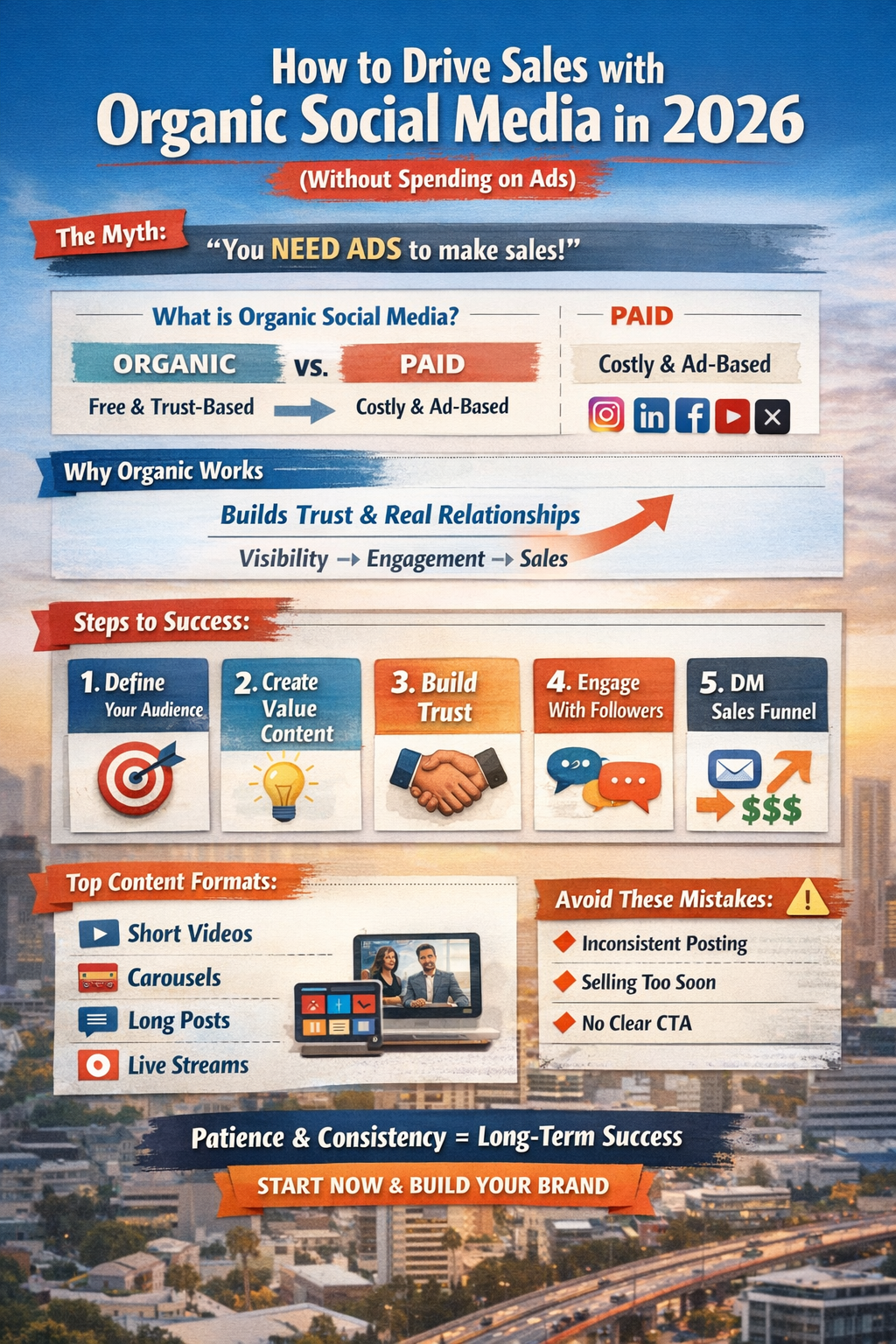
One of the biggest myths in
digital marketing is: “You need ads to make sales.”
While paid advertising can
accelerate growth, it’s not the only way to generate revenue. In 2026, organic
social media marketing is still one of the most powerful and sustainable
ways to drive real sales — especially for personal brands, service providers,
and small businesses.
Organic strategies help you
build:
1.Trust
2.Authority
3.Long-term brand value
4.Sustainable inbound leads
In this guide, you’ll learn
how to use organic social media step-by-step to attract, nurture, and convert
followers into paying customers.
What is Organic Social Media Marketing?
Organic social media
marketing refers to creating and sharing content without paying for ads
to grow your audience and generate leads.
Where Organic Works Best
Instagram
LinkedIn
Facebook
YouTube
X
These platforms reward valuable,
engaging, and consistent content. Their algorithms push content that keeps
users engaged — not necessarily content that is paid.
Why Organic Social Media Can Drive Real Sales
Organic marketing works
because it focuses on trust-based selling rather than interruption
marketing.
People don’t buy from
strangers. They buy from people they:
1.Recognize
2.Trust
3.See consistently
When someone consumes your
content regularly, familiarity builds credibility. Over time, this creates a
compounding effect: more visibility → more engagement → more trust → more
sales.
Step 1: Define Your Target Audience Clearly
Before posting anything,
define your Ideal Customer Profile (ICP).
Ask:
1.Who exactly do I want to
serve?
2.What are their biggest
pain points?
3.What results do they want?
4.What objections stop them
from buying?
Create simple customer
personas and align your content with their intent. When your content speaks
directly to their problems, engagement increases naturally.
Step 2:
Build Authority with Value-Driven Content
Authority is built through
consistent value.
3 Core Content Types
1.Educational Content – How-to posts, tips, guides
2.Problem-Solving Content – Address common challenges
3.Insight-Based Content – Opinions, industry trends, perspectives
Avoid over-selling. Instead,
position yourself as an expert by helping first.
Consistency Framework
Post 3–5 times per week:
A.2 educational posts
B.1 engagement post
C.1 proof-based post
Consistency builds momentum.
Step 3: Use Content That Builds Trust
Trust accelerates buying
decisions.
Post:
1.Behind-the-scenes content
2.Case studies
3.Testimonials
4.Transformation stories
5.Personal branding content
Social proof reduces risk in
the buyer’s mind. Show real results and real experiences.
Step 4: Create Engagement That Warms Leads
Engagement turns followers
into warm prospects.
Use:
1.Strategic questions
2.Polls
3.Interactive stories
4.Comment-based posts
Always reply to comments and
DMs. Conversations build relationships. Relationships build revenue.
Step 5: Implement a Simple Organic Sales Funnel
A simple organic funnel
looks like this:
Awareness →
Engagement → Trust → Offer → Conversion
Awareness Content
Educational posts and strong
hooks to attract new people.
Engagement Content
Discussion-based posts to
spark interaction.
Trust Content
Proof, testimonials, and
credibility markers.
Offer Positioning
Soft sell works better
organically:
1.“Comment ‘Guide’ to get
details”
2.“DM me for more info”
3.“Link in bio”
Clear call-to-actions are
essential. Without them, followers don’t know the next step.
Step 6: Convert Through Conversations (DM Funnel
Strategy)
Organic sales often happen
in DMs.
How to Start Naturally
1.Thank them for engaging
2.Ask about their goals
3.Identify their challenges
Simple DM Framework
1.Build rapport
2.Understand problem
3.Offer solution
4.Present offer
5.Handle objections calmly
Never sound pushy. Position
your offer as a solution, not a sales pitch.
Content Formats That Convert Best
Some formats perform better
organically:
1.Short-form videos (Reels,
Shorts)
2.Carousels
3.Long-form posts
(especially on LinkedIn and Facebook)
4.Live sessions &
webinars
5.Story sequences
Video content, especially on
platforms like Instagram and YouTube, tends to get higher reach and engagement
in 2026.
Common Mistakes That Kill Organic Sales
Avoid these:
1.Posting without strategy
2.Inconsistency
3.Selling too early
4.Ignoring analytics
5.No clear CTA
Organic growth requires
intentional planning.
Tools to Manage Organic Growth
Use tools for:
1.Content planning
2.Scheduling posts
3.Analytics tracking
4.CRM to manage leads
Automation supports
consistency — but content quality remains the priority.
Realistic Timeline: How Long Does It Take?
Organic marketing is not
instant.
1.First 30
Days: Visibility phase
2.60–90
Days: Engagement builds
3.3–6
Months: Conversion momentum
Patience and consistency are
critical. Organic is a long-term asset.
Final Thoughts
Organic marketing is not
“free.” It requires:
1.Time
2.Strategy
3.Consistency
4.Value
But the reward is powerful:
a trusted brand, loyal audience, and sustainable sales system.
When you combine authority
+ trust, you create predictable revenue without depending entirely on ads.
The best time to start
building organically?
Now.