Introduction to WhatsApp Marketing for Small
Businesses
What is
WhatsApp Marketing?
WhatsApp marketing is the practice of using WhatsApp to promote products,
communicate with customers, generate leads, and drive sales. It includes
sending promotional messages, updates, offers, customer support responses, and
automated conversations through WhatsApp Business tools.
Why
WhatsApp is a Powerful Platform for Small Business Growth
WhatsApp is one of the most
used communication platforms globally. Customers already trust and use it
daily, which makes it easier for businesses to connect with them in a natural
and personal way compared to traditional marketing channels.
Current
Trends & Business Adoption in 2026
In 2026, businesses are
heavily using WhatsApp for sales, support, automation, and payments. AI
chatbots, WhatsApp catalogs, and direct purchase features are becoming standard
tools for small businesses.
Why WhatsApp Marketing Is Important for Small
Businesses
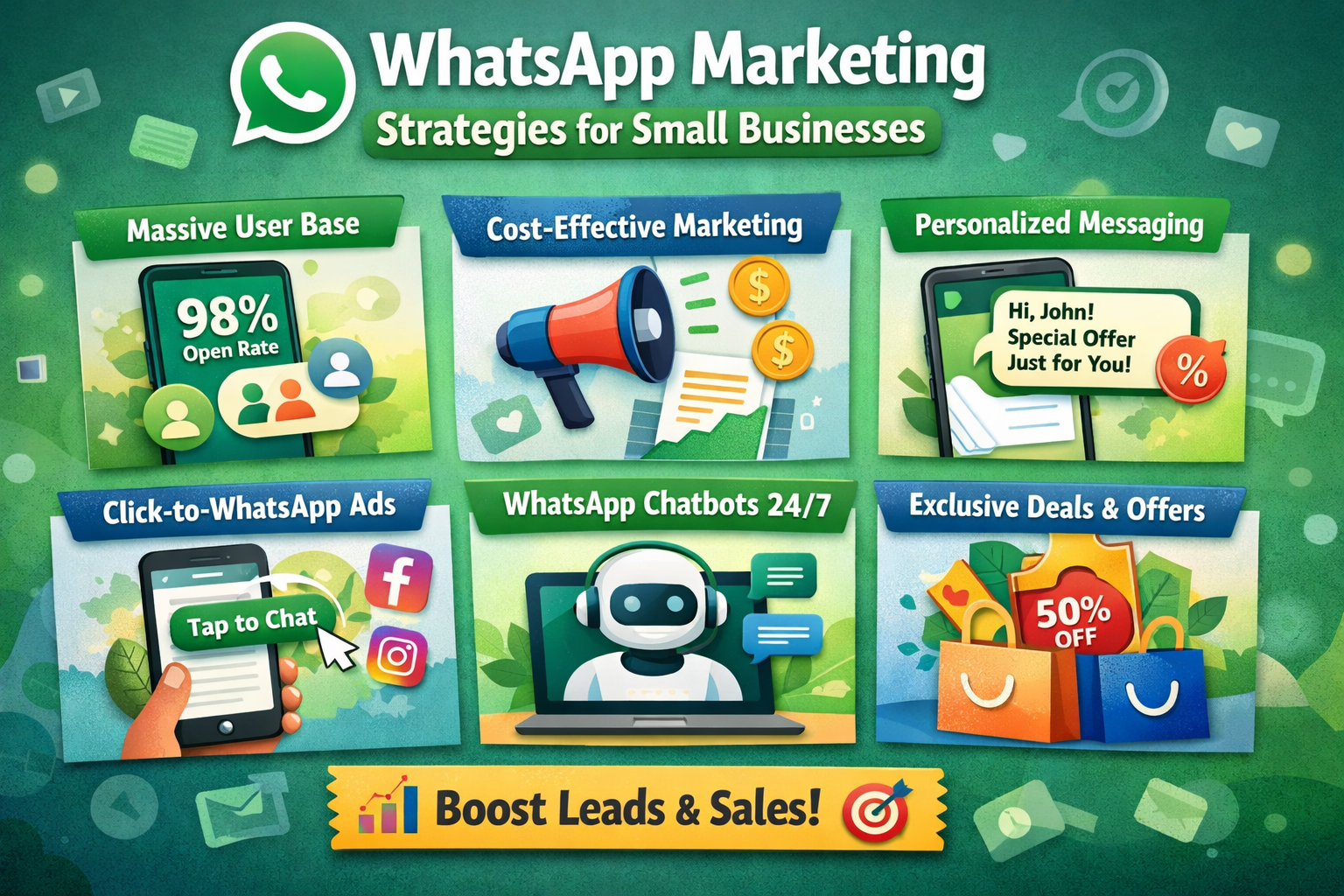
Massive User Base & High Engagement Rates
WhatsApp has billions of
active users worldwide. Messages on WhatsApp often have open rates above 98%,
which is far higher than email marketing. This ensures your message is actually
seen by customers.
Cost-Effective Marketing Channel
Compared to SMS, paid ads,
or email tools, WhatsApp marketing is very affordable. Small businesses can
reach hundreds of customers with minimal cost and still achieve strong ROI.
Direct & Personalized Customer Communication
WhatsApp allows one-to-one
communication. Personalized messages build trust, improve relationships, and
increase repeat purchases.
Faster Lead Conversion & Sales Growth
Instant messaging helps
customers make faster buying decisions. Real-time replies reduce hesitation and
improve conversion rates.
How WhatsApp Marketing Works – Step-by-Step Process
Setting Up WhatsApp Business Account
Download WhatsApp Business,
verify your number, and optimize your profile with business name, description,
website, location, and catalog.
Building a High-Quality Contact List
Always use ethical methods.
Collect contacts through website forms, ads, QR codes, and opt-in campaigns.
Creating Engaging Content for WhatsApp
Use text, images, videos,
voice notes, PDFs, and product catalogs to keep communication engaging.
Using Broadcast Lists & Automation
Broadcast lists help send
bulk messages while maintaining personal feel. Automation helps manage replies
and lead nurturing.
Top WhatsApp Marketing Strategies for Small
Businesses
Optimize Your WhatsApp Business Profile for
Conversions
Use professional logo, clear
description, business hours, and product catalog.
WhatsApp Broadcast Marketing Strategy
Send offers, updates, and
product launches to segmented contact lists.
Click-to-WhatsApp Ads for Lead Generation
Run Facebook and Instagram
ads that directly open WhatsApp chat.
WhatsApp Chatbot Automation for 24/7 Engagement
Automate FAQs, lead
qualification, and booking processes.
Exclusive Deals, Discounts & Coupon Campaigns
Reward WhatsApp subscribers
with special offers to increase loyalty.
WhatsApp Status Marketing Strategy
Post daily offers,
testimonials, and product updates on Status.
Building a High-Converting WhatsApp Sales Funnel
Attract → Engage → Educate →
Offer → Follow-up → Convert.
Customer Support & Follow-Up System
Provide quick support and
post-purchase follow-ups to increase retention.
Best WhatsApp Marketing Tools for Small Businesses
1.WhatsApp Business App
(Catalog, Quick Replies, Labels)
2.WhatsApp Business API
(Advanced automation & integration)
3.Chatbot Tools (AI-based
responses & automation)
4.CRM Integration (Lead
tracking & customer journey management)
Proven WhatsApp Lead Generation Techniques
1.Website WhatsApp Chat
Button
2.Click-to-WhatsApp Social
Media Ads
3.QR Code Marketing
(Posters, Packaging, Visiting Cards)
4.Offline to Online Lead
Collection (Events, Walk-ins)
WhatsApp Marketing Best Practices & Compliance
Rules
User Consent & Privacy Compliance
Always take customer
permission before sending marketing messages.
Avoiding Spam & Account Blocking
Send only relevant content
and avoid excessive messaging.
Message Timing, Frequency & Personalization
Send messages during
business hours and personalize using customer names.
Common WhatsApp Marketing Mistakes to Avoid
1.Sending too many messages
2.Sharing low-quality or
irrelevant content
3.Ignoring customer replies
or delays in response
Real-Life WhatsApp Marketing Case Examples
Local
Business: Used broadcast offers →
Increased repeat customers
Coaching Institute: Used WhatsApp inquiries → Increased admissions
E-commerce Brand: Used abandoned cart reminders → Improved conversions
Future of WhatsApp Marketing for Small Businesses
in 2026 & Beyond
AI Chatbots & Automation
Smarter AI will handle sales
conversations and customer support.
WhatsApp Payments & Commerce Integration
Customers can browse, chat,
and pay inside WhatsApp.
Omnichannel Marketing Integration
WhatsApp will connect with
email, SMS, CRM, and ad platforms.
Frequently Asked Questions
1.Is
WhatsApp marketing legal in India?
Yes, if you follow opt-in and privacy guidelines.
2.How much
does WhatsApp marketing cost?
Basic marketing is free. API and automation tools have costs.
3.Is
WhatsApp better than email marketing?
For engagement and response rate — yes. For long content — email works better.
4.How can
small businesses start WhatsApp marketing?
Start with WhatsApp Business, build an opt-in list, and create consistent
messaging strategy.
Key Takeaways
WhatsApp marketing is one of
the most powerful low-cost growth tools for small businesses in 2026.
Businesses that use automation, personalization, and compliance-focused
strategies will see the best results.