Introduction
Why do people choose an
iPhone over other smartphones with similar or sometimes even better
specifications? The answer usually isn’t just hardware — it’s product
branding.
Product branding is the
process of creating a unique identity, perception, and emotional value for a
specific product in the minds of customers. In today’s crowded and competitive
market, where customers have endless choices, strong product branding helps
products stand out and stay memorable.
In this article, you’ll
learn what product branding means, its core elements, why it matters, how it
differs from corporate branding, real-world examples, and how businesses can
build strong product brands step by step.
What is Product Branding? (Meaning &
Definition)
Product branding is the
strategy of giving a product a distinct identity through name, design,
messaging, and positioning so customers can recognize and prefer it over
alternatives.
A branded product is very
different from a generic commodity. For example, plain bottled water is a
commodity, but brands like Bisleri or Evian carry trust, quality perception,
and identity.
Branding adds personality
and meaning to a product. It transforms something functional into something
customers emotionally connect with. The key idea is simple:
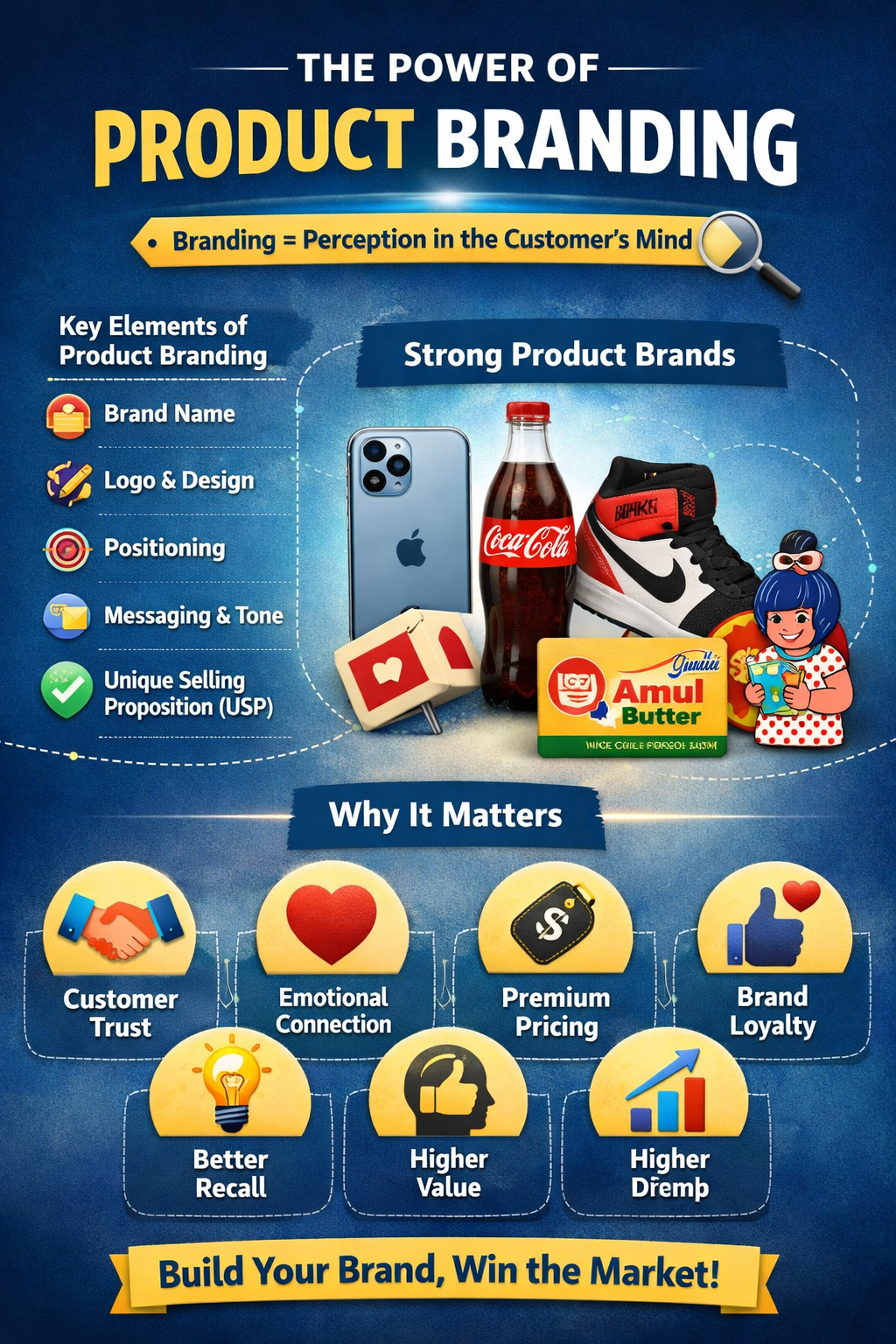
Branding = Perception in the customer’s mind.
Core Elements of Product Branding
1.Brand Name
A strong brand name should
be easy to remember, pronounce, and relate to. Good names create instant
recognition and emotional connection.
2.Logo & Visual Identity
Visual identity includes
colors, fonts, packaging, and overall design language. These visual elements
help customers quickly identify a product even without reading the name.
3.Brand Positioning
Positioning defines how a
product is placed in the market — premium, affordable, eco-friendly,
innovative, or luxury. Clear positioning helps attract the right audience.
4.Brand Messaging & Tone
Messaging includes taglines,
advertisements, and communication style. Some brands sound professional, others
friendly, youthful, or premium.
5Unique Selling Proposition (USP)
USP explains what makes the
product different from competitors — better quality, innovation, price
advantage, or unique features.
Why Product Branding is Important
1.Builds
Customer Trust:
People trust brands they recognize. For example, customers often choose known
medicine brands over unknown ones.
2.Creates
Emotional Connection:
Brands that tell stories connect emotionally. Nike inspires motivation and
achievement.
3.Increases
Perceived Value:
Branded products often feel higher quality, even if production cost is similar.
4.Supports
Premium Pricing:
Strong branding allows companies to charge higher prices because customers
value the brand experience.
5.Improves
Brand Recall:
Memorable branding ensures customers remember the product during purchase
decisions.
6.Encourages
Customer Loyalty:
When customers connect emotionally, they repeatedly choose the same brand.
Real-World Examples of Strong Product Branding
1.Apple
iPhone
iPhone is positioned as premium, innovative, and design-focused. Minimalistic
packaging and sleek design strengthen the premium perception.
2.Coca-Cola
Coca-Cola focuses on happiness, celebration, and emotional storytelling. Its
red color and bottle shape are globally recognizable.
3.Nike Air
Jordan
Air Jordan uses celebrity influence, sports culture, and exclusivity to build
lifestyle branding beyond just shoes.
4.Amul
Butter (Indian Example)
Amul uses its mascot and topical advertising consistently. This builds strong
recall and cultural connection with Indian consumers.
How to Build Strong Product Branding (Step-by-Step
Overview)
1. Market
Research
Understand competitors, customer expectations, and market gaps.
2. Identify
Target Audience
Define who the product is for — age group, lifestyle, income level, and needs.
3. Define
Positioning
Decide how you want customers to perceive your product.
4. Create
Brand Identity
Design name, logo, colors, and packaging aligned with positioning.
5. Develop
Messaging
Create consistent communication style, taglines, and brand voice.
6. Maintain
Consistency
Consistency across ads, packaging, website, and customer service is critical.
Common Mistakes in Product Branding
1.Copying
Competitors:
This creates confusion and weak differentiation.
2.Inconsistent
Messaging:
Different tones across platforms damage brand identity.
3.Ignoring
Target Audience:
Branding that doesn’t match audience expectations fails quickly.
4.Weak
Visual Identity:
Poor design reduces perceived quality and trust.
Conclusion
Product branding is far more
than just a logo or product name. It is about creating trust, emotional
connection, and strong market perception.
Strong branding helps
products stand out, command premium pricing, and build long-term customer
loyalty. Companies that invest in product branding don’t just sell products —
they build relationships with customers.
If you want to build a
powerful product brand, start with strategy, understand your audience, and
maintain consistent brand identity across every touchpoint.