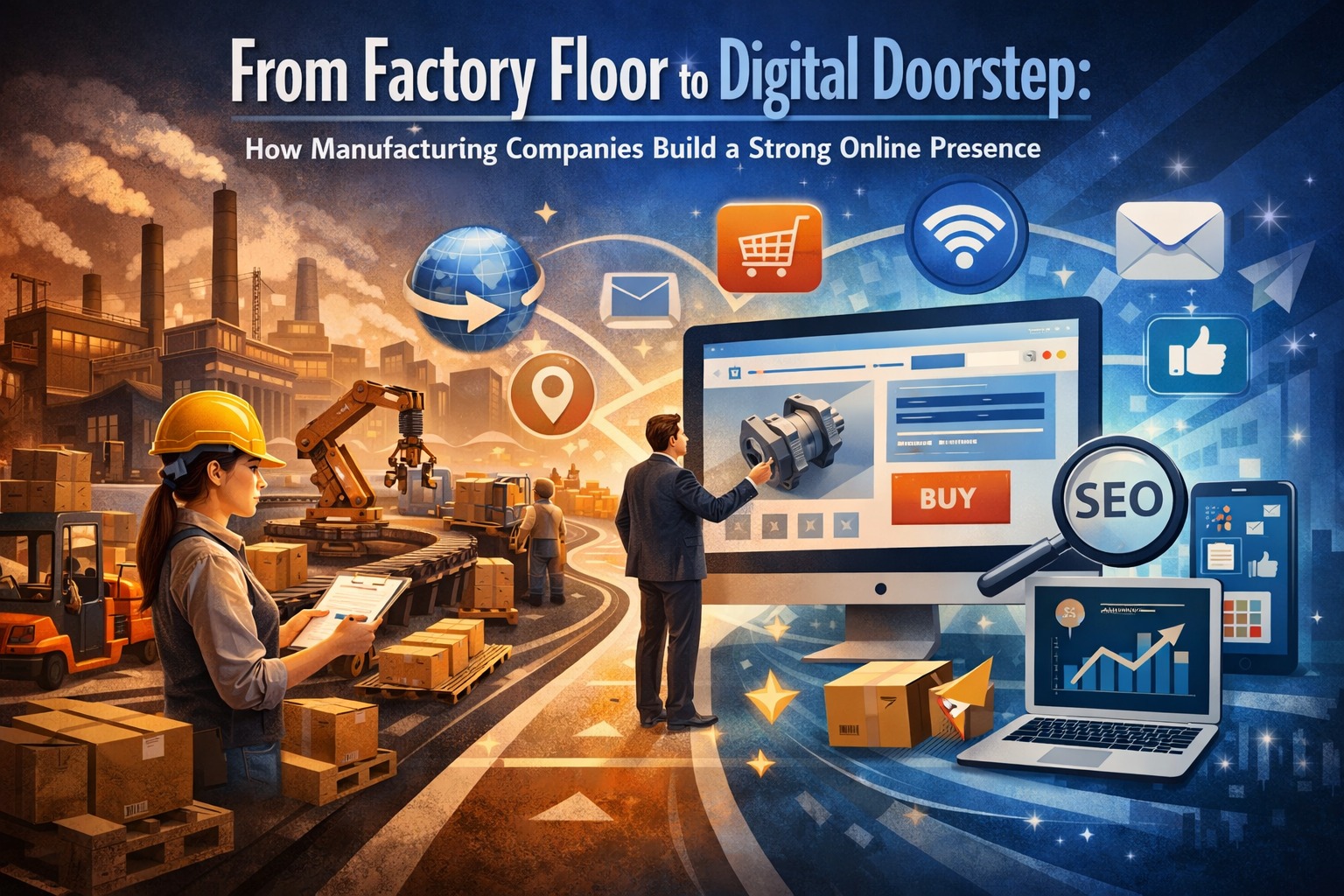
Introduction: Why Digital Presence Matters for
Manufacturing
The manufacturing industry is going through a major
transformation. Earlier, most manufacturing businesses depended heavily on
referrals, tenders, trade shows, and existing client networks. While these
methods still matter, today’s B2B buyers have changed how they search for
suppliers.
Before contacting a
manufacturer, buyers now research online. They check company websites,
certifications, production capabilities, client reviews, and even social media
presence. If your company is not visible online, you may lose opportunities
before you even know they existed.
Digital presence today means
credibility, visibility, and long-term business growth. For manufacturers, it
is no longer optional — it is a competitive necessity.
Understanding Digital Presence in Manufacturing
Digital presence for
manufacturers means how your company appears and performs across digital
platforms — including your website, search engine visibility, social media
presence, and online reputation.
B2B manufacturing digital
marketing is very different from B2C marketing. Manufacturing buyers focus on
quality, reliability, certifications, production capacity, and long-term
partnerships — not emotional or impulse buying.
One common myth is that
manufacturing businesses do not need digital marketing. In reality, most global
buyers and even domestic procurement teams now shortlist vendors online before
contacting them.
Building a Professional Manufacturing Website
A website is the foundation
of digital presence for any manufacturing company. It acts as your digital
factory showroom, available 24/7.
Essential pages every
manufacturing website should include:
1.About Us and Manufacturing
Capabilities
2.Products or Services Pages
3.Certifications and
Compliance Details
4.Industries Served
5.Contact Page with Inquiry
Forms
Your website must be
mobile-friendly and fast loading. Many decision-makers check vendors on mobile
devices. A slow or outdated website can damage credibility instantly.
Using SEO to Get Discovered by Buyers
Search Engine Optimization
(SEO) helps buyers find your business when they search online.
Industrial buyers search
using specific terms like:
1.“Precision CNC machining
supplier India”
2.“Sheet metal fabrication
manufacturer Delhi”
3.“Automotive component OEM
supplier”
Local SEO is also very
important. Many buyers search for manufacturers near specific industrial zones
or cities.
Optimizing product pages,
capability pages, and technical content helps you rank higher in search
engines. Creating and optimizing a Google Business Profile also improves local
visibility.
Leveraging LinkedIn & B2B Social Media
LinkedIn is the most
powerful social media platform for manufacturing companies. It connects you
directly with procurement managers, plant heads, and business owners.
Manufacturing companies
should post content like:
1.Factory updates and new
machinery installation
2.Production process videos
3.Certifications and
compliance achievements
4.Client case studies and
success stories
The goal is to build
authority and trust, not just gain followers.
Content Marketing for Manufacturing Brands
Content marketing helps
educate buyers instead of directly selling to them. This builds trust and
positions your company as an industry expert.
Useful blog and content
ideas include:
1.Manufacturing process
explainers
2.Material comparisons
(e.g., Aluminum vs Steel)
3.Quality testing and
inspection standards
4.Industry technology trends
Videos, product brochures,
and technical PDFs can also be shared digitally to support sales teams.
Digital Lead Generation for Manufacturers
Digital channels can
generate high-quality B2B leads consistently.
Effective lead generation
methods include:
1.Website inquiry forms
2.WhatsApp business
integration
3.Google Ads targeting
industrial keywords
4.LinkedIn lead generation
campaigns
Once leads are generated,
email marketing and follow-ups help convert inquiries into actual orders.
Building Trust in the Digital Space
Trust is critical in
manufacturing partnerships. Digital platforms should clearly showcase:
1.Certifications like ISO,
MSME, or industry-specific approvals
2.Client testimonials and
case studies
3.Factory images, production
videos, and virtual tours
Consistent branding,
messaging, and professional communication further strengthen trust.
Measuring Digital Growth & ROI
Manufacturers should track
digital performance using measurable data.
Key metrics include:
1.Website traffic
2.Inquiry quality
3.Cost per lead
4.Conversion rate
Tools like Google Analytics,
Google Search Console, and CRM systems help track and improve performance.
Common Digital Mistakes Manufacturing Companies
Make
Many manufacturers still
make mistakes such as:
1.Using outdated websites
2.Not clearly defining their
specialization
3.Ignoring SEO and content
marketing
4.Treating digital marketing
as a one-time activity
Digital growth requires
continuous effort and optimization.
Step-by-Step Digital Roadmap for Manufacturing
Companies
Phase 1: Build a professional website and strong
branding
Phase 2: Implement SEO and improve search visibility
Phase 3: Start content marketing and social proof building
Phase 4: Launch lead generation campaigns and automation systems
Conclusion:
The Future of Manufacturing Is Digital
Digital presence is becoming
a long-term business asset for manufacturers. Companies that adopt digital
strategies early gain a strong competitive advantage.
In the coming years, buyers
will rely even more on digital research before selecting manufacturing
partners. Companies that invest in digital presence today will be the ones
leading tomorrow’s manufacturing ecosystem.